
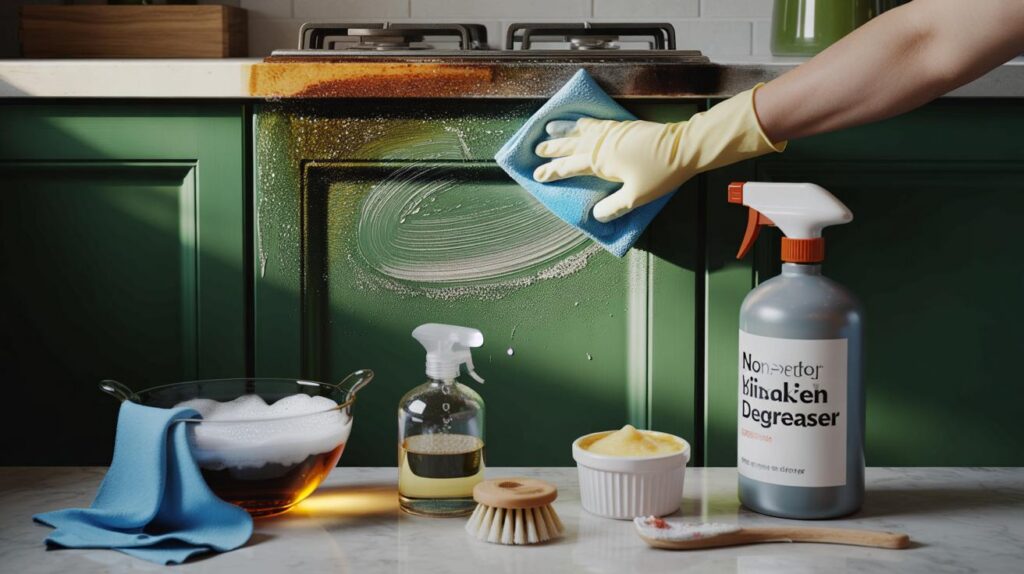
The shine fades, the stickiness stays. On busy weeknights, that invisible film creeps across doors, handles and hidden edges.
Grease mist from frying and roasting clings to cabinet surfaces, catching dust and cooking smoke. Left alone, it hardens, dulls paint and traps odours. Here is what’s happening in your kitchen, and four fast ways to take control without stripping finishes or losing an evening.
Why grease builds up on cabinets
Hot oil spits into the air as microdroplets. Those droplets cool, mix with steam, and land on doors and frames. The residue behaves like glue. It binds airborne dust, pollen and soot into a sticky film. Heat from the hob bakes that layer into a tougher coat that normal wiping fails to shift. Repeated splashes around handles and knobs create high-contact hotspots that feel tacky even when they look clean.
Grease is a mix of oils, proteins and fine dust. Break it with surfactants or mild alkali, then lift it before it resets.
What you’ll need
- Washing-up liquid and warm water (40–50°C is plenty)
- White vinegar for a mild acidic solution
- Bicarbonate of soda to form a gentle paste
- A non-abrasive commercial degreaser, if needed
- Microfibre cloths and a soft-bristle brush
- Spray bottle and measuring jug
- Dry, lint-free towel
- Nitrile gloves for sensitive skin
Always test any cleaner for 60 seconds on a hidden spot, then check for colour lift, haze or swelling.
The 4 methods that actually work
Method 1: washing-up liquid and warm water
Use this first for light films and fresh splatters. Surfactants in the liquid loosen oils so you can wipe them away.
- Add 4–6 drops of washing-up liquid to 500 ml warm water.
- Dip a microfibre cloth, wring until just damp.
- Wipe with light pressure. On timber, move with the grain for the final passes.
- Rinse the cloth, repeat on stubborn spots, then dry with a towel within one minute.
Boost the mix with a second clean cloth for rinsing if you see suds streaks on satin paints.
Method 2: vinegar and water solution
Acid helps cut mineral-laced grime and old soap residue. It also reduces odours near bins and pet bowls.
- Mix 1:1 white vinegar and warm water in a spray bottle.
- Mist the surface lightly. Do not soak door edges.
- Wait 2–3 minutes for dwell time, then wipe with a damp cloth.
- Gently agitate crevices with a soft brush. Dry immediately.
Avoid bare timber and stone splashbacks with vinegar; acid can etch marble and dull some natural stones.
Method 3: bicarbonate of soda paste
For stuck-on rings around handles and along door rails, a mildly alkaline paste breaks polymerised oils without chewing through finishes.
- Mix two parts bicarbonate of soda with one part water to a spreadable paste.
- Apply with a fingertip or soft cloth to the stain only.
- Leave for 3–5 minutes. Do not let it dry hard.
- Wipe with a damp cloth, then follow with a clean, dry cloth to finish.
If residue remains, repeat once rather than scrubbing harder. Patience protects paint and varnish.
Method 4: commercial degreaser, used gently
When layers resist home mixes, a shop-bought product can save time. Choose non-caustic, kitchen-safe formulas and avoid abrasives.
- Read the label for material compatibility: painted MDF, laminate, timber veneer and thermofoil each react differently.
- Test on the back of a door. Look for haze, softening or colour bleed.
- Apply sparingly, allow the stated dwell time, then wipe and rinse with a damp cloth.
- Ventilate the room and wear gloves if skin is sensitive.
Do not flood timber. Damp is fine; drips along door edges can swell cores and blister veneers.
At-a-glance comparison
| Method | Best for | Typical dwell time | Finish risk | Time per door |
|---|---|---|---|---|
| Washing-up liquid | Fresh splatters, daily film | None | Low | 1–2 minutes |
| Vinegar solution | Old film, odours | 2–3 minutes | Low–medium on bare timber | 2–3 minutes |
| Bicarbonate paste | Stubborn rings, handle zones | 3–5 minutes | Low if not scrubbed | 3–4 minutes |
| Commercial degreaser | Layered, baked-on residue | As directed | Medium if misused | 2–5 minutes |
Preventative moves that pay off
- Run your cooker hood on high during frying and for 10 minutes after you finish. Clean metal filters monthly.
- Wipe handles and the doors nearest the hob after each greasy cook. Two minutes now saves an hour later.
- Use a splatter guard when searing steaks or crisping bacon.
- Apply a thin coat of furniture wax to painted doors every three months to add a sacrificial layer.
- Keep a microfibre cloth on a hook inside the sink cupboard to make quick wipe-downs effortless.
Material-specific guidance
Painted timber and MDF
Stick to mild solutions and soft cloths. Work with the grain, limit moisture, and dry within one minute to prevent swelling at edges and joints.
Laminate and thermofoil
These finishes handle gentle cleaners well. Avoid abrasive powders and harsh alkalines that can cloud the surface. Heat-lifted corners are vulnerable to moisture.
Timber veneer
Veneer is thin. Avoid saturated cloths and strong solvents. A wax top-up protects against finger oils around handles.
Metal and glass fronts
Use washing-up liquid for grease, then buff dry to avoid streaks. Microfibre is the safest option for fingerprint-prone finishes.
Troubleshooting sticky hotspots
- Grease shadow around knobs: remove the knob once a month and clean the ring beneath with bicarbonate paste.
- Top rail above the hob: increase ventilation, then switch to a weekly vinegar pass to stop build-up.
- Grey haze after cleaning: rinse with clean water and buff dry; it is often soap film, not remaining grease.
- Raised grain on timber: reduce moisture, sand lightly only if you plan to refinish, then reseal.
Safety notes and smart chemistry
Most kitchen grease responds to surfactants and mild alkali. Washing-up liquid breaks the bond between oil and surface. Bicarbonate nudges pH upward, softening aged fats without biting into finishes. Acidic vinegar helps where mineral deposits join the party. Strong caustic cleaners work, but they can dull paint and lift veneers if overused or left too long.
Keep acids away from marble and limestone splashbacks. Keep caustic sprays away from unsealed timber. Ventilate during any deep clean, especially in compact kitchens with closed windows.
A 10-minute weekly plan
Set a timer for five doors per session. Start with washing-up liquid and warm water. Give handles two passes, then dry. Rotate through the kitchen during the month. Add bicarbonate paste to the worst two spots once a week. Run the hood for a post-cook clear-out and wash the filters on the first weekend of each month. This routine keeps layers from setting hard.
When to bring in a pro
If chalky paint rubs off on your cloth, if swelling appears at edges, or if grease has baked under a failing finish, refinishing beats scrubbing. A decorator can degrease, sand and reseal in a day or two, restoring sheen and improving cleanability for the next five years.



Brilliant breakdown. I tackled the sticky halo around my stove with the bicarb paste and it actually lifted without scuffing the satin paint. The “test for 60 seconds on a hidden spot” tip saved me from overdoing a degreaser. Definitley adding the 10‑minute weekly plan; two minutes per door feels achievable.
“2 minutes each” sounds optimistic—does your timing include dwell time and the final dry? On my cabients the vinegar mix needs the full 3 minutes, plus wipe and buff, which is more like 5–6 minuites per door.