
As nights cool and kitchens brim with end‑of‑season harvests, many of us attempt a final trick: turning stubborn green tomatoes red.
That last push can work, yet small missteps waste boxes of fruit. Cold snaps, damp corners and misguided hacks quietly stall ripening. This season’s rush to rescue tomatoes has exposed what helps and what wrecks the flavour, texture and colour you want.
Why your green tomatoes refuse to blush
Tomatoes ripen thanks to ethylene, a gas the fruit produces as it matures. Ethylene triggers colour change, softening and aroma. The process needs warmth and a stable, gently ventilated environment. Drop the temperature too far and the switch flips off. Push humidity too high and rot moves in first.
The temperature line you must not cross
Below roughly 13°C, many tomatoes slow dramatically or stop ripening. That threshold matters in late October and November when UK nights slide into single digits. A greenhouse or porch still cools to outside air after dark. A cold conservatory feels snug by day yet behaves like a fridge at 3am.
Keep ripening fruit away from cold snaps. Below 13°C, the biology hits the brakes. Aim for a steady 18–22°C.
Moisture is a silent saboteur
Condensation forms on cool fruit, especially after mild days and cold nights. Wet skins invite moulds long before colour develops. A sealed space traps that moisture. A draughty window chills the fruit and slows ethylene. Both scenarios end with pallid, mealy tomatoes.
Common habits that quietly ruin your batch
Leaving fruit “under cover” overnight
A polytunnel or glasshouse feels protective. It is not during night-time radiative cooling. Temperatures inside track the outside minimum, sometimes lower near panes. Fruit cools, then rewarms, then cools again. Repeated swings stress cells and produce dull, woolly flesh.
The sealed plastic bag shortcut
People try a closed carrier bag to trap ethylene. It also traps moisture and spores. Within 48 hours, droplets bead on skins. Black pinpricks or grey fuzz appear. Once colonies start, flavour collapses fast.
The fridge fantasy
Chilling green tomatoes below 10°C halts ripening and damages membranes. Ethylene signalling weakens. You bring them back to room temperature, but the aroma never fully returns. The result tastes flat and floury.
- Don’t leave green fruit in unheated spaces overnight once nights drop to single digits.
- Don’t use sealed plastic bags; they feed condensation and mould.
- Don’t refrigerate any tomato until it has fully coloured and softened.
What actually works right now
Set the right range: 18–22°C
Most households already have the sweet spot. A spare bedroom, a hallway shelf away from radiators, or the top of a cupboard often sits around 20°C. Gentle warmth supports ethylene without shrivelling the fruit.
Choose breathable supports
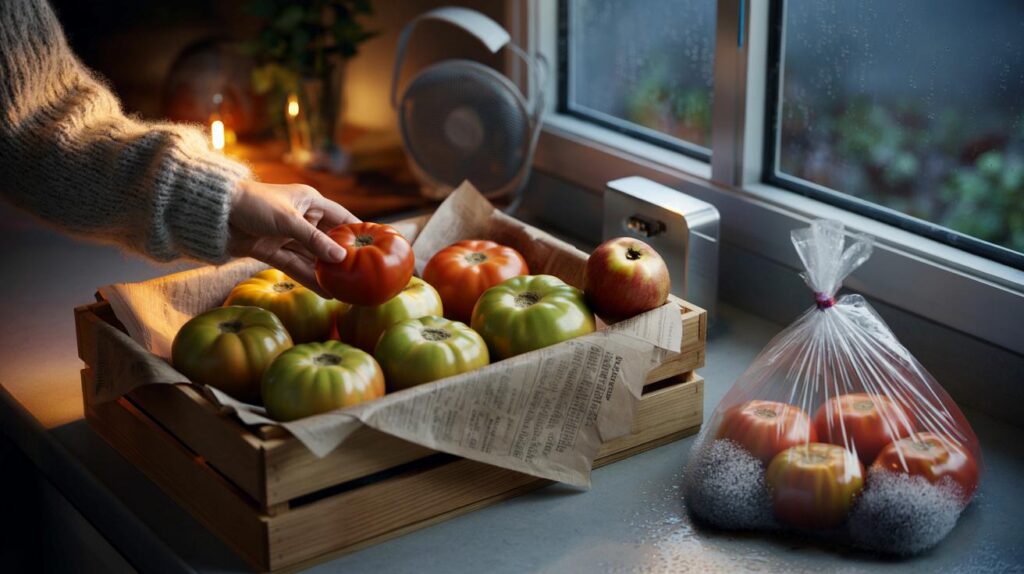
Spread tomatoes in a single layer on newspaper, kitchen roll or a wooden crate. Space them so none touch. The paper absorbs surface moisture and stops pressure marks. Keep them out of harsh sunlight to reduce skin toughening.
Use companion fruit wisely
A ripe apple or banana nearby bumps up ethylene in a small zone. One per tray suffices. Replace it before it goes mushy. Vent the room daily to clear damp air.
Simple kit wins: paper, air gaps, steady warmth and a single ripe apple per tray. Nothing fancy, just discipline.
Make daily checks a habit
Turn each tomato once a day. Remove any fruit that softens too quickly or spots up. Wipe the surface if you see dew. Sort by ripeness so you don’t lose a whole tray to one bad patch.
Reading the fruit: when to bring them indoors
Spot the right cues on the vine
Look for a faint yellow blush or a shift from glossy dark green to paler green. Squeeze gently near the calyx; slight give suggests ripening has started. Once the forecast shows a run of nights at or below 8–10°C, pick the best‑set fruit and move them inside.
Set up a quick home station
- Line a shallow box with newspaper.
- Arrange fruit in one layer with two fingers’ space between tomatoes.
- Add a single ripe apple in a corner.
- Place the box in a 18–22°C room, away from direct sun and radiators.
- Vent the room for five minutes each morning to release damp air.
Conditions, outcomes and fixes at a glance
| Condition | What happens | What to do |
|---|---|---|
| Nights under 13°C | Ripening slows or stops; flesh turns mealy | Move fruit indoors to 18–22°C before the cold spell |
| Sealed plastic bag | Condensation and mould within 24–48 hours | Use breathable paper and open air circulation |
| Direct sun on a windowsill | Skin toughens, uneven colour, soft spots underneath | Choose bright shade and rotate fruit daily |
| Fridge storage | Flavour loss, texture turns woolly | Wait until fully ripe before chilling, or skip the fridge |
| Overcrowded trays | Pressure bruises and rapid spread of rot | Keep gaps and remove problem fruit immediately |
Why this matters to households this week
Energy costs steer many households to cooler rooms at night. That makes the location of your ripening station decisive. A north‑facing spare room often stays stable compared with a sunny kitchen that swings from warm afternoons to chilly dawns. Stability beats heat peaks.
Older homes with single glazing collect condensation on cold nights. If you see droplets on nearby panes in the morning, shift the tray away from the window by 50–80 cm. A small desk fan on its lowest setting, pointed past rather than at the fruit, improves air exchange without drying the skins.
If they stay green, cook clever
Turn near‑misses into autumn plates
Some fruit simply won’t colour before skins age. Keep those for the hob. Slice and dredge in seasoned flour for pan‑fried green tomatoes. Chop for a quick chutney with onion, vinegar and brown sugar. Roast wedges with olive oil, honey and a splash of balsamic for a tart‑sweet side with cheese or roast squash.
Batch and freeze for later
Cooked green tomato sauces freeze well. Simmer with garlic, chilli and cumin for a bright relish. Label by date and heat level. One evening’s work saves several rushed midweek dinners.
Extra pointers for growers and renters
Growers can prompt a final push on the vine before harvest: trim excess foliage to let air move, cut water in the last week to concentrate sugars, and pick any damaged fruit immediately. Don’t strip plants bare; leave a leaf or two to avoid sunscald during brief warm spells.
Renters often lack storage space. Use a shoebox‑sized crate and rotate small batches instead of spreading trays across a flat. A cardboard wine carrier makes neat, separated slots that prevent fruit touching. Add a single ripe apple in the same cupboard to nudge ethylene without overwhelming humidity.
The winning formula this season: steady 18–22°C, dry breathable supports, one ripe companion fruit, daily hands‑on checks.



Finally someone explained the 13°C line in plain English. I’ve definately been “saving” mine in the glassy porch—aka night‑time fridge. Moving trays to ~20°C and using paper instead of bags improved flavour and cut mould by loads. Thanks for the no‑gimmick advice.