
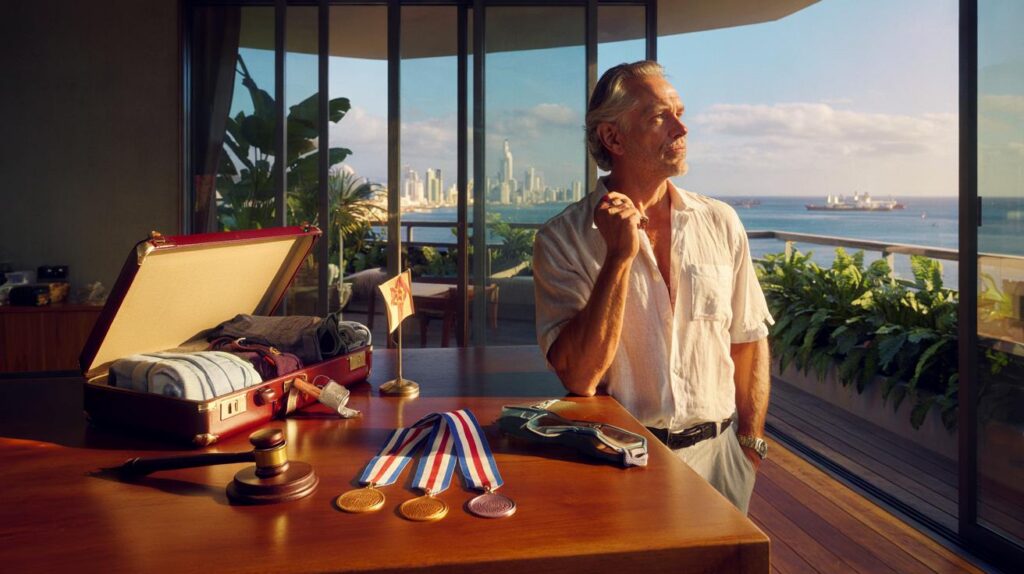
One of sport’s most decorated divers has chosen a startling new path, prompting questions about value, legacy and personal reinvention.
The four-time Olympic champion has shed possessions, reshaped priorities and charted a route far from southern California. At 65, the American icon says he wants a quieter life and a clearer head, and he has taken tangible steps to get there.
A champion starts over
Greg Louganis, the standard-bearer of springboard and platform diving in the 1980s, has decided to leave the United States and settle in Panama. He disclosed the move on Facebook after completing the sale of his California home and streamlining his belongings. He described a period of sorting, donating, gifting and selling with purpose. He also said he felt satisfied with the new owner of his house, having wished joy and safety upon the space before locking the door.
At 65, Louganis is trading trophies and square footage for freedom, cash flow and a different pace of life in Panama.
The shift follows a summer auction of three Olympic medals, a decision he framed with stark honesty about money. He said he ignored advice from advisers who urged secrecy in past attempts and instead told fans the truth this time: he needed the funds. He also reflected on his career management, suggesting better guidance might have changed his position, while stressing he intends to learn from it.
The medals that funded a new chapter
The July auction raised $430,865 across three medals earned between 1976 and 1988. Two golds came from the Games in Los Angeles and Seoul. A silver arrived when he was a teenage prodigy in Montreal. The lots attracted interest not only for rarity but for what they represent: the record of a diver who won with precision, grace and nerve under pressure.
| Year | City | Medal | Hammer price (USD) |
|---|---|---|---|
| 1976 | Montreal | Silver | $30,250 |
| 1984 | Los Angeles | Gold | $199,301 |
| 1988 | Seoul | Gold | $201,314 |
| Total | — | — | $430,865 |
Three medals. Two golds. One silver. $430,865 raised in a single month to finance a reset.
Those numbers speak to supply, provenance and story. The medals trace a career that saw Louganis sweep both springboard and platform at back‑to‑back Games, a feat unmatched in men’s diving. They also carry the mark of an athlete whose bravery extended beyond sport. He became a leading voice on LGBTQ+ rights and HIV/AIDS at a time when stigma ran deep, then broadened his advocacy to mental health, addiction, human rights and environmental causes.
From California to Panama
Why Panama? He did not publish a point‑by‑point explanation, yet the clues are plain. He wants less noise and more space to work out who he is without the machinery of fame. Panama offers a warmer climate, a slower rhythm and relative affordability compared with coastal California. English is widely used in the capital. The time zone stays close to the US, which helps with calls and travel.
For many retirees, Panama’s stability and practical programmes add appeal. The Pensionado programme supports foreign retirees who can prove a steady income. Private healthcare options exist in larger cities. Daily costs vary by region, with Panama City above the countryside, but housing, services and food often undercut major US metros.
- Lower average cost of living than many US coastal cities, especially outside the capital
- Warm climate and established expat communities in several provinces
- Direct flights to and from multiple US hubs via Tocumen International Airport
- Retiree incentives through residency programmes, subject to eligibility and documentation
He says he wants less distraction and a clearer inner voice. The plan is simple: travel lighter and live more deliberately.
Selling symbols, keeping the legacy
Medals attract awe, yet they also sit in boxes and cases for decades. Athletes sometimes pass them to museums or family. Others auction them to fund projects, settle debts or support charities. Buyers pay for the metal, the signature and the moment frozen in time. Louganis’s lots achieved strong prices because he remains a byword for excellence on the board and resilience away from it.
He framed the sale as a practical choice rather than a farewell to identity. He still carries the experience that shaped him alongside coach Ron O’Brien and the teams that backed them. His post made clear he felt honoured to have served a vision built on love. The medals helped finance the next act; the memories stay with him.
What the move could mean
The move gives him distance from the American spotlight. It may reduce costs and free up time for personal projects, coaching visits, speaking, writing or community work. Panama’s location keeps Latin America within reach and keeps the US a short flight away.
He has long used his platform to push for dignity and health. He came out publicly in the mid‑1990s and shared his HIV status soon after. He talked openly about mental health and addiction. That history suggests he may continue to mentor, campaign and educate, whether online or in person, regardless of postcode.
What readers can take from his choice
Selling awards to fund a reset feels drastic. Yet late‑career pivots can make sense when assets sit idle and living costs rise. Cashing in memorabilia converts sentiment into runway. Moving abroad can stretch that runway. Both moves demand clear spreadsheets as well as courage.
If you weigh a similar step, start with a budget and a timeline. Track income sources, healthcare options and tax rules in both countries. Check residence permits and proof‑of‑income thresholds before you pack. Visit in the off‑season as well as the high season. Speak with locals, not just expats. Rent first, then buy if your plan sticks.
Practical notes for a Panama plan
Rules change, so verify details with official channels, but the broad checklist remains steady:
- Residency: map the right route for your situation, such as a retiree programme or work‑related permit
- Healthcare: price private insurance and compare hospital access in your target area
- Housing: compare city, beach and mountain markets; consider flood risk and transport links
- Banking: ask about local accounts, international transfers and currency exchange costs
- Taxes: review obligations in both countries to avoid double payment
- Community: test daily life beyond expat clusters to check fit and language comfort
What drives memorabilia prices
Collectors pay premiums for clean provenance, headline achievements and cultural impact. Olympic pieces rise when the athlete defines an era, sets records or breaks barriers. Media attention boosts bids. Market timing matters as much as condition. Transparency about reasons for sale can add human weight to the story, which pulls bidders into the room.
Louganis’s auction ticked many of those boxes: a household name, a rare sweep of titles, and a life that resonated far beyond the platform. The cash now underwrites a move meant to swap clutter for clarity. He says he wants to hear his own signal again. The medals have gone to new custodians. The next dive is his alone.



Would you trade your trophies for peace of mind at 65? I might. Memories don’t pay bills, but they also don’t vanish when you sell a medal.
Respect the reset.