
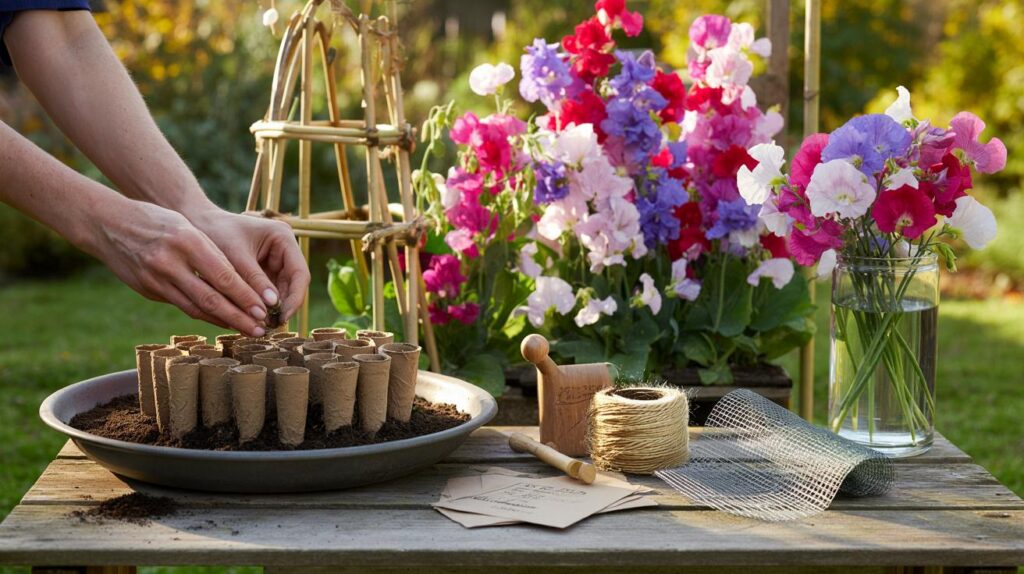
As frosts loom and days shrink, one low-cost autumn task promises morale, fragrance and vivid colour when winter finally loosens.
October sowings of sweet peas set roots quietly through the cold months, then surge early, giving earlier blooms and more stems. The routine is simple, the kit is cheap, and the payoff fills vases and fences when gardens most need a lift.
Why sowing in october pays off
Autumn-raised plants spend winter building roots. That underground work buys you earlier flowers and longer picking. Spring-sown seedlings can still shine, but October gives a head start that shows when days warm.
Sow in October for stronger roots, earlier colour and a longer cutting season with minimal extra effort.
Earlier flowers, sturdier plants
Cool conditions keep growth compact while roots thicken. Many UK gardeners see blooms up to a month sooner, with plants that cope better with dry spells in May and June. That timing matters if you want colour for exams, weddings or half-term parties.
What you need today
- Seeds: scented varieties such as ‘Matucana’ or classic Spencer types for long stems.
- Deep pots or root trainers (8–12 cm deep), or recycled cardboard tubes.
- Seed compost with added grit for drainage; a saucer or tray for bottom-watering.
- Labels, a pencil, and a bit of horticultural fleece or newspaper for cold snaps.
- Slug protection and something to deter mice; lids or mesh help at germination.
How to start seeds this week
- Soak firm-coated seeds for 4–8 hours, or gently nick the seed coat with a nail file.
- Fill deep pots with moist, free-draining compost. Make 2–3 cm holes with a dibber.
- Sow one seed per cell or two per pot. Cover and firm lightly. Water from below.
- Germinate at 16–18°C on a bright sill. Expect shoots in 10–14 days.
- Move to the brightest, coolest place you have once seedlings show. Aim for 5–10°C.
- When plants have 3–4 pairs of leaves, pinch the tip above a leaf node to encourage branching.
Pinch once at 3–4 pairs of leaves; you trade one tall stem for multiple flowering shoots later.
Winter care without a greenhouse
You do not need a heated space. A cold frame, porch, lean-to or even a sheltered doorstep works if you can keep frost off the foliage. Ventilate on mild days to prevent mildew. Water sparingly; damp, not soaked.
- Frost forecast: cover with fleece or double newspaper overnight.
- Leggy seedlings: move to cooler, brighter light and rotate pots every few days.
- Yellowing leaves: check drainage; sweet peas hate waterlogged compost.
Planting out and training
By March or April, roots should knit the compost. Harden off for a week, then plant into sun with drainage. Improve heavy soil with grit and garden compost. If your soil is very acid, add a dash of garden lime; sweet peas prefer neutral to slightly alkaline conditions.
- Spacing: 20–25 cm apart for bushy clumps, 10–15 cm for cordon-trained show blooms.
- Depth: set plants at the same depth as the pot and water in well.
- Support: canes, a bamboo teepee, pea netting or a trellis 1.8–2 m tall.
- Tie in loosely every 10–15 cm of growth; help tendrils find their support.
For exhibition-style long stems, train one main shoot per plant and remove side shoots. For mass colour, allow several shoots and accept slightly shorter stems.
Feeding, watering and summer picking
Keep soil evenly moist as buds form. Mulch in May with compost to lock in moisture. Feed little and often with a high-potash fertiliser from first buds. Avoid nitrogen-heavy feeds which push leaves over bloom.
Cut or deadhead every two to three days; letting pods form slows the plant’s will to flower.
Spencer types shine in vases thanks to long stems. Scented heritage sorts like ‘Matucana’ carry perfume that fills a doorway, though stems may be shorter. Either way, regular picking is the engine of repeat flowering.
Best varieties for small and large spaces
- For perfume: ‘Matucana’, ‘Hi Scent’, ‘Cupani’ (shorter stems, superb fragrance).
- For cutting: Spencer mixes and named forms offer large, ruffled flowers on long stems.
- For pots and baskets: dwarf or patio lines stay compact and need minimal tying-in.
- For colour themes: pastel mixes for soft schemes; bicolours for a lively fence.
Check the packet for fragrance rating; some bold exhibition strains focus on size over scent. If fragrance matters to you, choose accordingly.
Common snags and quick fixes
- Slugs and snails: use barriers, night checks, or wildlife-friendly pellets.
- Mice at sowing: cover pots with mesh or use lidded propagators.
- Aphids in spring: blast with water, encourage ladybirds, or use a soft soap spray.
- Mildew in June: water the soil, not leaves; thin congested growth; remove affected foliage.
- Wind rock: firm plants in and add a second tie after gales.
Your month-by-month roadmap
| Month | What to do | Target conditions |
|---|---|---|
| October | Sow into deep pots; germinate indoors; deter mice | 16–18°C to sprout, bright light |
| November–January | Grow cool and bright; water lightly; pinch once | 5–10°C, good airflow, frost protection |
| March–April | Harden off and plant out; tie to supports | Sun, free-draining soil, steady moisture |
| May–July | Feed, water, pick every 2–3 days; remove pods | Mulch in May; high-potash feed little and often |
How much will it cost — and save?
A packet of seed is typically £2–£4. Add compost and canes and you can be underway for about £5–£10 if you reuse pots. A dozen plants often yield scores of stems. Even at a modest 8–10 stems per plant, that’s 100-plus flowers from a small bed, far cheaper than shop bouquets.
Small-space tactics
Balconies and renters
Choose dwarf varieties in 20–30 cm pots, or run two canes in a deep container for a slim column of colour. Use a saucer to water from below and prevent drips on neighbours. Rotate containers weekly for even growth.
Shade and tricky sites
Sweet peas want sun, but morning sun with bright afternoon shade still works. In windy courtyards, shorten canes to 1.5 m and tie more frequently to reduce strain.
Safety and extra gains
Sweet pea seeds and pods are not edible; keep them away from children and pets, and label clearly to avoid confusion with edible peas. Spent plants can be composted once pods are removed. As legumes, sweet peas partner well with roses and climbers by adding nitrogen to the soil in small amounts, while acting as bee magnets in late spring.
If you enjoy cut flowers, plan a second, spring sowing in February for a staggered season. Plant the October batch for early colour, then follow with the spring batch to extend picking into August. Mix scented heritage types near doors for evening perfume and plant Spencer forms on your cutting frame for long stems. The result is colour where you live, fragrance where you linger, and a steady stream of flowers for pennies.



Great guide! The reminder to pinch at 3–4 pairs of leaves was gold—I alwys forget and end up with leggy stems. Love the tip about bottom-watering and using grit in the compost. Going to try ‘Matucana’ for scent this time. Thanks!