
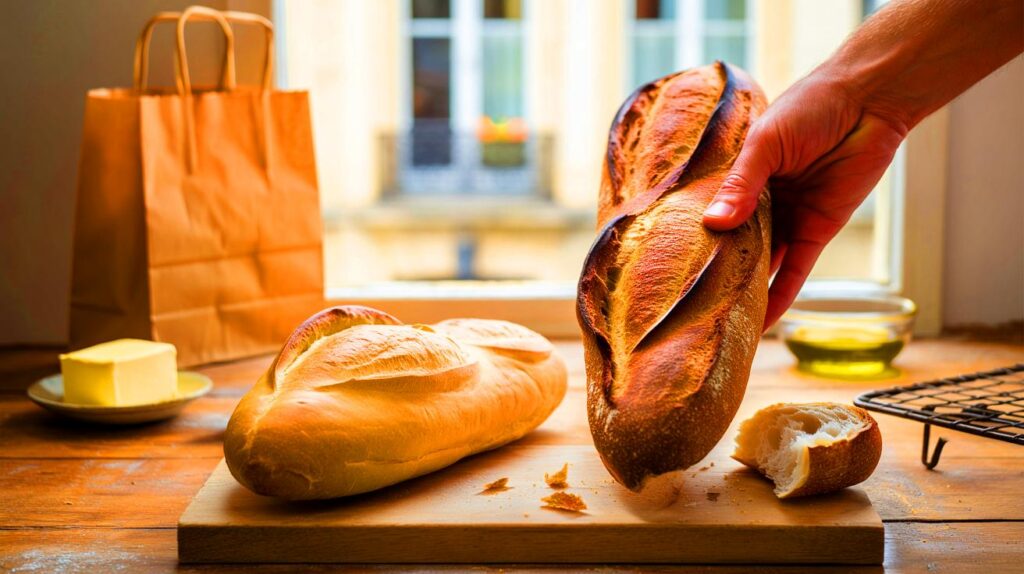
A French master baker has sparked a nationwide kitchen rethink, and your next bite of bread could feel very different.
Bruno Cormerais, a Meilleur Ouvrier de France and revered artisan, has called time on the “pas trop cuite” trend that’s swept French bakeries. In a message shared alongside Minoterie Bourseau, he argues that the true French baguette should be baked boldly and chewed properly. Bakers across the country say as many as one in two customers now ask for paler, softer loaves. He says that habit robs the bread of flavour and makes meals feel heavier than they need to be.
A warning from an mof baker
Cormerais draws a sharp line between a fluffy white baton and a baguette baked until the crust sings. Texture is the heart of his case. A crisp crust resists the bite, the crumb bounces back, and chewing takes its time. That mechanical work in the mouth unlocks aroma, slows the hit of starch, and helps the body handle the meal.
The baker’s critique is plain: underbaked loaves look pale, sag under the fingers and taste flat. They spoil faster. They also demand less chewing, so a large bolus of easy starch lands in the stomach quickly. By contrast, a well-baked baguette offers structure and scent. The crust protects flavour, the crumb feels alive, and every mouthful brings air, aroma and saliva into play.
Crisp crust and patient chewing release more aroma compounds, temper the rush of starch and make eating feel lighter.
The science behind crust and chew
A baguette earns its character in the last minutes of baking. The Maillard reaction browns the surface at high heat, building hundreds of flavour molecules. Steam expands the loaf and sets the crust. When it leaves the oven, a good baguette crackles as moisture escapes and the shell tightens.
That shell matters. It forces you to chew. Chewing mixes the crumb with saliva, where enzymes such as amylase begin breaking starches down. This early step smooths digestion and stretches the eating experience, so you taste more and eat less in a rush. Texture is not theatre; it’s part of how bread works in the body.
Fermentation is the second pillar. Many craft baguettes use a preferment or natural leaven. Longer, slower fermentation reduces the dough’s pH and supports enzymes that can reduce phytic acid in flour. Lower phytic acid can help mineral availability. A slow dough also develops a more open, elastic crumb that stands up to a proper bake without drying out.
A well-baked baguette usually reaches about 96–98°C at the core; the crust should speak with a faint crackle as it cools.
| Choice | Likely effect at the table |
|---|---|
| Pale, very soft loaf | Mild flavour, quick chew, faster carbohydrate hit, limp crust, stales and sags quickly |
| Boldly baked baguette | Richer aroma, firmer chew, slower eating, satisfying texture, crust protects flavour for longer |
| Leavened (sourdough-style) baguette | Sharper aroma, lively crumb, potential reduction of phytic acid through longer fermentation |
How to choose and eat a baguette the French way
At the counter
- Ask for “bien cuite” or “tradition” if available; look for a deep gold to chestnut crust with light freckling.
- Give it a gentle squeeze: the shell should resist, then spring back, not cave in.
- Listen for a whispering crackle when you pick it up; silence often signals a soft, damp crust.
At home
- Let it breathe. Keep it in paper, not plastic, to protect the crust. Plastic turns the shell rubbery.
- Refresh a flagging crust in a 180°C oven for 4–6 minutes. Avoid the microwave; it toughens the crumb.
- Slice or tear just before eating. Exposed crumb dries quickly, draining aroma.
At the table
- Chew slowly. Let the crust break down and the crumb warm in the mouth. Aroma peaks with time and air.
- Pair with butter, olive oil or cheese. Fat carries aroma compounds and balances the glycaemic punch of starch.
- Keep portions modest and go back if you want more. This keeps the pace gentle and the bread fresh.
If it’s pale and silent, leave it on the shelf. If it crackles and resists, you’ve found the right loaf.
Why so many people get it wrong
Convenience and habit drive the “pas trop cuite” request. Pale loaves feel soft in the hand and seem fresh because they are warm and pliable. Busy counters reward speed, so bakers produce lighter bakes that sell on sight. Several shop owners say up to half of their customers now ask for softer bread by default, especially at breakfast or for children’s snacks.
There’s also a fear of bitterness. Some buyers equate colour with burnt flavour. But a bold bake is not char; it’s caramelised proteins and sugars producing nutty, toasty notes. The line is real, and skilled bakers track it by sight, smell and the sound of the crust.
Pro tips from the bench
- Judge by colour bands: a honey-coloured back, darker ears where the cuts lift, and chestnut flecks across the shell.
- Check scoring: cuts should rise into crisp ridges, not lie flat. Lift means steam and structure did their job.
- Feel the weight: a good baguette is light for its size because moisture has baked off, concentrating flavour.
Health notes without the hype
No single loaf turns a meal into a miracle, yet small choices add up. A longer-fermented, properly baked baguette can feel easier on the stomach because you chew more and eat at a calmer pace. Fermentation may also reduce phytic acid and shape the crumb in ways that slow absorption. People with jaw or dental issues can still enjoy crusty bread by choosing smaller pieces and moist accompaniments, such as soup or olive oil.
Worried about dark crusts? Normal “bien cuite” colour comes from desirable browning reactions, not burning. Charred patches should be avoided, but a deep gold-to-brown shell signals flavour, not ash. If you prefer a milder profile, aim for medium gold rather than very pale; you’ll still get a crisp bite and better aroma release.
Turning advice into practice
Try a simple tasting at home. Buy two baguettes: one pale, one well baked. Tear equal pieces, smell them side by side, then chew slowly. Note how aroma builds, how long you chew, and how you feel twenty minutes after eating. Most people report that the darker loaf tastes richer and leaves them satisfied with less.
For bakers, the message is commercial as well as culinary. A confident, consistent “bien cuite” line builds trust and teaches customers what great bread feels like. For households, asking for a bolder bake steers demand. Change one request and the counter follows.



Thanks for the science—if the crust doesn’t sing and resist, it’s not a real baguette. The bit about chewing slowing the starch hit was new to me; definately asking for “bien cuite” now.
Isn’t this just bakery snobbery? If half the country asks for softer loaves, maybe that’s a legit choice, not “wrong.” Taste is subjective; stop turning crust color into a moral choise.