
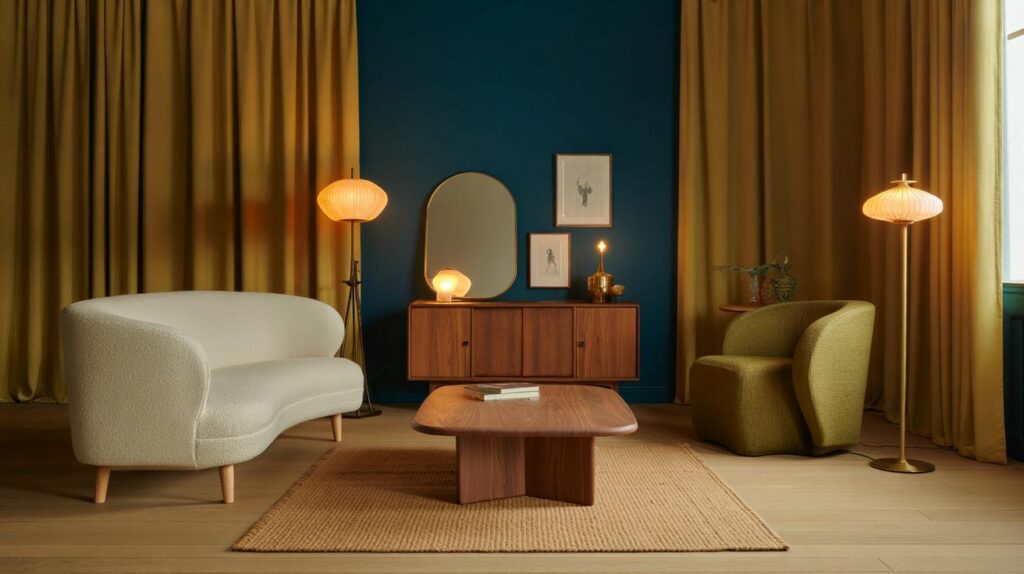
Your beige sofa looks fine, yet something feels flat. Blame fatigue, shorter days, or a craving for colour.
Across the UK, homeowners admit that the cool, pared-back scandi look no longer lifts their mood. As autumn sets in, decorators point to a warmer, craft-led shift that promises comfort, character and a dose of joy for 2025.
Why scandi minimalism now feels tired
For a decade, pale woods, neat lines and snow-light palettes made rooms look calm, clean and bright. The formula spread fast, from city flats to new builds, helped by accessible price points and easy-to-mix basics. That ubiquity is now part of the problem. When you see the same oak legs, the same off-white rug and the same ladder shelf on every feed, the charm fades.
The darker months amplify the issue. Low natural light can make stripped-back rooms feel cool and a touch impersonal. People want tactility. They want colour that hugs, not spaces that whisper.
2025 pivots from pale timber and polite restraint to pigment, patina and pieces that feel lived-in.
Retail buyers quietly confirm the swerve. Scandinavian-themed ranges shrink, capsule collections lean into saturated tones, and new concept stores put vintage, craft and Mediterranean warmth upfront. Demand still exists for scandi staples, but the era of the total look is winding down.
The 2025 look: colour, craft and comfort
Materials and shades that change the mood
Designers highlight a deeper palette and layered textures that photograph well and feel inviting in real life. Think olive, rust, peacock blue and marigold, anchored by tobacco brown and inky navy. Textiles go plush and structured: wool, bouclé, corduroy and heavyweight linen. Ceramics show hand-thrown irregularity. Metals swing warmer, with bronze and aged brass edging out chrome.
- Swap bleached oak for walnut, stained ash or mid-century teak.
- Choose ribbed glass or coloured glass lamps with warm white bulbs (2700–3000K).
- Add dense, lined curtains to soften echoes and hold heat.
- Layer hand-tufted rugs over sisal for depth and acoustic comfort.
- Reupholster a plain chair in moss velvet or a small-scale floral.
Shapes relax as well. Sofas and chairs lean curvy and enveloping, coffee tables gain chunkier silhouettes, and cushions move beyond flat rectangles to bolster and round forms that invite touch.
Gentle maximalism with a vintage twist
This is not about clutter. It is about confident layers: artwork with personality, patterned textiles, and one-off finds next to clean-lined keepers. Gentle maximalism balances busy moments with quiet space so the eye can rest.
- Craft signals: hand-thrown pottery, turned wood bowls, woven wall pieces.
- Vintage anchors: a 1970s sideboard, a Persian runner, a brass mirror with foxing.
- Colour moments: a peacock blue lampshade, a rust check tablecloth, mustard velvet stools.
Mix, do not match. Keep your best scandi pieces. Dial up warmth through colour, pattern and patina.
A quick comparison for confident mixing
| If you liked | Try in 2025 |
|---|---|
| Bleached oak coffee table | Dark-stained, rounded-edge table with visible grain |
| Grey wool throw | Textured rust or olive throw in heavyweight wool |
| White walls everywhere | One enveloping accent wall in peacock blue or tobacco |
| Minimalist floor lamp in chrome | Aged brass lamp with ribbed or coloured glass shade |
| Smooth stoneware vase | Handmade ceramic with visible glaze drips or grog |
Designer-approved quick wins under £300
You do not need a renovation to shift gears. Target high-impact swaps that look intentional and feel good to use.
- Paint a single wall or alcove in a deep, low-sheen tone (£25–£60 per tin).
- Upgrade four lamps to warm LED bulbs and add dimmers (£40–£90 total).
- Buy a vintage side table with character marks (£80–£200 on the second-hand market).
- Commission a small lampshade in patterned linen or silk (£60–£120).
- Layer a hand-tufted wool runner over sisal in a hallway (£120–£300).
- Source two art prints from emerging artists and frame simply (£80–£160).
- Add heavy, lined curtains or a Roman blind in a textured fabric (£150–£300 per window).
Set a cap per month to avoid impulse buys. One considered addition that you love beats five placeholders that add noise.
How to blend scandi with the new wave
Keep the calm, add the character
Hold onto the qualities that made scandi work: clarity, light, and human-scale furniture. Then introduce soul. Pair an airy sofa with a Persian-style rug. Hang a gilt mirror above a simple oak console. Keep white walls if you like, but ground them with darker timber and saturated textiles.
Use the 60–30–10 approach: 60% neutral foundation, 30% mid-tones for furniture and curtains, 10% vivid accents. This curbs overkill while letting bold moments sing.
Mistakes to avoid
- Copying a showroom. Your rooms deserve pieces with personal stories.
- Going dark everywhere. Choose cocooning spots and leave sightlines light.
- Thin curtains in winter. They look fine but do little for warmth or acoustics.
- All-new buys. Refresh by re-covering, repainting or re-hardware-ing what you already own.
- Too many small patterns. Balance with solids and larger motifs for rhythm.
Budget, comfort and sustainability
Start with what you can touch. A plush rug underfoot, a curved chair that hugs your back, a velvety cushion where you read. These items earn their keep daily and lift perceived quality. Heavy curtains and draught stoppers also help rooms feel warmer, which can support thriftier heating habits.
If you rent, consider removable wallpaper panels, plug-in wall lights, and furniture-scale colour moves instead of major paint jobs. For tight spaces, prioritise vertical storage, then introduce one generous piece—a deep armchair or oversized lamp—to avoid a scattered look.
Shop second-hand first. Reupholstery often beats replacement on both cost and waste. Choose low-VOC paint for a healthier finish. When buying new, seek traceable wood and small-batch ceramics made with durable, repairable glazes. Aim for fewer, better pieces that age well, not trend-chasers that tire quickly.
Signals that the shift is sticking
Colour-forward ranges now arrive as full stories rather than one-off accents. Buyers champion textured fabrics for longevity. Lighting brands push warmth, diffusion and sculptural shades. Independent makers see higher demand for one-off objects that hold their own on a shelf. All signs point to a mood that values tactility, narrative and comfort over strict minimalism.
You do not have to pick a tribe. Curate. Keep the calm lines you love, then add the warmth you miss.
Try this 45-minute room refresh
- Swap cool bulbs for warm white and dim the brightest lamp.
- Pull your sofa off the wall by 15–20 cm to create shadows and depth.
- Stack two rugs for texture; rotate the top one by 45 degrees.
- Group three objects of different heights on the coffee table: a book, a bowl, a stem vase.
- Throw a coloured blanket across one arm of the sofa and add a round cushion.
Stand back and take a photo. The camera catches balance better than the eye. Adjust until the room feels layered, calm and distinctly yours.



Finally someone said it—my off-white rug and oak legs feel copy-paste. The under-£300 swaps are realistic. Any recomendations for aged brass lamps with ribbed or coloured glass that don’t look cheap?
My beige sofa has entered its “plain porridge” era. Would a marigold throw actually help or just make it look like breakfast? Be honest, pls.