
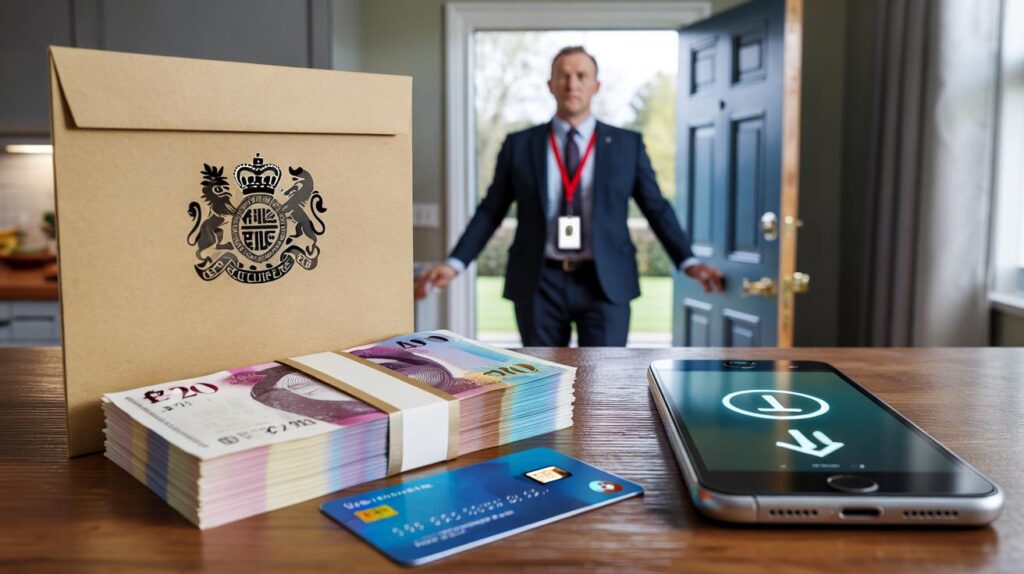
Letters land, calls go unanswered, and then the knock at the door. A quiet policy shift now carries big stakes.
HMRC is reviving powers that let it order banks, building societies and ISA providers to hand over money from accounts. Ministers want faster tax collection. Officials say only people who refuse to pay, yet can afford to, will feel the hit.
What the new powers mean for you
The tax authority will use Direct Recovery of Debts to collect unpaid tax straight from accounts. Staff will start with a test-and-learn rollout, then scale. The goal is to cut the tax gap, estimated at 5.3% or £46.8bn for 2023/24.
HMRC can compel banks, building societies and ISA providers to transfer funds to settle unpaid tax when set conditions apply.
The approach returned after a pandemic pause. HMRC first gained the powers in 2015, used them sparingly, then suspended direct recoveries during Covid. The early years brought only 19 recoveries totalling £361,678 up to 2018.
Who could be targeted
Officials point at a narrow group: people and businesses who have the means to pay but refuse. Cases will include sole traders, directors paid via dividends, and firms with arrears that persist despite contact from HMRC.
- Debt of at least £1,000 must be outstanding.
- The person or business must ignore repeated communications.
- HMRC must judge that the debtor can pay but chooses not to.
- After a recovery, at least £5,000 must remain in the account from which money is taken.
HMRC says it will not use direct recovery where the remaining balance would fall below £5,000 in the account.
What happens before money is taken
An HMRC officer will visit the person at home or at work. The officer will check that the debt is correct and discuss payment options. The officer will assess vulnerability and gather more detail about finances. The visit must happen before any transfer order issues.
If a person objects, they can complain within 30 days. HMRC says it will pause any transfer until it decides. Debtors can also appeal to a county court on specified grounds.
You get a 30‑day window to challenge. HMRC says it will not move the money until a decision is made.
The numbers behind the push
The government wants extra revenue through compliance rather than tax rises. This spring, ministers set a target to raise £7.5bn by tackling non‑payment and fraud, backed by more compliance staff and more prosecutions.
| Measure | Figure |
|---|---|
| Estimated tax gap 2023/24 | £46.8bn (5.3%) |
| Minimum debt for direct recovery | £1,000 |
| Protected balance after recovery | £5,000 left in the account |
| Appeal period | 30 days |
| Historic recoveries (2015–2018) | 19 cases, £361,678 recovered |
Safeguards and concerns
Officials promise stringent checks. They point to the visit requirement, the protected £5,000 balance and the appeal process. Support groups want clearer rules on vulnerability, including how HMRC defines it and what support follows.
The Low Incomes Tax Reform Group has asked for more clarity on how HMRC will identify people at risk. They have also asked how officers will assess hardship in complex cases, such as joint accounts or irregular self‑employed income.
Privacy questions and the next wave
Campaigners warn that account‑level recovery risks mission creep. The Public Authorities Bill would later give the Department for Work and Pensions authority to recover certain benefits‑related debts from accounts. Critics see a shift towards more data‑driven enforcement and broader access to financial information.
How a case might play out
Picture a contractor who owes £3,200 in self‑assessment tax. They miss the deadline, then bin the letters and dodge calls. An HMRC officer visits, confirms the debt and looks at income and bills. The officer offers an instalment plan. The debtor refuses. HMRC issues a recovery direction to the bank. The bank must transfer £3,200 if at least £5,000 will remain in that account afterwards. The debtor then files a complaint inside 30 days. The transfer waits for a decision.
Another example involves a small retailer with PAYE arrears. The owner has cash reserves across a current account and an ISA. HMRC looks at the current account first. The rules apply to ISA providers too. That raises attention for savers who rely on tax‑free pots for emergencies.
What you should do if HMRC contacts you
- Open the letter and check the reference number against past correspondence.
- Ask HMRC for a breakdown of the debt and the tax periods covered.
- Request a Time to Pay arrangement if cash flow is tight but income is stable.
- Provide evidence of hardship, such as rent, childcare, medical costs and energy bills.
- Keep notes of every call and the name of any officer who visits.
- Use the 30‑day window to object if the figures look wrong or the method feels disproportionate.
- Seek professional advice if you run a company or have complex income.
Key risks and practical tips
Joint accounts can bring surprises. One partner’s tax debt may lead to questions about shared funds. Keep clear records of who paid in what. Sole traders should separate business and personal money to make affordability assessments clearer. People with irregular income should prepare a cash‑flow summary to support a payment plan.
Savings behaviour may shift. ISA providers can receive a recovery order. That means emergency funds in an ISA do not sit beyond reach if conditions are met. A buffer in a current account may help if an urgent bill lands soon after a deduction, yet the £5,000 protection only applies as described by HMRC.
Why HMRC says this is different from a raid
Officials stress that a visit comes first, not a silent sweep. They claim a narrow focus on wilful non‑payers and a safety margin for living costs. They point to hardship guidance for people facing life events or business shocks.
HMRC says it takes a sympathetic approach where illness, bereavement or business trouble causes genuine difficulty.
What comes next
The test‑and‑learn rollout suggests small cohorts, close monitoring and published updates. Early cases will signal how banks respond, how appeals land, and how often officers judge someone vulnerable. Ministers will watch whether the policy brings measurable gains against the £46.8bn gap.
People who worry about mistakes should gather paperwork now. Bank statements, payslips, invoices and expense records help officers judge affordability and set instalments. A short, clear letter that proposes a payment plan can prevent escalation and keep control in your hands.



Can HMRC take from a joint account if only one person owes tax? The piece mentions checks on vulnerability, but what proof do they accept—bank statements, rent, childcare? And if we object within 30 days, does interest still acrue while they pause?