
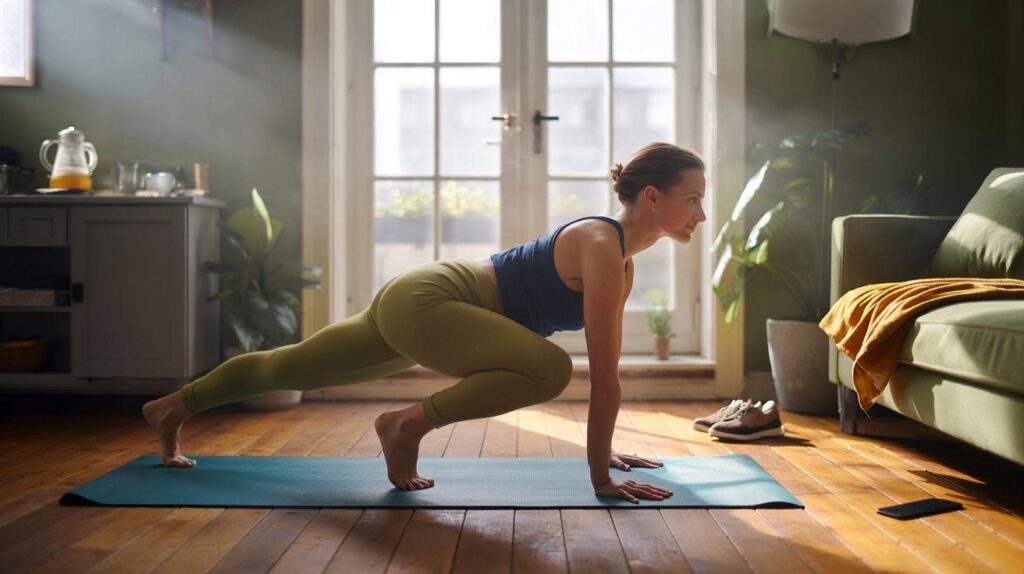
You don’t need a fancy gym when what you want is steadiness in your body and clarity in your head. You need room for a mat, five quiet minutes, and a reason to start that belongs to you. Core strength is not a six‑pack fantasy here; it’s the quiet confidence of standing tall when the day leans hard.
It was early, the kind of soft grey morning that London does better than anywhere. A kettle hissed, the floorboards were cool, and my shoulders felt like they’d been carrying yesterday’s emails all night. I scrolled past glossy fitness promises and froze on something small: a five‑move core routine, no kit, ten minutes. It sounded like nothing and everything at once. I lay on the rug, heard a bus exhale outside, and did the first slow dead bug, counting my breath under the noise of the city. The world didn’t change, but the ground under me felt less slippery. We’ve all had that moment when we want to feel stronger without starting a war with ourselves. The floor answered back.
Your core is more than your abs
Think of your core as the body’s anchor, not a body‑builder’s showpiece. It wraps around your middle like a corset you can’t see, linking your ribs to your hips, your spine to your breath, your steps to your gaze. When it does its job, everything else gets easier, from hauling shopping upstairs to sitting through a long meeting without fidgeting. When it’s sleepy, your back grumbles, your shoulders hitch, your hips do more than their fair share. **A responsive core is quiet power—felt in the way you move, not in how you pose.** It’s a friend you call at 7 a.m., reliable and unfussy, who helps you start before your brain finds excuses.
I met Marta on a video call last winter; she works in an NHS admin team and laughs easily, but she’d stopped going to her spin class after a rough spell. She started with three moves on her living‑room carpet: pelvic tilts, dead bugs, and a gentle side plank against the sofa. Two weeks in, she noticed her walk to the bus felt smoother. Four weeks, she was sleeping without that low back whisper. Eight weeks, she picked up a suitcase with one hand and didn’t wince. No medals, no selfies—just a small daily vote for herself. That small run of votes adds up. Behaviour beats bravado.
Why does the core change so much for so little? Because it sits at the centre of your movement map. Train it to brace and breathe, and your brain learns new routes for stability and ease. The deep muscles—transverse abdominis, diaphragm, pelvic floor, multifidus—work together like a quiet choir. When they time their notes, your limbs can play louder without going off key. This is resilience in a very practical sense: you stay steady under loads, recover faster from slips, and trust your body’s signals. Confidence arrives not as a roar but as a nod. Motivation follows stability more often than the other way round.
Start here: simple moves, good form, small wins
Begin with your breath. Lie on your back, knees bent, feet flat, one hand on your ribs and one on your lower belly. Inhale softly through your nose, let the ribs expand sideways, exhale like you’re fogging a window for six seconds, and feel your lower belly draw gently in. Now add pelvic tilts: exhale and curl your tailbone to flatten the lower back into the floor, inhale to tip it away. Three sets of eight slow reps. Then dead bugs: arms up, knees over hips; exhale as you lower opposite arm and leg, ribs heavy, back long; swap sides. Two sets of six per side. Finish with a 20‑second forearm plank and a 15‑second side plank each side, knees down if you like. That’s your entry ticket.
Common wobbles happen, and they’re part of the learning. People hold their breath because tension feels like effort, but your core loves oxygen and rhythm. Others arch the lower back in dead bugs, chasing range over control; keep the front ribs softly heavy and let the range be smaller this week. Rushing the plank is another classic—thirty heroic seconds with a sagging midline won’t serve you better than a crisp fifteen. Let’s be honest: nobody actually does that every day. Aim for three short sessions a week, like brushing your teeth rather than preparing for a marathon. You’re training attention as much as muscle.
Your body listens when you talk to it like a teammate, not a tyrant. Build a tiny ritual—playlist on, kettle on, mat down—and keep the moves in the same order for a fortnight so your brain can coast. I nearly closed the laptop and crawled back to bed. On those days, cut the plan in half and call it a win. **Consistency grows best in small, boring pots.**
“Stability first, strength second, speed third,” a physio once told me. “Think of it like building a house: lay the foundation, then the walls, then the windows.”
- Quick‑start circuit: 3 rounds — 6 dead bugs/side, 8 glute bridges, 15–20s plank, 15–20s side plank/side, 6 bird‑dogs/side.
- Rest 30–40 seconds between moves; breathe out on effort; smile if it feels daft.
- Progress next week: add 2 reps or 5 seconds per hold, not both.
- Comfort kit: towel under knees, timer on your phone, socks off for grip.
Make it stick in real life
Resilience comes alive in the gaps: the minute before a call, the moment after you hang up the washing, the quiet at night when the house finally sighs. Park a mat where you’ll trip over it and let that be your nudge, not a scold. Stack a core set onto an existing habit—after your morning coffee, right after brushing your teeth, the song you always skip to on your commute playlist. **Switch the goal from “get fit” to “feel stable today,” and watch the mood lift before the mirror does.** Share your wins with a friend, or write them on a sticky note: “Held side plank for 25s, didn’t quit.” That’s not vanity. That’s data you can feel.
| Point clé | Détail | Intérêt pour le lecteur |
|---|---|---|
| Start with breath and alignment | Ribcage expands sideways, slow exhale, pelvis neutral before each move | Better control, safer reps, faster progress without strain |
| Small, repeatable routines | 10–12 minutes, 3 times a week; same order for two weeks | Easier to stick to, visible improvement without overwhelm |
| Progress one variable | Add 2 reps or 5–10 seconds, or a slightly tougher variation | Steady gains, less risk of plateaus or flare‑ups |
FAQ :
- How long until I feel a difference?Many beginners notice steadier posture and less fidgeting in 2–3 weeks with three sessions a week. Strength and confidence often grow together after 4–6 weeks.
- What if planks hurt my lower back?Shorten the hold, drop knees, and think “long spine, ribs soft.” Build time gradually, and keep breathing out during the hardest second.
- Do I need equipment?No kit is fine. A mat or folded towel helps. Later, a light band or a small cushion can add challenge to dead bugs and bridges.
- Can I do this alongside running or cycling?Yes. Place core work on easy days or after shorter sessions. Focus on quality reps so your legs stay fresh for the miles.
- What’s a simple weekly plan?Mon: breath, pelvic tilts, dead bugs. Wed: glute bridges, plank, side plank. Fri: bird‑dogs, dead bugs, plank. Weekend walk optional and lovely.



Loved the “quiet power” framing—finally makes core work feel friendly. I tried the dead bugs and actually felt my ribs stay heavy; my back didn’t grumble for once. The “add 2 reps or 5 seconds” rule is gold. Saving this for the grey mornings 🙂 Thank you!