
Hours at a laptop leave hips welded, shoulders hunched and a mind buzzing like a neon light. Many women working from home feel it most when the day finally quiets, yet the stiffness still whispers. The wish is simple: move in a way that softens the edges without stealing half the evening.
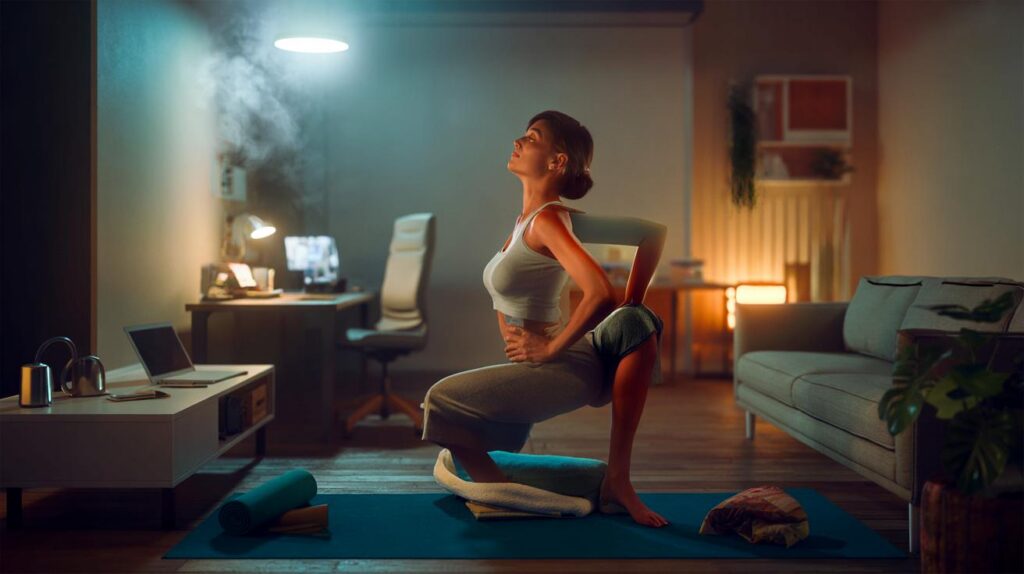
The kettle clicks off at 6:41 pm. Amy presses her thumb into the knot under her collarbone and winces, half-laughing at the absurdity of getting sore from emails. The mat slides out from under the sofa like a secret. The floor is cool, the room half-blue with dusk, and the first deep breath lands as if someone opened a window inside her ribs. For a moment, the day loosens its grip. We’ve all had that moment when your body asks for help in a voice you can’t ignore. She looks at the clock, nervous she’ll talk herself out of it. The answer is smaller than she expects.
Why sitting steals your stretch
A chair is a brilliant trap for your body’s elasticity. Hips fold and stay folded, chest maps itself forward, and the neck leans into tomorrow before today is done. Stretching after this kind of stillness feels like asking cold toffee to bend.
On a Teams call, Priya in Bristol joked she had “laptop shoulders” and then couldn’t lift a suitcase into the boot. She’d gone from spinning classes to twelve months of kitchen-table ergonomics, and her hips felt older than her passport. Surveys suggest many office workers sit seven to ten hours most days. That load shapes tissues more than any weekend warrior moment.
It isn’t only muscle length at play. Your nervous system guards you when it senses threat, and unfamiliar ranges feel risky. Gentle movement tells the system you’re safe, and breath lowers the background hum. Mobility opens when strength and breath meet range, not when force meets resistance. Think coaxing, not conquering.
An 8‑minute home flow that loosens laptop body
Start with 60 seconds of box breathing: inhale for four, pause for four, exhale for four, pause for four. Slide into “thread the needle” on all fours, one minute each side, letting the upper back rotate while the neck stays easy. Sit into a 90/90 hip shape and windshield-wiper the knees for two minutes, slow and smooth. Rise for a couch stretch using the sofa, one minute a side, front of hip long, ribs stacked over pelvis. Face a wall for calf stretch, heel down, 45 seconds per leg. Finish with gentle neck glides: chin tucks, then ear to shoulder, thirty seconds each direction.
Move with curiosity, not grit. If you tug at your hamstrings like a stubborn drawer, they tug back. Let the breath do some of the work, and keep your jaw soft. Soyons honnêtes: personne ne fait vraiment ça tous les jours. That’s fine. Two or three short resets across a week beat one heroic hour you dread.
Start where the body says “yes” and build from there. Invite range, then add a light squeeze to keep it. That is how flexibility sticks.
“When women stop chasing ‘deeper’ and start chasing ‘easier’, tension drops fast,” says London physio Jenna Hale. “Your body trusts you again, and that’s when range shows up.”
- Pair a stretch with a daily cue: kettle boils, do calf stretch.
- Keep a strap or scarf by the sofa for hip openers.
- Set a 90‑minute phone reminder: three slow breaths, neck glide, stand up.
- Stop at mild intensity. You should feel space, not strain.
Keep it flexible, keep it kind
Flexibility is less about touching your toes than touching base with your tissues. When you move a little and often, your body remembers the edges of its map and redraws them with less static. Some days it’s a full eight minutes. Other days it’s two poses while the pasta water rolls. Routine is not a test of virtue; it’s a quiet agreement with a future you.
| Point clé | Détail | Intérêt pour le lecteur |
|---|---|---|
| Short, repeatable flow | 8‑minute sequence pairing breath, hips, thoracic spine, calves and neck | Fits between emails and school runs without guilt |
| Ease over force | Breath-led, pain-free ranges with light activation | Improves mobility while lowering tension and risk of flare-ups |
| Micro-habits at home | Link stretches to daily cues like the kettle or calls | Makes consistency feel almost automatic |
FAQ :
- How many days a week do I need to do this to feel a difference?Two to four short sessions usually shift the needle. You might notice easier shoulders after the first go, and steadier gains over two weeks.
- Will stretching alone fix my desk pain?Stretching helps, and strength seals the deal. Add simple pulls, rows and glute work on alternate days to support new range.
- I’m very stiff—should I push harder to “catch up”?No need. Aim for mild intensity and smooth breath. Big leaps come from consistency, not force.
- Can I do the flow during work in normal clothes?Yes. Most moves are sofa or floor friendly. Swap the couch stretch for a standing quad stretch if you’re in jeans.
- What if my wrists or knees complain on the floor?Cushion with a folded towel, elevate hands on books, or do thread‑the‑needle standing against a wall. Comfort keeps you coming back.



Tried the 8‑minute flow after the kettle clicked and wow, my chest felt “unhunched” for once 🙂 Box breathing + 90/90 was a keeper. The couch stretch was spicy but doable, even in jeans. Defintely adding this as my post-email reset.