
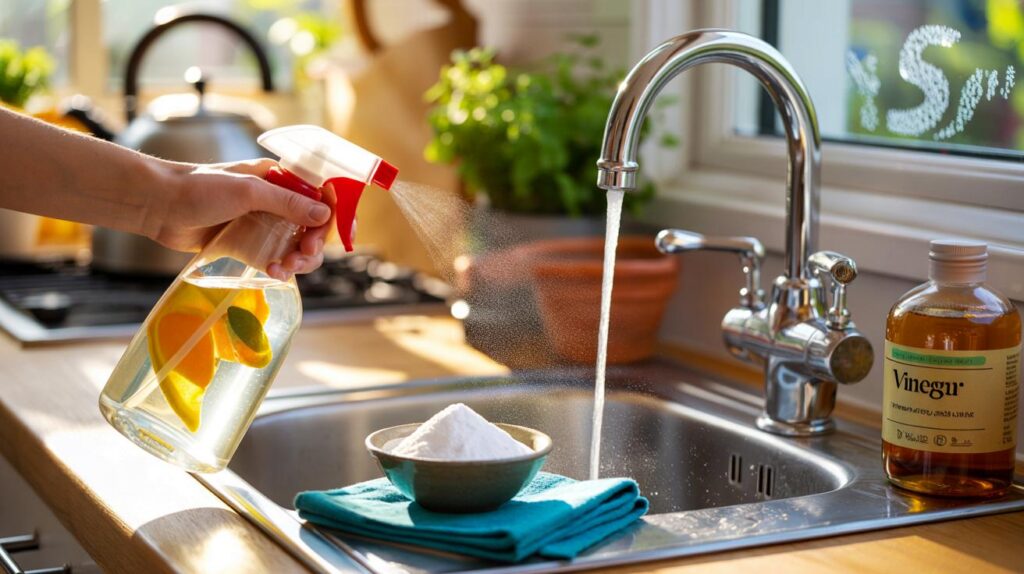
The bottle sat by the sink with no label, just a scribble in marker: “vinegar”. The kitchen smelled faintly tangy, like a chip shop after closing. Sunlight hit the taps and they flashed back, clean in a way store-bought sprays rarely manage. I watched a friend wipe the hob with easy, practiced strokes, not fussing, not fretting, the cloth moving like she had other things to do. She did. The kettle boiled. A child yelled about socks. The dog sneezed. The house was alive and slightly messy, yet surfaces gleamed without that clingy perfume fog. We’ve all had that moment when mess meets momentum and you need something simple that just works. The vinegar bottle felt like a small act of rebellion. And a quiet kind of relief. Then she did one last swipe and said, “Try the windows.” A dare hung in the air.
Why vinegar belongs in the cleaning cupboard
Walk into any supermarket and you’ll see the rainbow aisle: floral sprays for every room, every surface, every “issue”. The promise is speed and a smell that says “hotel lobby”. Yet the cupboard ends up crowded, heavy on plastic, and expensive over a year. Homemade vinegar cleaner cuts across all that. It’s one bottle, two ingredients, and a handful of jobs ticked off without drama. The charm is in the everyday-ness. No rituals. No boutique labels. Just a simple acid doing honest work.
Here’s a number that’s easy to picture rather than prove: a 5‑litre bottle of distilled white vinegar costs roughly the same as one branded multi-surface spray. That 5‑litre bottle makes around ten standard 500 ml spritzers at a 1:1 mix with water. Ten. You’ll refill less often, bin fewer bottles, and not panic when the last squirt splutters out mid-clean. Let’s be honest: nobody really does that every day. But when you do, it’s ready.
The science is plain English. Vinegar is acetic acid, usually around 5%. That acidity dissolves mineral deposits like limescale, cuts through film on glass, and lifts light grease when partnered with a tiny dash of washing-up liquid. It won’t do everything. Vinegar isn’t a miracle nor a hospital-grade disinfectant. Think of it as a reliable, low-drama cleaner for routine grime, especially in kitchens and bathrooms where water leaves its mark. It’s the everyday broom, not the specialist tool.
How to make a homemade vinegar cleaner that actually works
Start with a clean spray bottle. Mix 1 part distilled white vinegar with 1 part water for glass, taps, and stainless steel. For tougher limescale, go stronger: 2 parts vinegar to 1 part water. Add 2–3 drops of washing-up liquid if you’re tackling greasy splatters on the hob. For scent, drop in a few citrus peels and let the bottle sit a week, then strain. You’ll get a softer, sunlit note without synthetic perfume.
Use light, overlapping sprays. On glass and mirrors, spritz, then wipe in a quick “S” pattern with a microfibre cloth. On taps or shower screens, spray, wait two minutes, then buff. For a kettle spout or aerator, soak a kitchen towel in vinegar and wrap it on like a tiny scarf for ten minutes. Your windows will tell you the truth. If they dry streaky, you used too much product or a tired cloth—go lighter next time.
Here’s what people trip over, and it’s easy to fix. Don’t use vinegar on marble, granite, limestone, travertine, or other natural stone—it can etch the surface. Skip it on waxed wood, cast iron, and some aluminium. Don’t soak rubber seals for long periods. And don’t rely on vinegar for raw-meat chopping boards or high-risk mess. Vinegar cleans; it doesn’t sanitise like a registered disinfectant. **Vinegar is not a hospital-grade disinfectant.**
“My gran always said, ‘Keep it simple, love. A clean house should smell like nothing at all.’”
- Basic recipe: 1:1 vinegar and water in a spray.
- Boosters: a pinch of bicarbonate of soda for sinks, a drop of washing-up liquid for grease.
- Skip list: natural stone, waxed wood, cast iron, and long soaks on rubber.
- Safety: never mix with bleach or hydrogen peroxide; store away from kids and pets.
What this simple habit changes at home
You notice silence. No aerosol hiss, no fake orchard hanging in the air. The kitchen smells clean because it is, not because it’s perfumed. You use fewer bottles, make fewer runs to the shop, and spend less on things that vanish with a squeak of a trigger. It feels humble, almost old-fashioned, and oddly modern at the same time. It’s routine pared back to the bone.
There’s a small choreography to it that makes life smoother. Keep one spray in the bathroom, another in the kitchen. After a shower, a quick mist on the screen prevents limescale from staking its claim. On the hob, a swirl over the splashback stops cooked-on dots from turning into a weekend project. *Some days, the smell of vinegar feels like a reset.*
Stay with the practicalities. Don’t use vinegar on a hot surface—let pans cool. For the showerhead, unscrew it and soak in warm vinegar for an hour, then rinse. For laundry, a small cup in the rinse can soften towels; check your machine manual first, as rubber parts vary by model. **Never mix vinegar with bleach or hydrogen peroxide.** That pairing makes nasty chemistry you don’t want near your lungs. Keep the bottle labelled. Keep it simple. Keep it kind to your home.
There’s another layer people don’t always talk about. When you make your own cleaner, you quietly opt out of the marketing carousel. You become the person who knows how to sort a streaky window with three cheap things and some patience. You share the bottle with a neighbour when they run out, and it becomes a small act of community. The planet angle isn’t a halo, just a nudge—less plastic, fewer harsh fragrances down the drain, more control in your hands. It’s oddly empowering. It’s also just easy.
Is it perfect? No. Vinegar won’t whiten grout that’s seen grief or erase burnt caramel from a pan by magic. That’s fine. Use the right tool when you need it. For the rest—the daily film on the bathroom mirror, the rings on the tap, the whisper of grease behind the kettle—this is your pocket knife. It lives where you live, in reach, not precious. Try it for a week. Notice how the house feels when the clean doesn’t smell like anything at all.
| Key points | Details | Interest for reader |
|---|---|---|
| Simple recipe | 1:1 vinegar and water, with optional citrus peels and a drop of washing-up liquid | Easy to mix, no special kit, quick wins |
| Where it shines | Glass, mirrors, taps, shower screens, light grease, limescale film | Immediate, visible results on everyday mess |
| Where to avoid | Natural stone, waxed wood, cast iron, long soaks on rubber; not a disinfectant | Prevents damage and false expectations |
FAQ :
- Can vinegar replace all my cleaners?Not quite. It handles everyday film, light grease, and limescale spots. Use a proper disinfectant for high‑risk mess and specialist products for ovens, stone, or heavy grime.
- What kind of vinegar should I buy?Choose distilled white vinegar, around 5% acidity. It’s clear, cheap, and leaves no colour on fabrics or grout. Save malt or apple cider vinegar for cooking.
- Will my home smell like a chip shop?The scent fades as it dries. Infuse your vinegar with citrus peels for a gentler note, or open a window for a minute. The clean finish doesn’t linger as a smell.
- Is it safe for pets and kids?As a cleaner, yes when used correctly, though it’s still an acid. Store bottles out of reach, label them, and rinse surfaces that tiny hands or paws lick. Avoid mixing with any other chemicals.
- Can I use it in the washing machine?A small cup in the rinse can soften towels and help with odours. Check your machine’s manual, as frequent acid use may not suit all rubber seals. Spot-test and go lightly.



Thanks—this is exactly the low‑drama routine my cluttered cupboard needed. The 1:1 mix and citrus peel trick are simple enough I’ll actually do them. Fewer bottles, less fake perfume, more clean that smells like nothing. My budget (and nose) will thank me, definately 🙂
Question: is 5% vinegar safe on anodized aluminum taps, or will it pit over time? Also, how long is “too long” for rubber seals—minutes, hours? My washer door gasket went weird and sticky last year after vinegar soaks… might be coincedence, but I’m nervous.