
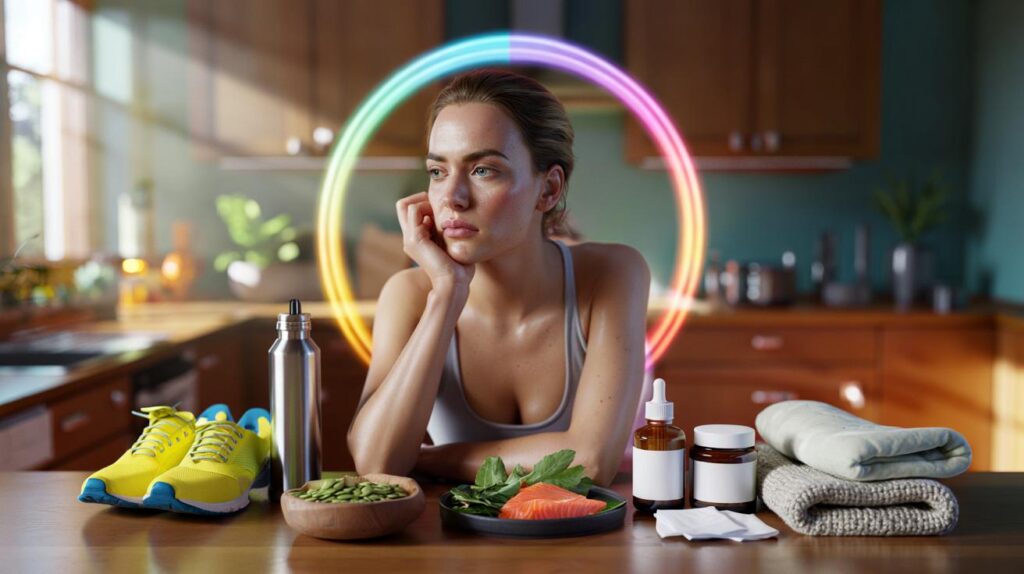
Your cycle is not just a date on an app. It’s a moving backdrop that quietly shifts how you think, feel, and show up — from the glow on your skin to the snap in your step to the day everything feels a bit too loud. The trick isn’t to “fix” it. It’s to read it.
I’m on a bus to work, fogged window, coffee cooling. Two seats ahead, a woman swipes through her calendar with that familiar mix of dread and relief: a red dot on Friday. Across the aisle, a runner in neon socks fidgets, rolling out her calves with a water bottle, cheeks bright, eyes sharp. Different mornings, same city, entirely different bodies.
Last month, I noticed the quiet pattern in my own week: three brilliant days where words fell into place and my skin looked like it had slept for nine hours; then five slower, snappier ones when I wanted carbs and silence. Nothing dramatic. Just a tide pulling in and out. The pattern hides in plain sight.
What if timing is the missing lever?
Phase by Phase: What Your Hormones Are Really Doing
The week after your period often lands like a reset. Oestrogen rises, and your brain feels brighter, that switch flicked from “maybe” to “yes”. You might say yes to a late night, a heavy lift, a new haircut. Then ovulation arrives and the world looks crisp, colours dialled up, social energy humming.
After that high, the luteal phase creeps in. Progesterone builds, nudging you towards steadier tasks and calmer evenings, yet irritability can flicker if sleep slips or blood sugar dips. Skin may feel oilier or bumpier. Then bleeding begins, and energy may drop a notch while cramps, bloating, or aches stake their claim.
**Your cycle is a rhythm, not a report card.** Across these phases, the levers shift behind the scenes. Oestrogen boosts serotonin and dopamine; many people feel clearer, sharper, more outward. Mid-cycle, a small bump in testosterone can lift drive. Late luteal, progesterone’s metabolite interacts with GABA receptors, offering calm in some and jitter in others. These aren’t “moods out of nowhere”. They’re the chemistry of being cyclical.
Habits That Sync With Your Cycle (Without Becoming a Full-Time Project)
Try a simple four-week loop: during the follicular phase, schedule heavier lifts or faster runs, plus brainstorming or social pitches. In the ovulatory window, lean into collaboration and camera-facing tasks. As luteal arrives, switch to strength maintenance, gentle conditioning, batch admin, and wrap up loose ends. On period days, go by symptoms: walk, stretch, or rest if cramps knock.
Food-wise, anchor protein at each meal and add complex carbs in the late luteal to steady energy. Magnesium-rich foods (pumpkin seeds, dark leafy greens) and oily fish can help. For skin, use salicylic acid or a gentle BHA a few nights in the week before bleeding, then dial up moisture during your period. Sunlight before screens, especially in the luteal phase, steadies sleep. Let’s be honest: nobody really does that every day.
Big swings don’t stick. Tiny switches do. **Small, repeatable tweaks beat heroic overhauls.** If you track anything, keep it simple: energy (high/medium/low), mood (steady/irritable/flat), skin (clear/congested/dry), and sleep quality. Patterns pop in three cycles.
“I tell patients to build a ‘good enough’ routine and let hormones nudge the dial, not set the rules,” says a London GP who specialises in women’s health. “Consistency beats intensity.”
- Cycle map: mark bleed start, ovulation signs, and 2–3 symptoms only.
- Snack buffer: protein + fibre in late luteal to blunt the 4pm crash.
- Skincare swap: pre-period BHA; period week equals barrier repair.
- Bedtime boundary: same lights-out for five nights, not forever.
- Movement menu: three options per phase so choice beats guilt.
The Bigger Picture: Mood, Skin, Energy—And What You Can Control
We’ve all had that moment where a tiny snag feels nuclear and, a week later, it barely registers. If you know where you are in the cycle, you can zoom out. Maybe it’s not the job, the partner, the mirror. Maybe it’s day 25. *Data doesn’t fix everything, but it softens the edges.*
This isn’t an excuse for nasty behaviour or a pass on care. It’s a lens. Severe or spiralling symptoms deserve attention: think PMDD-level mood drops, cycles shorter than 21 days or longer than 35, new pain that stops your day, heavy bleeding that soaks through hourly, or fatigue that floors you. That’s GP territory. **You are not moody; you are cyclical.**
What changes is the story you tell yourself. You move from “Why can’t I handle this?” to “Today asks for a slower gear.” You stop punishing the body that’s trying to help you pace. When the chemistry shifts, you shift with it. That’s agency, not surrender.
| Point clé | Détail | Intérêt pour le lecteur |
|---|---|---|
| Phase-by-phase rhythm | Oestrogen lifts focus early; progesterone steers towards steadier tasks later | Pick the right task for the right week, feel less friction |
| Timed skincare | BHA pre-period, barrier repair during bleeding, vitamin C mid-cycle | Fewer breakouts, calmer skin without a 10-step routine |
| Food and training sync | Protein and carbs late luteal; heavier lifts mid-cycle; deload when cramps bite | More energy, better recovery, less guilt |
FAQ :
- How long is each phase, roughly?Many people see 3–7 days of bleeding, 7–10 days of follicular build, a short ovulatory window, then 10–14 days luteal. Your own pattern may sit outside those ranges and still be normal.
- Why do I break out right before my period?Late luteal shifts can raise oil production and inflammation while skin barrier resilience dips. Pores clog more easily. A gentle BHA and non-pore-clogging moisturiser help more than harsh scrubs.
- Is “cycle syncing” real science or a trend?The exact playbook is still evolving, but the principles are grounded: hormones influence brain chemistry, skin, and metabolism. Aligning effort to symptoms is common sense dressed as a fad.
- Can I exercise on my period?Yes, if you feel up to it. Many feel better with walking, mobility, or lighter strength. If cramps or dizziness flare, rest is training, too.
- What if mood swings feel extreme or new?Track for two cycles and speak to your GP, especially if work or relationships are impacted. PMDD, thyroid issues, anaemia, or low iron stores can mimic or magnify cycle symptoms.



Love how you frame it as a rhythm, not a report card. The movement menu per phase is so doable, and the ‘sunlight before screens’ reminder is gold. Thanks for making this feel practical, not preachy 🙂