
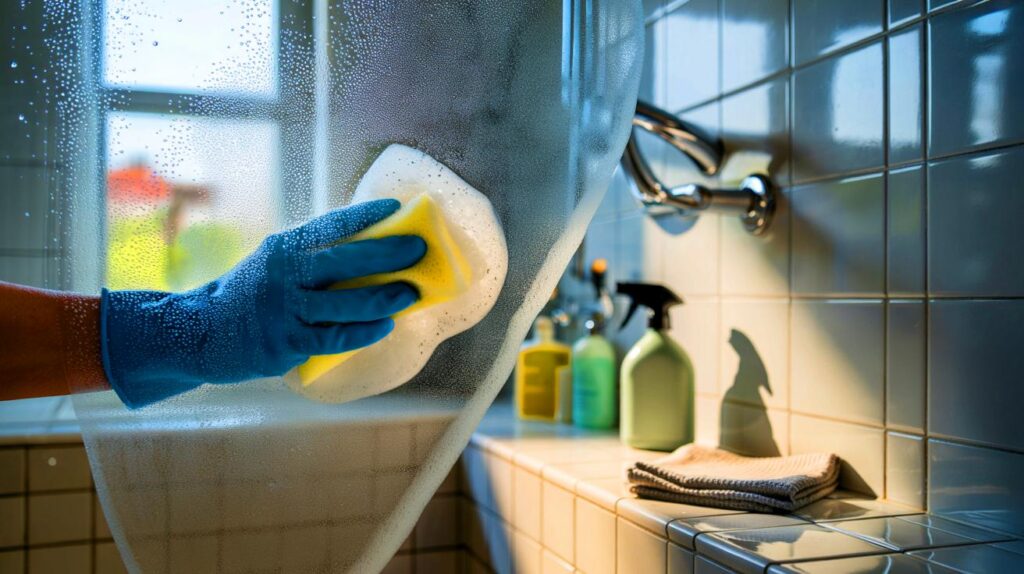
Bathrooms eat time and money every week, yet a low-cost backstage routine is quietly reshaping how busy households cut grime and streaks.
The method, common in hotel housekeeping, trades pricey sprays for a simple foam block and warm water. It targets stubborn limescale and soap scum on glass, acrylic and tiles in minutes, leaving clear panels with less elbow grease and less residue.
Why hotels reach for melamine foam
Across high-occupancy properties, speed and consistency matter. Housekeepers need a technique that works fast on hard water marks, doesn’t fog up glass, and avoids chemical odour build-up in enclosed bathrooms. That is where melamine foam—sold as so‑called “magic sponges”—slides in. The open-cell structure behaves like ultra‑fine micro‑abrasive mesh, shaving off mineral and soap deposits while sparing most hard surfaces.
The 79p melamine sponge, used damp, lifts limescale and soap scum in under five minutes, no extra sprays required.
Because it uses only water, staff don’t juggle multiple bottles or risk streaks from surfactants. For guests, the result is visibly clearer glass and a neutral smell. For hotels, it trims minutes per room and reduces chemical procurement.
How the foam works on glass and tiles
Material science made simple
Melamine resin, cured into a rigid foam, forms countless microscopic, hard-edged cells. Think of it as a very fine, springy sandpaper. When damp, those cells glide over glass and ceramic, dislodging scale crystals and soap film. The foam crumbles slowly as it polishes, exposing fresh edges until it eventually wears down.
On tough deposits, the foam’s micro-structure provides mechanical action where standard cloths smear. On clear screens, it reduces haze because there is no detergent film left behind.
The five-minute hotel routine at home
- Run warm water over the sponge and squeeze until just damp (not dripping).
- Work in small squares, using light pressure and short, overlapping strokes.
- Focus on edges, hinges and tap surrounds where mineral build-up hides.
- Rinse the panel with a quick shower spray; squeegee from top to bottom.
- Buff metal fittings with a dry microfibre cloth; leave the door ajar to ventilate.
Use water only. Squeeze, don’t twist. Replace the sponge when it thins or crumbles; cutting it into thirds extends its life.
Where it shines, where to pause
Best matches
Glass shower screens, ceramic tiles, glazed porcelain, untextured acrylic trays, chrome taps, and grout lines respond well. Hard water streaks and dried-on soap respond fastest because the foam cuts through film without leaving surfactant veils.
Use care or avoid
Test first on an inconspicuous spot. The micro‑abrasive action can dull high‑gloss acrylic, polished marble, lacquer, certain anti‑fingerprint coatings and some painted or tinted surfaces. On stainless steel, stick to brushed finishes and light pressure.
Test a hidden corner. Avoid polished stone, high‑gloss acrylic, non‑stick coatings and fresh paint or varnish.
Could it really save you money and time?
Households often clean showers two to three times a week. If the foam trims seven minutes per session—by skipping separate degreaser, limescale remover and glass spray—you reclaim about 21 minutes weekly. Over a year, that’s roughly 18 hours. Valued at £10 per hour, your time saving alone equals around £180.
| Method | Upfront cost | Average use per month | Estimated annual spend | Typical time per clean |
|---|---|---|---|---|
| Melamine sponge (79p each) | £0.79 per sponge | 2 sponges | £18.96 | 5–7 minutes |
| Proprietary limescale spray | ~£3.50 per bottle | 1.5 bottles | ~£63.00 | 12–15 minutes |
| White vinegar spray (DIY) | ~£0.50 per 500 ml | 1 bottle | ~£6.00 | 8–10 minutes |
The foam beats most branded sprays on time and rivals DIY vinegar on cost while leaving notably fewer streaks on glass.
Tips from hotel housekeeping leads
- Pre‑rinse hot glass quickly to soften residue; let steam work for 30 seconds before wiping.
- Use vertical passes on flat glass, circular motions on textured tiles and corners.
- Swap to a fresh edge of foam the moment drag increases; dull foam wastes time.
- Finish with a squeegee every shower to slow limescale, then deep clean weekly.
- Store sponges dry; a simple hole punched in the wrapper lets them breathe between uses.
Health, safety and environmental notes
Melamine foam is non‑toxic in normal use and doesn’t need chemical boosters for most bathroom grime. Keep it away from children and pets, as the crumbly pieces create a choking hazard. Avoid using it on skin.
Compared with bottled cleaners, you’ll reduce plastic packaging and fragrance build‑up indoors. The foam itself isn’t recyclable; cut pieces to size to minimise waste and use until they shrink. Choose warm rather than hot water to reduce energy use.
Hard water realities and how to stay on top
Hard water deposits form when dissolved calcium and magnesium exceed roughly 200 mg/L as CaCO3, common across the South East and East of England. Those salts bond with soap to create a dull film that traps grime. Mechanical removal works reliably because it lifts the deposit rather than trying to dissolve it chemically on the glass.
Build a routine: a 30‑second squeegee after each shower, plus a five‑minute foam clean once a week. Skip perfumed multi‑step products unless you face etched glass or coloured mould, where a targeted mould remover may be necessary.
When the foam needs a helper
For extreme limescale—etched, not just deposited—no sponge will restore the surface fully. Consider a specialist glass polish and reseal the screen with a water‑repellent coating. For heavy grout staining, pair the foam with a bicarbonate paste and a stiff brush, then rinse thoroughly.
What to do next if you want hotel‑style results
Buy a multi‑pack of melamine sponges (unit prices often start at 79p), a basic squeegee and a single good microfibre cloth. Label one sponge “glass only” to prevent cross‑scratching. Time a session once; most people report five to seven minutes for a standard enclosure. Track your results for two weeks and tweak pressure and stroke pattern for your screen type.
For families, set a rota: the last person to shower each evening does the 30‑second squeegee pass. That habit alone can halve deep‑clean frequency and keep the five‑minute foam blitz effective for months.



Tried a melamine sponge last week and it definitley beat my spray+wipe routine—less haze on the shower glass and faster on the tap edges. If it really saves ~18 hours a year, I’m sold. Thanks for the step-by-step, esp. the “squeeze, don’t twist” bit; I always ruined them by wringing.
Isn’t melamine foam basically micro‑abrasive? How safe is it on acryllic tubs or anti‑fingerprint coatings—will it dull them over time? Curious but a bit wary.