
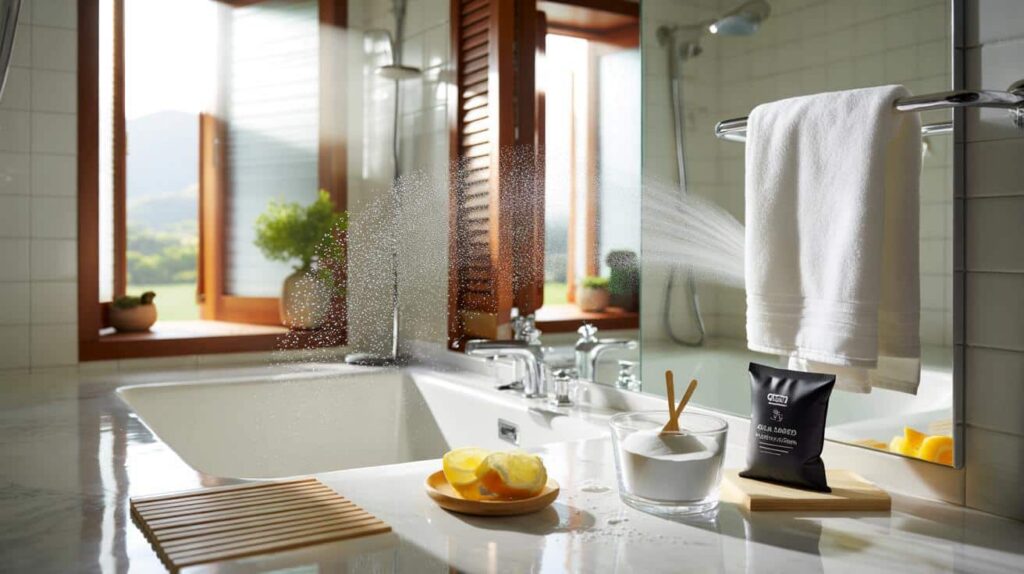
Anyone who has stayed in a good hotel knows the feeling: the bathroom smells neutral or subtly fresh, never like perfume. There’s no secret lab behind it – just consistent routines and a few simple tricks that eliminate moisture, biofilm, and the sources of bad odour.
The hotel trick that works instantly
The biggest odour culprit in bathrooms is damp textiles. Towels, bath mats and washcloths hold moisture. Bacteria quickly grow in the fibres and cause that musty smell. Hotels prevent this with strict routines.
Never dry towels in a humid bathroom. Take them out of the room immediately after use – that’s the fastest way to keep the air fresh.
How to apply it at home:
-
Hang towels outside the bathroom to air-dry after showering.
-
Use an electric towel warmer to keep fabrics dry and cosy.
-
Change towels at least once a week, more often if used daily.
-
Wash or replace bath mats regularly with fast-drying versions.
Your washing machine helps too: washing towels at 60°C with detergent removes odour-causing germs. Between washes, a quick airing on the balcony does wonders.
Natural odour remedies
You rarely need chemicals to fight bad smells. Hotels and cleaning experts often rely on simple, natural materials that neutralize instead of masking.
Using baking soda in drains
Baking soda binds acids and neutralizes odours. Combined with hot water, it helps clear deposits from drains.
-
Pour half a cup of baking soda into the drain, flush with hot (not boiling) water.
-
If the smell persists, fill the siphon with warm water first – without a water seal, sewer gases can rise.
-
For drains that are rarely used, pour a small amount of cooking oil on top of the water to slow evaporation.
Baking soda also works in small bathroom bins: sprinkle a teaspoon at the bottom and replace regularly.
Lemon for a fresh scent
Lemon has a double effect: it smells bright and helps remove limescale.
-
Place a few lemon slices in a small bowl – they’ll release a gentle scent for hours.
-
Make a natural spray: 200 ml of water + 1 tablespoon of lemon juice or 4–6 drops of lemon essential oil. Spray lightly on surfaces after cleaning and wipe.
Natural scent boosters should only be used after tackling the source of the smell. Remove the cause first – then add a touch of freshness.
Ventilation – the right way
Odour is often linked to humidity. Warm shower air quickly saturates the room. Without ventilation, condensation builds up and feeds mould spores.
-
With a window: Open right after showering for 5–10 minutes. Keep the door open and create a cross-draft.
-
Without a window: Run the exhaust fan for 15–20 minutes afterward. Leave doors to adjacent rooms open.
-
Keep humidity between 40–60%.
After showering, use a squeegee on mirrors and tiles – it halves the room’s moisture in seconds.
Homemade scent sources
Artificial sprays often just mask odours. Better are simple, decorative scent sources that work subtly.
-
Place a bar of perfumed soap openly by the sink – each use refreshes the fragrance.
-
Light a small scented candle briefly (never leave unattended).
-
Make your own soap: melt 100 g of glycerine soap, mix in 8–12 drops of essential oil (lavender, citrus, eucalyptus), pour into moulds and let harden.
Be cautious with essential oils – some can irritate pets or sensitive individuals. Less is more, especially in small rooms.
Clean tiles and grout with vinegar water
Vinegar slows mould growth and removes soap residue. Mix equal parts of water and household vinegar in a spray bottle.
-
After showering, spray tiles and grout, leave for 2 minutes, then wipe dry.
-
Don’t use on natural stone (marble, slate). For these, use pH-neutral cleaners.
-
Never mix vinegar with chlorine cleaners.
Less wall moisture means less microbial buildup – and fewer smells.
Quick checklist for odour sources
-
Drains: Does water still sit in the trap? Clean hair filters.
-
Toilet base: Check for loose seals or small leaks.
-
Bin: Close bags tightly, wash the bin, clean the lid underside.
-
Shower curtain: Wash regularly to prevent film smell.
-
Washing machine in the bathroom: Clean lint filter and door seal; run a 60–90°C cycle monthly.
-
Air circulation: Keep corners clear and furniture away from outside walls.
Which remedies work best for what?
| Product | Purpose | Note |
|---|---|---|
| Baking soda | Neutralizes odours, keeps drains clean | Activate with hot water |
| Lemon | Fresh scent, light descaling | Store away from light, use sparingly |
| Vinegar water 1:1 | Reduces moisture, breaks biofilm | Don’t use on natural stone, never mix with bleach |
| Activated charcoal | Neutralizes odours in small spaces | Replace every 6–8 weeks |
Why focusing on towels makes such a difference
Textiles act as diffusers. A damp terry towel has a large surface area, evaporating moisture and creating a microclimate where bacteria thrive. Drying or removing towels quickly stops the source. Hotels target this point precisely – achieving noticeably fresher air with minimal effort.
Two more practical tips
-
Guest bathrooms often smell “musty” because the water trap dries out. Run water briefly every other day. Add a teaspoon of cooking oil to the siphon to slow evaporation.
-
Keep humidity under control: A small hygrometer costs little and tells you instantly when to ventilate. If there’s no window, use a timer for your extractor fan – let it run 10–15 minutes after showers. For tricky bathrooms, especially in older homes, quiet mini-dehumidifiers work wonders.
For those who want to go a step further
Activated charcoal bags in cupboards absorb leftover perfume or lotion scents that linger in the air. A washable polyester shower curtain dries faster than heavy vinyl ones. If you’re sensitive to scents, switch from essential oils to hydrosols. Finally, a simple 15-minute weekly routine – squeegee, bin clean, drain check, towel change – brings your bathroom impressively close to hotel freshness.


