
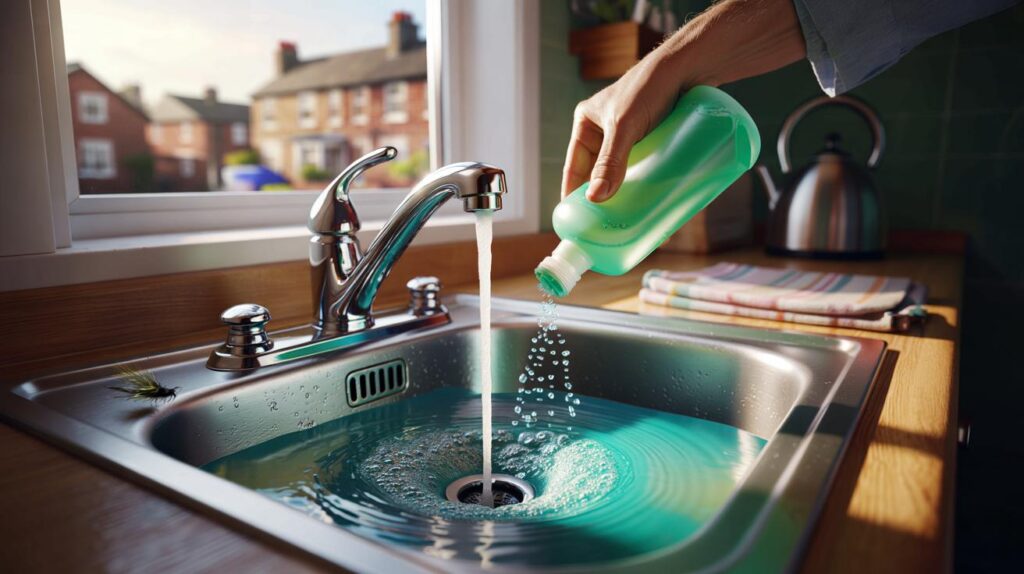
Across the UK, families are being told to do something that sounds wrong at first blush: pour washing‑up liquid down their drains. Not buckets. Not daily. A small squeeze. It’s not a cleaning hack for shiny sinks. It’s about what happens out of sight, in the pipes and sewers that knit our streets together. The surprising twist? That humble soap squirt helps stop smells, flies, and even those grisly “fatbergs” that make headlines and cost a fortune to clear. It’s a tiny habit with an outsized payoff.
I saw it on a warm Tuesday evening, the kind that turns a kitchen into a slow cooker. The sink had started to hum with that sour drain note, and my neighbour — sleeves rolled, tea towel on shoulder — reached for the washing‑up liquid. Two brisk squeezes, a glide of hot water, and the odour vanished as quickly as it had arrived. No drama. No tools. Just a simple, familiar bottle used in an unfamiliar way.
He wasn’t “cleaning” the sink. He was helping the street. The reason isn’t what you think.
The little squirt with the big job
Here’s the gist. A small dose of washing‑up liquid breaks the surface tension inside drains and lifts the greasy film that clings to pipes. That slick, invisible layer is where smells brew and where fat starts to harden. One short flush of warm water after a soap squirt sends those loosened bits on their way, before they clump together deeper down. **It’s a nudge for your home — and your neighbourhood — to keep things flowing.** Everyday habit, street‑level impact.
We’ve all had that moment when a warm spell turns a faint whiff into something you can’t ignore. In one terraced block in Leeds, residents started a weekly “soap and warm water” ritual after a drain fly bloom drove them mad at night. A plumber who works that patch told me the call‑outs fell away within a fortnight. No miracles, just fewer sticky pipes and fewer breeding pockets for flies to settle. Brisk, boring, effective.
Here’s why it works. Surfactants — the stuff that makes washing‑up liquid so good at dishes — cut through grease and stop oils clinging to pipe walls. They also collapse the water’s surface film where drain fly larvae feed and breathe, which means fewer flies making it to adulthood. In hotter months, when fats soften and odours intensify, that quick soap flush keeps biofilm from getting the upper hand. **Think of it as housekeeping for the hidden plumbing we all share.** Small action, calmer pipes.
Do it right, do it safe
Go for small and gentle. Run the hot tap for 30–40 seconds so the pipe warms. Add a teaspoon or two of washing‑up liquid to the plughole. Wait ten seconds, then run warm water for another minute to carry it through the trap and first lengths of pipe. For an outside kitchen gully that feeds the foul sewer, repeat with a kettle of hot (not boiling) water and a light squeeze of soap. Never do this in kerbside storm drains that lead straight to rivers.
The sweet spot is little and often, not a soap tsunami. Avoid pouring litres of product, and skip harsh cocktails. Don’t mix with bleach or acid drain cleaners — there’s no upside, only fumes and risk. If you’ve got a septic tank, choose a septic‑safe, eco‑labelled liquid and keep doses tiny. And if water is backing up, stop. That’s a blockage for a plumber, not a sink‑side ritual. Let’s be honest: nobody actually does that every day. Weekly during warm spells is realistic.
People ask what the “best” brand is. Honestly, the method matters more than the label. *Pick a biodegradable, dye‑light liquid and keep it modest.* A drain engineer in Manchester told me the goal isn’t to scrub your pipes spotless, it’s to stop grease from laying down in the first place.
“Think of a teaspoon of soap like a seatbelt for your pipes,” he said. “You hardly notice it — until you really would have.”
- Use warm, not boiling, water on PVC pipes.
- Stick to indoor sinks or foul‑sewer gullies, not street grates.
- Tiny dose, short flush, repeat weekly in summer.
- Call a pro if water is slow or backing up.
- Choose eco‑labelled, septic‑safe liquids where relevant.
The bigger picture we don’t see
What looks like a quirky tip is really a mindset shift. Our homes connect into a living system that reacts to heat, habits and what we put down the plughole. When a few houses in a row switch to small, regular soap‑and‑warm‑water flushes, drains smell less, flies have fewer places to breed, and fats are carried further before they can harden into trouble. It’s community‑level hygiene with zero WhatsApp group and no fuss.
There’s a line here, and it matters. This isn’t a licence to send oils and food down sinks, or to tip detergent into street drains that run to rivers. It’s a nudge to keep legitimate wastewater pipes slick enough that they don’t grab every scrap of fat that passes. **The soap isn’t solving everything. It’s stopping a few problems from starting.** If that sounds small, so does flicking a light switch — until the street stays bright.
In the months ahead, more councils and water companies are likely to push simple, low‑waste habits that reduce call‑outs and emissions from emergency clearances. Kitchens will carry on being messy, and life won’t pause for perfect routines. But these easy micro‑rituals tend to stick because they’re doable. They fit in your real Tuesday night, between the kettle and the kids’ bedtime. And they leave your home, and the street beneath it, just a bit easier to live with.
| Key points | Details | Interest for reader |
|---|---|---|
| Small soap doses help | Surfactants lift grease, break surface film, and reduce odours and flies | Fewer smells and pests with almost no effort |
| Method matters | Warm water, a teaspoon of washing‑up liquid, short flush, weekly in warm spells | Clear, safe routine you can actually keep |
| Safety and limits | No storm drains, no chemical cocktails, eco‑label where possible, call a pro for blockages | Protects rivers, pipes and your wallet |
FAQ :
- Does this replace proper drain cleaning?Not at all. It’s a light preventative for odour, flies and early grease — not a fix for real blockages.
- Can I do it daily?You could, but weekly is enough for most homes, especially in warmer weather. Save product and water.
- Is any washing‑up liquid okay?Choose a biodegradable formula, and septic‑safe if you have a tank. The dose matters more than the brand.
- What about toilets?A small squeeze can help lubricate a minor toilet clog before plunging, but persistent issues need a plumber.
- Is it safe for the environment?Used sparingly in foul sewers, it’s comparable to normal dishwashing. Never pour into street grates that drain to rivers.



Is this really safe for the enviroment? Pouring detergent down drains sounds counterintuitive. I get the surfactant logic and the “tiny dose” bit, but even biodegradable liquids can impact waterways if overused. For homes with septic tanks, how tiny is tiny—like half a teaspoon? Would monthly be enough vs weekly during warm spells? Just trying to balance helpful micro‑habits with not adding more chems than needed.