
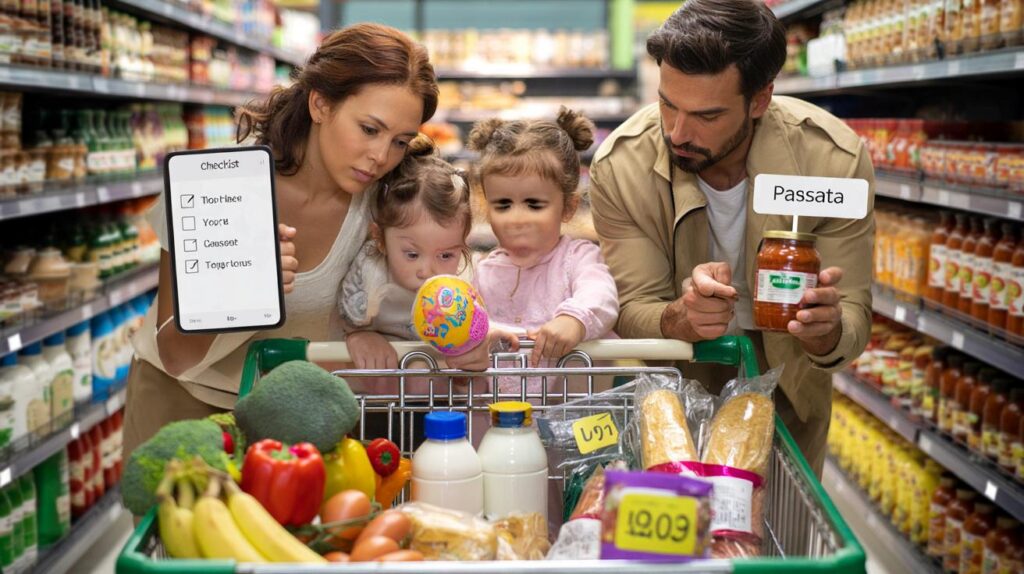
Prices climb quietly, then all at once. One week your usual trolley feels normal, the next it bites. A family in Leeds hit that wall, like so many, and found a way through. Not with hacks, apps or extreme couponing. With one simple shopping rule.
The Sunday shop used to start with good intentions and end with shrugged shoulders. The Hendersons would push a wobbly trolley past the bakery fan, two kids angling for iced buns, Dad mentally running through dinner, Mum checking a half-charged phone. Shelves full, minds foggy. A familiar dance of “might as well” and “just in case.” The till always told the truth.
On a grey January afternoon, they tried something different. No manifesto, no spreadsheet. Just a line that wasn’t crossed, like tape on a football pitch. Everyone could explain it. Everyone could follow it.
Just one rule.
The one-rule shop
Here it is: If it’s not on the list, it doesn’t go in the trolley. No debate in aisle six. No “we’ll use it at some point.” The list is the map, and the map wins. Two adults, two kids, one shared note on their phones. The list is built at home, not on the shop floor. It sounds almost too simple, which is why it works.
We’ve all had that moment when a bogof on crisps seems like a bargain and a treat and an act of self-care. The Hendersons pressed pause. They added “crisps” to next week’s list instead of grabbing a jumbo pack. In eight weeks, their average shop fell from £118 to £62. According to the ONS, food inflation hit a 45‑year high last year, and yet they paid less by buying less. They didn’t switch to rice and regret. They just stopped freelancing the shop.
Why does that one boundary cut so deep? Impulse is expensive. Every “maybe” and “why not” adds five quid here, three quid there, until a small mountain appears at the till. The list rule removes hundreds of micro-decisions. It downgrades the supermarket’s power to persuade. When choice shrinks to “is it on the list,” the brain rests and the bill falls. Decision fatigue is a spendy habit.
How to make it work when real life is messy
Start the list at the sink, not the store. The Hendersons keep a sticky note by the kettle and a shared note on their phones. When the ketchup wheezes, it goes on the list. They rough out seven dinners first, then breakfasts, then lunchbox fillers. The last line? “One fun thing.” That simple promise makes it human, not harsh. **That one friendly allowance stops the dam from bursting later.**
Let’s be honest: nobody really does that every day. There will be Tuesday nights, tantrums, and a last-minute school bake sale. The Hendersons built an “escape hatch”: three flex items live at the bottom of the list—eggs, frozen veg, tortillas. If something blindsides them, those staples cover a fast meal. The trick isn’t perfection. It’s fewer points of failure than last week.
This is where many people stumble. They write a list that’s too clever, then ditch it at the first smell of warm bread. The antidote is simple and kind.
“We argue less now,” said Laura, the mum. “The rule makes the shop boring in a good way. We talk about the weekend, not whether we ‘deserve’ brioche.”
- Build the list when you’re fed. Hungry lists underestimate reality.
- Group by aisle: fruit/veg, dairy, protein, dry, frozen. Fewer detours, fewer temptations.
- Add brand notes: “own-brand unless rejected,” “kids’ yoghurt: £0.20 per pot cap.”
- Agree one swap token per person. One. That’s your wiggle room.
What this changes beyond the till
The biggest shift is quiet. Dinners become predictable in the best sense. The Hendersons rotate four “house meals” each fortnight—tray-bake chicken, veggie chilli, pasta with hidden veg, jacket potatoes with toppings. That rhythm still leaves space for discovery when peaches appear or a fishmonger’s deal pops up. **Small boundaries beat big budgets.** Friends laugh until they see the receipts, then they start texting pictures of their own lists.
On the first week, the Hendersons treated the list like a law. By week four, it felt like language. The kids know “one fun thing” means choosing, not pleading. The aisle of bright boxes lost its spell. They still have ice cream. They still buy decent coffee. They just buy it when it’s printed. There’s a sense of calm money can’t fake.
Halving a grocery bill isn’t about suffering. It’s about removing noise. If the rule sounds stern, it’s actually a relief. The supermarket stops being a quiz and becomes a walk. That’s what sticks.
Not all lists are equal. The Hendersons use three quick checks at home: what’s already there, what’s about to die, what’s coming up this week. A five-minute fridge audit saved them from buying a third jar of pesto. A scan of the calendar stopped a roast on the night of swimming lessons. Those minutes at the kitchen table made the shop feel shorter and cheaper. The rule starts before aisle one.
Their one list rule has a twin: unit price curiosity. They don’t chase every deal; they read the small shelf label. If the own-brand passata is 65p per 500g and the “premium” jar is £1.30 for 350g, the decision writes itself. They learned to love yellow stickers when the yellow sticker matches the list. No list, no sticker. That keeps the freezer from becoming a cold museum of bargains they never fancied.
There are pitfalls worth naming. Newcomers often forget snacks, then “break the rule” mid-shop in panic. So the Hendersons pre-load a snack lane on the list: fruit, nuts, two pick-and-mix treats. Others try to rewrite the list in the aisle, which defeats the point. Write it at home. Shop it at speed. **The supermarket is set up to win; your list is how you play your own game.**
One simple line changed a family’s weekly mood and their monthly bank balance. You can feel the ripple: fewer arguments, less waste, more routine. It’s not glamorous. It’s not viral. It’s a boundary that keeps your future self from paying for your distracted one. The next time you reach for a “why not,” picture it on the list next week. Picture a calmer till. Picture the receipt folding smaller in your pocket. Price fights happen in your notes app long before you meet the bread aisle. Try it for two weeks, then tell someone what happened. Stories like this travel further than coupons.
| Key points | Details | Interest for reader |
|---|---|---|
| The one-rule shop | Buy only what’s on a pre-written list; one fun allowance | Immediate, repeatable way to cut impulse spend |
| Make it practical | Build list at home, group by aisle, unit-price checks | Reduces time, stress and sneaky price traps |
| Design for real life | Flex staples, swap token, snack lane on the list | Stops “rule breaks” when plans change or kids revolt |
FAQ :
- What exactly was the Hendersons’ weekly saving?They dropped from roughly £118 to about £62 per week over eight weeks.
- Did they change supermarkets?Mostly Aldi and a local greengrocer, with the same rule. The saving came from the boundary, not the badge on the door.
- How do you handle offers and yellow stickers?If it’s on the list, grab it. If it isn’t, it waits until next week. The freezer stays useful, not cluttered.
- What about treats for kids?“One fun thing” lives on the list every week. Choice beats pleading, and the budget survives.
- Can this work if you hate meal planning?Keep it light: pick four “house meals” and fill gaps with simple staples. The rule does the heavy lifting.



I was sceptical, but the “list or no trolley” rule is kind of genius. Built ours at home, grouped by aisle, and we actually stuck to it. Our total dropped from £97 to £73—definately doing this again next week.
Isn’t this just willpower with branding? What about yellow-sticker meat or seasonal fruit that isn’t on the list—do you skip genuine value because of a line in the sand?