
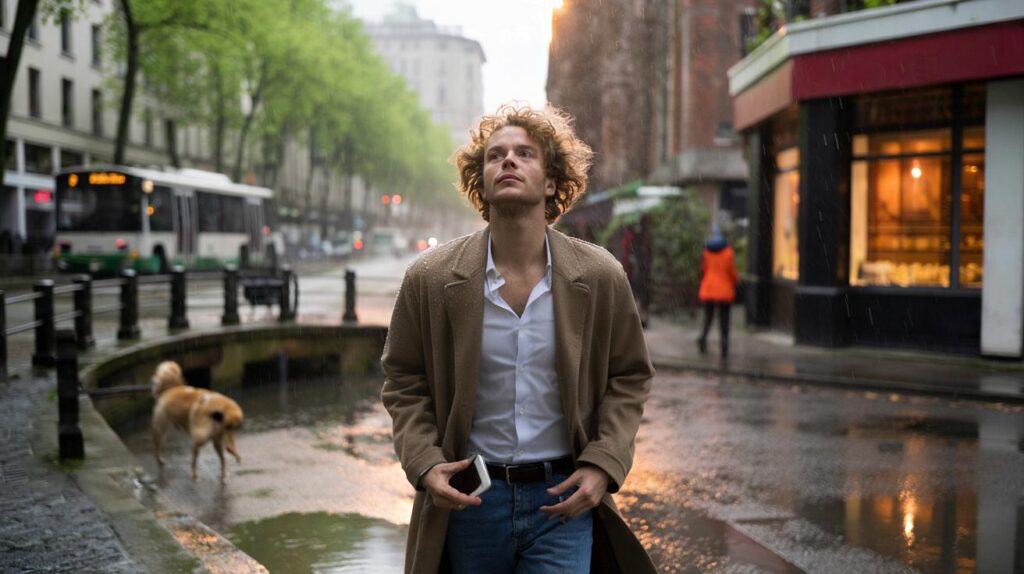
The idea arrives in the least glamorous moment: you’re staring at a blinking cursor, emails multiply like rabbits, and the coffee has stopped doing anything useful. You step outside just to breathe, coat half-zipped, phone in your pocket, and the city does its small theatre — a bus exhales, a dog shakes off rain, a shop shutter rattles. We’ve all had that moment when the world feels both messy and oddly generous. You walk, almost by accident, feeling pavement underfoot while your thoughts unstick themselves with each step. Ten minutes later, the knot in your head loosens. A sentence surfaces. A colour, a line, a headline. And there it is, the thing you were straining for at your desk suddenly appearing like it was waiting round the corner. A small mystery lives in that loop.
Why walking wakes up your creative brain
You’re built to move, and movement changes what your attention can notice. Sit still and you narrow, like a camera on zoom; stand up and stroll and your focus grows wider, softer, more porous. Movement changes the texture of attention. Peripheral vision picks up shapes and rhythms, and your mind finds space between thoughts. It’s not cardio, it’s choreography for ideas. Walking gives you a narrative pace — beginning at your door, a middle where something happens, and a return that feels like a gentle drumroll. The brain loves a rhythm; your feet supply one very nicely.
A copywriter in Manchester told me she cracked a headline she’d battled for a week on a 20-minute loop around Ancoats, rain in her fringe, no playlist, just traffic and puddles doing their work. Research backs the hunch: in one oft-cited Stanford set-up, people came up with far more novel uses for everyday objects while walking compared with sitting. This is where your mind stretches without trying. The novelty doesn’t have to be grand — a new street, a different sky, the smell of dough from a bakery — small shifts flick on cognitive lights you didn’t know were there.
There’s a backstage network in your brain that hums when you’re not forcing it — the default mode. When you walk mindfully, attention gently toggles between the world and your inner notes, and that’s where odd, useful connections tend to spark. Your breathing steadies, which tames the noise of stress, and when stress softens, ideas stop hiding. A comfortable pace — the kind where you could talk but don’t have to — is the sweet spot. Think of it as setting a metronome for curiosity, not a race for steps.
How to take a mindful walk that actually sparks ideas
Pick a simple loop you can do in 12–20 minutes, ideally with one small texture change — a park path, a canal bridge, a row of lime trees. Leave your phone in a pocket and set it to Do Not Disturb; pocket is key, it changes the relationship. Begin with three low, slow breaths, then give your senses a tiny job: name five colours you see, four sounds, three physical sensations. Start shorter than you think. End the loop with a tiny “capture”: a three-word note or a voice whisper. That’s it — no marathon, no rules chasing rules.
Common detours? Turning the walk into a productivity Olympics, stuffing earbuds in, blasting a podcast, and coming home full of facts but empty of your own ideas. Or marching like it’s a punishment, eyes down, mind on emails you can’t answer yet. Be gentle with the drift. Some days, the only win is leaving the chair. Let’s be honest: nobody actually does this every day. Life gets loud, weather gets weird, moods swing. Keep the bar low enough to step over it, and the practice becomes a quiet promise you can keep.
Ideas are shy in captivity, bold in the open. Don’t yank on them. Walk with a loose grip and a clear pocket for when they pop up. Speak a phrase softly into a note, or write a scrappy line on a receipt; raw is fine, you can edit later at the desk. That tiny capture is the bridge between spark and something you can use.
“When my feet move, my brain loosens its grip. I stop trying to be clever and start noticing things. That’s when the idea strolls up like it belongs to me.” — Rosa, product designer
- Route recipe: one familiar street + one slight detour + one green touchpoint.
- Sensory scan: 5 colours, 4 sounds, 3 textures — done in under a minute.
- Idea capture: a three-word note, voice memo under 15 seconds, or a sketchy shape.
- Timing: late morning or just after lunch often beats dawn for creative drift.
- Weather hack: light rain is gold; carry a cap and call it atmosphere, not obstacle.
Make it a daily habit without killing the magic
Habits work when they piggyback on something you already do. Tie your walk to a trigger — send the last email of the hour, close the laptop, stand, shoes on, out. Keep the route flexible so it never feels like detention; have two or three loops in your pocket, like playlists for your feet. Creativity is rarely loud; it whispers when your feet find rhythm. If you’re in a small flat or the weather turns savage, do a corridor loop with the window open and a cup of tea waiting at the end — it still shifts your state. The real trick is to treat the walk like a friend you meet often, not a boss you report to. Your ideas get the message: this is safe ground for them to show up.
| Key points | Details | Interest for reader |
|---|---|---|
| Walking widens attention | Movement softens focus and boosts novelty, which helps fresh connections form | Immediate, practical way to unstick thinking without special gear |
| Short, mindful loops beat epic treks | 12–20 minutes with a sensory anchor and a tiny idea capture at the end | Easy to fit into a busy day; results without big time cost |
| Make it a ritual, not a chore | Attach to a daily trigger, keep routes flexible, welcome small weather and mood shifts | Habit that lasts and keeps the creative spark alive |
FAQ :
- How long should a mindful walk be to boost creativity?Start with 12–20 minutes. That’s enough to change state without turning it into a project. If you’re on a roll, go again later.
- Do I need to leave my phone at home?No, but tuck it away and silence it. A pocketed phone preserves attention; in-hand scrolling siphons it off.
- What should I focus on while walking?Pick a light anchor: colours, sounds, textures. Let attention drift between senses and stray thoughts. The ideas live in that gentle back-and-forth.
- Is it better to walk in nature?Green helps, but it’s not a deal-breaker. City walks work too — look for micro-nature: a tree, a canal, a patch of sky. Variety beats perfection.
- How do I capture ideas without breaking the flow?Use a three-word rule or a 10–15 second voice note. Park detail for later; preserve the spark in a tiny container and keep moving.



Loved the line ‘movement changes the texture of attention.’ Tried the 5-4-3 sensory scan on a lunch loop and snagged a headline I’d been stuck on all morning. Definitley keeping a three‑word capture note from now on—simple but sticky.