
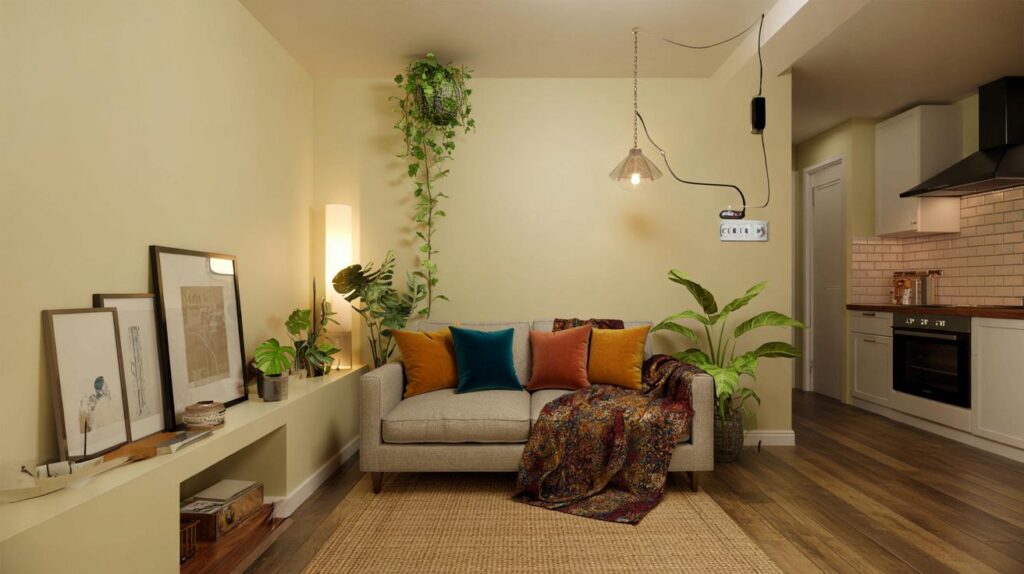
The flat came with magnolia walls, a rattly extractor, and a smell of someone else’s laundry. You turn the key, step into a blank, echoing box, and wonder how to make it yours without pushing your deposit off a cliff. The agent’s smile fades, the inventory photos loom, and your thumb hovers over a pot of paint like it’s a detonator. We’ve all had that moment when a rented room feels like it belongs to the person who left yesterday, not the one who just arrived. You drop your bags, switch on the overhead glare, and every scuff looks like it’s already charging you interest. Then you clock a soft throw over a chair in a café, a lamp with a warm pool of light, a plant that hides a plug socket, and think: maybe style can be borrowed, not bolted. One small move at a time. Quiet changes, loud impact. A trick hiding in plain sight.
Start with things that leave quietly
Begin with layers you can fold into a suitcase: textiles, portable lights, artwork that leans rather than hangs. Colour can live in a rug, not a roller. A shade can soften the same bulb you already own. Plants add height, hide sins, and don’t trigger clauses. Think of the room as a stage and add props, not carpentry. You’re building mood with fabric, glow and shape.
In Walthamstow, Maya turned a grey rental bright over a single weekend. She rolled out a jute rug to kill the echo, clipped a pleated shade onto a bare bulb, and draped a patterned throw over a battered sofa. Two framed prints leaned on the mantel—no nails, no drama. By Monday, the place felt lived-in, not borrowed. Data from the Tenancy Deposit Scheme shows cleaning and redecoration are among the most common deduction flashpoints, which is a polite way of saying paint is politics. Textiles are diplomacy.
Layers work because they change how a room sounds and how your eye travels. A rug softens footsteps and pulls furniture into a conversation. A floor lamp with a warm LED draws attention away from hard corners. Leaned art creates a focal point without leaving a trace. You’re editing sightlines and acoustics, not just colour. The landlord sees the same walls at checkout; you experience a different home every day.
Stick-on, switchable, and landlord‑friendly moves
Use reversible hardware like adhesive hooks, picture hanging strips, and removable wallpaper panels. They’re strong enough for frames and mirrors, then peel off when it’s time to go. Try a tension rod for curtains inside a recess, or a slim café curtain under a worktop to hide recycling. Peel-and-stick splashback tiles lift a kitchen, and window film adds privacy without frosting your deposit. Small tools, big change.
Common pitfalls? Overloading strips, skipping the wipe-down, and hanging art on fresh paint before it’s cured. Blue tack that seemed harmless can leave oily ghosts. Keep every original screw, shade and knob in a labelled zip bag and box. Photograph how things looked on day one so you can reverse the moves on day last. Let’s be honest: no one really does that every day. Do it once at the start and future-you will send a thank-you card.
When you push beyond cushions, think in reversible systems: a plug-in pendant swagged on a ceiling hook, a freestanding bookcase that doubles as a room divider, a stick-on dimmer for lamps. Keep the landlord looped in via email if you want to swap a loo seat or shower head, and offer to reinstall theirs before checkout. One quick “Yes, go ahead, as long as it’s back to how it was” can save a headache later.
“Tenants who tell us what they plan to change get fewer end-of-tenancy disputes,” a north London property manager told me. “If we know it’s temporary and trace-free, we can say yes—and we usually do.”
- Photograph everything on move-in day and after each mini-upgrade.
- Keep every screw, knob, and light shade together with a note of where it came from.
- Patch-test adhesives on a hidden spot and stick to the listed weight limits.
- Swap bulbs for warm LEDs and store the originals in a labelled box.
- Leave zero residue: citrus goo-remover and a plastic scraper are your deposit’s best mates.
Make it yours now, and invisible later
The best renter changes are a magic trick: bold while you’re in, gone when you leave. Build a headboard from a room-width fabric panel hung on a tension rod and roll it up on move-out day. Rest a narrow shelf on rubber feet behind the sofa to host lamps and books without drilling the wall. Add a runner in the hallway to muffle sound and welcome you home. *Small changes stack up faster than you think.* When it’s time, the space returns to factory settings, and the only trace left is your photos—and your deposit intact.
| Point clé | Détail | Intérêt pour le lecteur |
|---|---|---|
| Layer with textiles | Rugs, throws, cushion covers in a tight colour story | Instant warmth and colour, zero damage risk |
| Go reversible | Adhesive hooks, removable wallpaper, tension rods | Custom look that peels off before checkout |
| Swap, don’t screw | Clip-on shades, plug-in lamps, freestanding shelves | Better light and storage without drilling |
FAQ :
- Can I paint a rented flat?Ask in writing and include the exact shade and a promise to return to the original. Many landlords say yes to one accent wall or a light neutral. Keep the paint code and a spare pot for touch-ups.
- How do I hang art without drilling?Use picture hanging strips, lean frames on mantels or shelves, or fit a tension rail inside an alcove. Check weight limits and clean the wall first for a solid bond.
- Are peel-and-stick tiles safe for kitchens and baths?Quality vinyl or composite tiles rated for splash zones work well. Test one tile, use a degreased surface, and warm with a hairdryer to remove cleanly when you move out.
- What counts as fair wear and tear?Faded paint, light scuffs, and worn carpets from normal use aren’t chargeable. Extra cleaning, stains, or holes can trigger deductions. The deposit schemes publish guidance your landlord should follow.
- How do I deal with a carpet I hate?Layer a large rug with a good underlay, add runners in traffic zones, and use carpet tiles under the bed to mask the worst patches. Neutrals calm patterns; pattern hides stains.



“Textiles are diplomacy” is spot on. I turned my echoey box into a home with a jute rug + clip‑on shade in a weekend; the difference in sound and mood was wild. Definately stealing this mantra.
Do adhesive hooks/picture strips truly come off clean? I’ve had oily ghost marks before and a tiny peel of paint—ugh. Any specific brands you’d recomend, or prep steps beyond a quick wipe?