
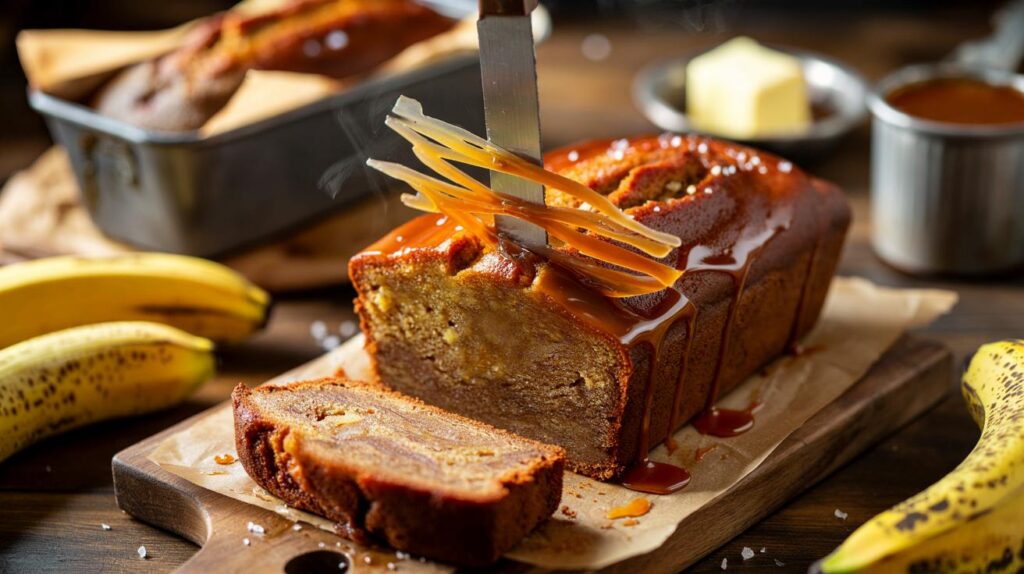
Some banana breads are just soft and sweet. The one people whisper about has a crackly, glassy caramel lid that shatters at the first slice. That’s the loaf you bring once and get texts about for months.
The bananas on my counter had drifted past freckled into slumped and fragrant, the kind of ripeness that makes a room smell like warm toffee. It was a rainy Sunday, kettle hissing, and I mashed them with a fork while the radio hummed. The batter came together in a bowl that had seen better days; butter melted, brown sugar, a bit of yogurt, the usual suspects.
What happened next wasn’t usual at all. A sandy blanket of demerara went on top, then a ribbon of quick caramel, and the loaf rose like a promise. When it cooled, the top clicked under the knife, shards chiming against the board. Neighbours stopped on the landing and asked what that smell was.
The secret sits on top.
Why the crunch changes everything
Texture is the hook your memory hangs on. Banana bread is soft by nature, a tender crumb that leans into comfort, but pair it with a caramelised crust and you get contrast that wakes the palate. The sweetness sharpens, the banana tastes more banana, and the salt sneaks in at the end.
We’ve all had that moment where a bake sale table blurs into one beige parade. Last spring, I took a loaf with a caramel lid to a community fundraiser. Eighteen slices went in nine minutes, not because it looked flashy, but because the top audibly cracked when I cut it. People hovered, took a bite, then turned to ask for the recipe with that slightly stunned look.
There’s logic behind the magic. Banana keeps a loaf moist thanks to sugars and pectin, which is exactly why many tops slump or go sticky by the next morning. Caramel, properly cooked and set, creates a barrier that resists that creeping humidity. Demerara crystals are large and slow to dissolve, so they survive the bake and merge with melted butter into a thin, brittle sheet. A pinch of salt snaps the sweetness into focus.
The method: a moist loaf with a shattering caramel top
Start with the loaf. Mash 3 large very ripe bananas (about 350 g peeled) until almost smooth. Whisk in 120 g melted butter, 120 g soft light brown sugar, 2 large eggs, 80 g thick yogurt, and 1 tsp vanilla. In a separate bowl, combine 220 g plain flour, 1 tsp bicarbonate of soda, 1 tsp baking powder, and ½ tsp fine salt. Fold dry into wet with a spatula just until the flour disappears. Pour into a lined 900 g loaf tin. Oven at 170°C (fan 160°C) or Gas 3½. That’s your base.
Now the crunch. Mix 60 g demerara sugar with a tiny pinch of flaky salt. Sprinkle it evenly over the batter. Dot 20 g of cold butter in pea-sized bits across the surface so the sugar melts into a caramel sheet as it bakes. Slide the tin onto the middle shelf and bake for 50–60 minutes, until a skewer comes out with moist crumbs. For the extra glassy finish, warm 50 g caster sugar in a small dry pan until amber, then spoon a thin ribbon over the baked loaf while it’s still hot.
Little habits make or break it. Use bananas that are heavily speckled and soft, not blackened to the point of fermenting. Stir only until just mixed, and leave the loaf in the tin for 10 minutes before lifting it out to a rack so the caramel sets cleanly. Let’s be honest: nobody bakes banana bread every day, so when you do, make it count.
“A crunchy top is a kindness to your crumb,” says a pastry chef friend. “It locks in the steam and adds theatre. People eat with their ears before they taste.”
- Ingredients at a glance: 350 g ripe banana, 120 g butter, 120 g brown sugar, 2 eggs, 80 g yogurt, 220 g flour, leaveners, salt, 60 g demerara, 20 g butter, 50 g caster sugar.
- Key steps: Mix wet, fold dry, top with demerara and butter, bake at 170°C, optional quick caramel drizzle, cool to set.
- Pro tip: Line tin with a parchment sling so the caramel doesn’t glue the loaf to the edges.
Fixes, flops, and clever tweaks that change your loaf
Caramel can intimidate, yet the tiniest tweak improves your odds. If you’re nervous about a pan caramel, swap the drizzle for 1 tbsp golden syrup warmed with a knob of butter; brush it over the hot demerara crust and it will set with a delicate crack. Want nutty? Scatter 40 g chopped pecans over the sugar before baking for a praline edge. One sly upgrade is browning the butter for the batter until it smells like toasted hazelnut.
Common wobbles are real and normal. Sugar that crystallises usually means you stirred a pan caramel once it started boiling, or added something cold too fast. A soggy top often comes from underbaking or covering the tin, trapping steam. If your loaf domes then sinks, the batter sat too long or the oven ran hot then dipped. You’re fine. Bake five minutes longer, tent with foil if getting too dark, and keep going until that skewer shows moist crumbs, not wet batter.
Think about tomorrow as much as today. That crunchy top needs the right storage to stay snappy. Once fully cool, wrap the sides and base in parchment, then slide the loaf into a paper bag or a loose lidded tin to let the top breathe. *Plastic traps moisture and steals your crunch by morning.* If you’re gifting, tuck in a note: “Slice with a sharp serrated knife.” **Use really ripe bananas.** **Don’t overmix the batter.** **Demerara equals crunch.**
Make it yours and keep the magic
I love how a simple loaf can carry a memory. Swap 30 g of flour for cocoa and add a caramel-salt crust for a chocolate ripple moment. Brush the hot top with a teaspoon of rum or espresso before the caramel drizzle for a grown-up edge. Vegan? Melt 120 g plant butter, use 2 tbsp aquafaba per egg, and 100 g plant yogurt; the caramel topping still behaves. If the house is cold, warm the tin for a minute in the oven before pouring your drizzle so it sets in a glossy, even sheet instead of shock-freezing in lumps.
There’s a small ceremony to that first slice. The click of the crust. The aroma that wafts up, banana and burnt sugar and Sunday. Share the loaf warm if you can, and watch the room soften. Someone will ask what you did differently, because they can taste it yet can’t quite name it. Say it with a shrug if you like. The secret’s not hidden. It’s right on top, sparkling in the light.
| Point clé | Détail | Intérêt pour le lecteur |
|---|---|---|
| Texture contrast | Soft crumb meets brittle caramel lid | Elevates flavour and memorability |
| Sugar choice | Demerara sprinkles plus a light caramel drizzle | Reliable crunch without specialist kit |
| Moisture management | Proper bake time and breathable storage | Keeps the crust crackly until the next day |
FAQ :
- Which bananas are best?Spotty and very ripe, soft to the touch, with a deep banana scent. If they’re leaking or smell boozy, they’ve gone too far.
- Can I make the topping without cooking caramel?Yes. The demerara-and-butter topping alone bakes into a crackly lid. For extra shine, brush 1 tbsp warm golden syrup over the hot crust.
- How do I stop the caramel from sticking to the tin?Line the tin with a parchment sling that overhangs the long sides. Lift the loaf out after 10 minutes, when the caramel has begun to firm.
- Will the crust stay crunchy overnight?If you let it cool fully and store it so the top can breathe, the crunch holds well for 24–36 hours. Avoid plastic wrap on the top.
- Any simple flavours to add?Stir in 1 tsp cinnamon, a pinch of cardamom, or 60 g chopped dark chocolate. A little flaky salt on the caramel makes the sweetness sing.



Made this today and the top actually clicked under the knife—wild. The demerara + butter trick is absolutly genius, and your “no plastic” storage note kept the crunch till day two. 10/10 would bake again.
Quick Q: if I skip the caramel drizzle and only use the demerara, do I need to extend bake time, or will it still set into that britle lid?