
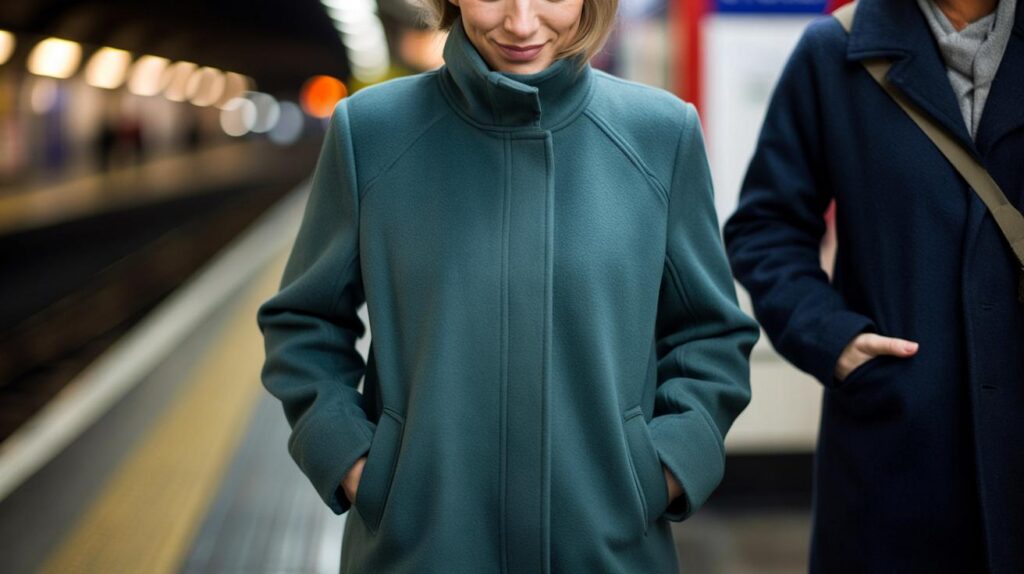
You scroll past coats that look perfect on paper: warm, waterproof, on sale. Then the parcel arrives, you slip it on, and… nothing. The mirror says yes; your body says maybe. A hug isn’t a spec sheet. It’s the quiet mix of fit, fabric, weight and details that calm your shoulders and soften your breath on a cold platform. This is the coat we hunt for every winter — not the loudest trend, but the one you miss when you forget it at home.
It’s a Thursday on the Northern line and the carriage is steaming with damp scarves. A woman across from me tucks her chin into a high collar, tugging it a tiny inch higher, and her whole posture settles. Two stops later, a man in a long navy wool coat folds his hands in deep pockets and smiles at nothing. The good coats are like this. You don’t notice them working until you do. And then you notice everything else. A soft shoulder can reset a day.
Why your coat should comfort, not just cover
The best coats behave like portable rooms. They hold space around you, keep your heat where it matters, and make the world feel a notch kinder. A “hug” in coat form usually starts at the shoulder, wraps through the collar and lands in the lining. When those three are right, your body loosens. You stop clenching against draughts. Your hands learn where to rest. That calm is not an accident; it’s design that understands human fidgeting, hurried mornings, and commuters who hate the wind.
Last winter I walked Oxford Street with my friend Priya, who swears coats hate her. First try: a sharp belted trench in a chilly polyester. She looked incredible and shivered within minutes. Second: a puffer that swallowed her frame and made the bus feel like a sauna. The third coat — a mid-length wool with a brushed lining and dropped shoulders — did something new. She reached up for a light fitting and didn’t feel the sleeves tug. She sat, the hem draped rather than bunched, and she exhaled like she’d reached home early.
Why does that happen? The body reads pressure and freedom at the same time. A coat that hugs well adds gentle weight over the shoulders and upper back, where we carry stress, while keeping the underarm high enough to move without drag. That balance gives deep, steady contact — the same reason a weighted blanket soothes — without turning you into a duvet. Lining with a soft hand glides over jumpers, making micro-movements smooth. A collar that stands without scratching gives your neck a place to land. *This is about warmth of mind as much as warmth of body.*
The try-on ritual that never lies
The quickest test is five minutes in a mirror you trust. Wear the jumper you actually reach for, loop a scarf once, sling on your bag cross-body. Do the reach test: arms up like you’re grabbing the top shelf. If the coat climbs, the armholes are low or the back pleat is mean. Sit on a bench. Does the hem pull or pool? Walk the aisle, swing your arms, check if the collar brushes your jaw in a good way. This tiny rehearsal tells you more than any label ever will.
Common traps? Buying “fits” rather than feelings. We chase the smallest size that does up, then complain the sleeves bite when we drive. We trust the size chart more than our shoulders. We forget lining quality, which is the handshake you feel every day. Let’s be honest: nobody actually steams their coat after every wear, or unpacks the care label with a cup of tea. Your coat has to work on messy mornings. If it scratches for one minute in a shop, it will haunt you in February.
Fit is a set of levers you can pull. Fit first, then fabric, then features. A slightly roomier shoulder with a neat waist can feel kinder than a tight shoulder with a perfect line. If the armhole is too low, tailoring can sometimes raise it, though not always. Check the shoulders: the seam should kiss the edge of yours, not fall down the arm. Weight matters too; a coat that’s heavy without balance will tire your neck. Spread your hand under the collar stand — that tiny shelf should feel steady, not brittle.
“The hug lives in the shoulders,” a Savile Row tailor told me. “Get that right and the rest is poetry.”
- Fabric matters: brushed wool, wool-cashmere and high-quality faux shearling tend to read as softer.
- Lining feel: satin or viscose glides; cheap poly can squeak and snag on knits.
- Closure security: big buttons or a smooth zip you can operate with cold fingers.
- Cuff defence: ribbed or storm cuffs stop sneaky gusts up the sleeve.
- Hem balance: a gentle A-line frees steps; a split or vent avoids saddle bunching.
Materials that embrace you back
We’ve all had that moment when the first icy gust hits and you know your coat is either with you or against you. Wool is the quiet hero for city cold: it insulates even when a bit damp, breathes, and drapes with natural weight that calms the body. Brushed finishes feel softer on the skin and look forgiving under streetlight. High-fill down is unmatched for deep cold with low weight, though it can feel slippery and loud if the fabric rustles. Good faux shearling and teddy textures give instant comfort cues, wrapping with plush that reads as safe. Parkas with modern membranes block wind like a door; if the lining isn’t scratchy, they can feel like a fort. If you run warm, aim for lighter fill with a tight weave and smarter cuffs. If you run cold, prioritise collar height, inner baffles, and a lining that doesn’t steal heat the second you put it on.
The hug you’re looking for may be part posture, part memory. Coats carry stories — the train you almost missed, the beach in January, the first walk home from a new job. Choose the one that invites your shoulders to drop and your breath to even out. Choose the fabric that feels like you, not your timeline. The right coat will ask less of you and give more back. You’ll notice it on a tired Wednesday, in a windy doorway, or as you wrestle a bag and a coffee and still manage a smile because your collar knows exactly where to sit.
| Point clé | Détail | Intérêt pour le lecteur |
|---|---|---|
| Shoulder and armhole | Seam meets shoulder edge; higher armhole for movement | Freedom to reach and carry without digging or drag |
| Fabric and lining | Brushed wool, quality faux shearling; smooth viscose/satin lining | Softer contact, better warmth, fewer scratchy moments |
| Collar, cuffs, closures | Supportive collar stand; storm or ribbed cuffs; easy buttons/zip | Blocks wind, reduces fiddling, adds that “held” feeling |
FAQ :
- How do I tell if a coat “hugs” me in the shop?Wear your real jumper, do the reach, sit, and walk tests. Lightly press the collar against your jaw and notice if you relax or flinch. If you forget the coat is on within a minute, that’s a good sign.
- What fabrics feel cosiest for UK winters?Mid to heavy wool (with a brushed finish), wool-cashmere blends, and quality faux shearling. For wetter, windy days, a lined parka with a soft-touch interior and windproof shell feels like sanctuary.
- Is down always better for warmth?Down is unmatched for heat-to-weight, brilliant for very cold, dry days. In damp city weather, wool or synthetic-insulated parkas can feel steadier and less clammy in and out of the Tube.
- Can a tailor make a non-hugging coat feel better?Sometimes. Small shoulder tweaks, sleeve length, adding hidden snaps, or swapping a scratchy lining can transform comfort. If the armhole is very low or the pattern fights your shape, it’s harder to fix.
- What about style vs comfort — do I have to pick?You don’t. Look for clean lines with forgiving interiors: soft lining, friendly collar, decent pockets. Style follows when you move well and stop fussing. The coat that makes you breathe easier always looks better.



Just did the reach test in my hallway with my “almost right” coat and now I know why it bugs me: low armholes and a brittle collar. The way you frame shoulders + lining as the hug totally clicked. Adding “fit first, then fabric” to my brain. Thank you! 🙂