
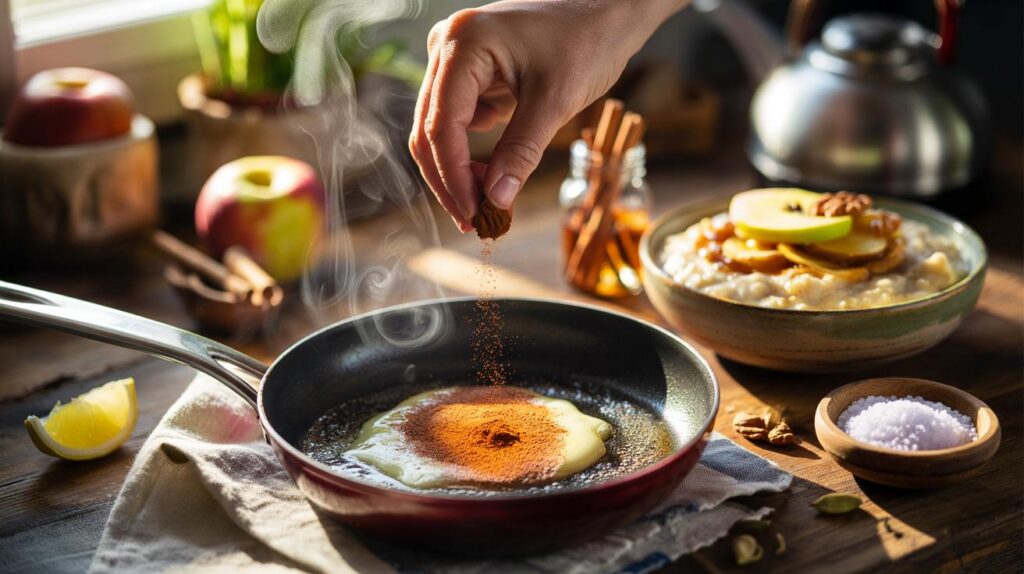
You reach for something sweet when the day tilts sideways. The kettle hums, your shoulders drop, and a warm scent floats up from the pan. Not a cure-all. Just a nudge back towards yourself. Cinnamon has that quiet way of softening the edges — if you cook with it like you mean it.
My favourite moments start in a small London kitchen where the windows steam and the radio crackles, and a teaspoon taps the side of a mug. I sprinkle a little cinnamon onto sliced apples and hear the soft hiss as butter foams, the smell rising like a familiar song. It reminds me of a Sunday years ago, my gran stirring a pot of rice pudding slowly, patiently, as if that were the only job the world had left to do. Last week, my neighbour texted in a flurry about a grim meeting; I handed them a bowl of warm oats with cinnamon, and they just breathed, for the first time that day. What if dinner could do some of the listening?
The quiet chemistry of cinnamon
Cinnamon settles a busy mind because it feels safe. The warmth is suggestive, like a soft blanket you forgot you owned. You taste it and your body recognises a pattern: heat, spice, a hint of sweetness, and then the gentle slide into calm. Familiarity is a soothing ingredient.
On the 7.42 to Brixton I met Sian, a bus driver who swears by cinnamon porridge before an early shift. She said it stops the jitters better than a second coffee, and she gets fewer sugar crashes at 11. Small studies have linked warm spice aromas with steadier heart-rate variability, which is science’s way of saying “a calmer engine”. It’s hardly a lab coat, but the body notices.
There’s a logic to it. Cinnamon nudges how we perceive sweetness, so we often use less sugar and keep blood-sugar dips less dramatic. Steady energy feels like steady mood. And the act of stirring a pan, counting a pinch, breathing in, is a ritual of control. In a loud world, that’s a quiet power.
Cooking moves: from pinch to pan
Start by blooming cinnamon in fat. Heat a little butter, ghee, or olive oil until it shivers, then add a pinch of ground cinnamon and let it sizzle for 15–20 seconds. The spice opens up, turns rounder, less dusty. That perfumed fat can then kiss roast carrots, swirl through yoghurt, or slide into tomato soup. It’s a tiny move with a big ripple.
Try this micro-ritual for grey afternoons: toast oats in a dry pan, add a pinch of cinnamon, then splash in milk and a date, chopped. Two minutes, deep comfort. Or go savoury. A whisper of cinnamon in a pan of onions makes lentil stew unexpectedly plush. Lamb koftas wake up with it. Tomatoes love it. Let’s be honest: nobody really does this every day. But when you do, it lands.
Think about strength and style. Ceylon cinnamon is lighter, floral, lovely for daily cooking; Cassia is darker, punchier, good in bakes and slow stews. Go easy or the dish turns chalky. Keep to about a quarter-teaspoon for two people and build. If you use it most days, Ceylon is the gentler friend.
“Small rituals change big moods. When you warm a spice, you give yourself a second chance at the day.”
- Bloom it in fat: 15–20 seconds in butter or oil before liquids go in.
- Microdose, then taste: Begin with a pinch; add more only after heat does its work.
- Balance with sour: a squeeze of lemon, a splash of vinegar, or a spoon of yoghurt.
- Pair with salt: a tiny pinch sharpens the cinnamon and calms sweetness.
- Add a crunch: toasted seeds or nuts stop “pudding vibes” in savoury bowls.
Rituals that actually fit your life
We’ve all had that moment when the day goes brittle and you want to press reset without a lecture. Build a cinnamon ritual that takes less than five minutes, because that’s the window most of us have. Pre-mix a “calm dust” in a jar: 3 parts Ceylon cinnamon, 1 part cardamom, 1 part cocoa, a pinch of flaky salt. A shake over sliced pears in a hot pan with a dab of butter becomes dessert-for-one that feels like a hug. Stir the same mix into yoghurt with honey and walnuts and you’ve got something steady at 10am. If evenings are your wobble, keep sticks by the kettle. Simmer one in a mug of milk or oat milk for three minutes, swirl in honey, and breathe through the steam. It’s not about the recipe; it’s about the repeatability. **Ritual beats perfection**.
Think of cinnamon as a bridge, not the star. It links sweet to sour, heat to freshness, bitterness to fat. Toss roast squash with cinnamon, chilli, and lime; spoon over tahini and crushed pistachios. Fold a pinch into a pan sauce after searing chicken thighs, then whisk in a knob of butter and a squeeze of orange. Cinnamon finds order amid the flavours. And when flavours feel ordered, you often do too.
There’s a small caution worth keeping in your pocket. Cassia cinnamon contains more coumarin than Ceylon, so choose Ceylon for daily use and keep stronger Cassia for occasional bakes or long braises. Not a fear thing, just good housekeeping. If a recipe calls for a teaspoon and you feel your shoulders climb, halve it and bump the perfume with orange zest or vanilla. *Kitchen peace beats kitchen rules.*
A warm thread you can follow, wherever the day goes
Emotional balance rarely arrives with fanfare. It sidles in through little choices: what goes into the pan, which spoon you use, how long you let the butter sigh before you move on. Cinnamon is a practical shortcut to that quieter place, because it works on the senses first. You smell it, you slow down, and the body gets the message. The rest follows in its own time.
Try thinking in movements, not meals. A pinch at breakfast to soften the edges. A stick in the afternoon to change the room. A bloom in dinner that makes everything make sense. Your day gets signposted by the same scent, so your brain learns, almost like a song: this means calm. You can share that song with someone else, too. A neighbour over the fence. A child asking for the first or last slice of cinnamon toast. The scent lingers. The feeling often lingers longer.
There’s no badge for perfect eating or monk-like rituals. The badge — if there is one — is a kitchen that looks like your life and still offers a hand back to yourself when you wobble. Cinnamon won’t fix a broken week, but it can put a soft border around a hard hour. And maybe that’s the whole point.
| Point clé | Détail | Intérêt pour le lecteur |
|---|---|---|
| Bloom in fat | Heat cinnamon briefly in butter or oil before liquids | Deeper flavour, less chalkiness, more calm-per-bite |
| Choose Ceylon for daily use | Lighter, floral, lower in coumarin than Cassia | Gentler routine you can keep up |
| Balance with sour and salt | Add lemon, yoghurt, vinegar and a pinch of salt | Stops cloying sweetness and keeps dishes clean |
FAQ :
- How much cinnamon should I use each day?Think in pinches, not spoons. A quarter-teaspoon once or twice a day is plenty for flavour and ritual.
- Is Ceylon really different from Cassia?Yes. Ceylon is softer and brighter; Cassia is stronger and more intense. For frequent use, Ceylon plays nicer.
- Can cinnamon work in savoury dishes?Absolutely. Add a pinch to onions, tomato sauces, lamb, lentils, or roasted roots. It adds warmth, not dessert vibes, when balanced.
- What if I don’t like ground cinnamon?Use sticks. Infuse milk, broths, or syrups, then remove. You get the perfume without the powdery feel.
- Does toasting make a difference?Yes. A quick bloom in fat or a dry toast wakes up the oils and makes everything rounder and calmer on the palate.



I tried the “calm dust” (3 parts Ceylon, 1 cardamom, 1 cocoa + pinch salt) over pears—definately calms the 4pm wobbles. Also microdosed a teaspon into yoghurt with walnuts and honey; chef’s kiss. Thanks for the bloom‑in‑fat tip; 15–20 seconds made it way less dusty.
The HRV bit sounds intriguing but vague—do you have links to the “small studies” on warm spice aromas and heart-rate variability? And any data comparing Ceylon vs Cassia effects beyond coumarin? Not trying to nitpick, just curious about the science under the poetry.