
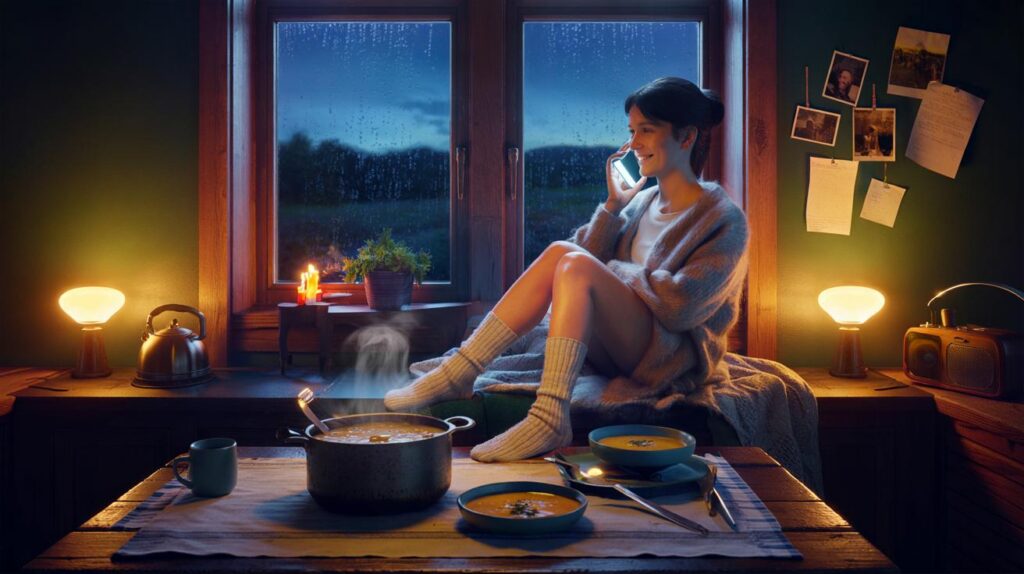
The light goes soft and sallow, and suddenly the evening feels bigger than the room. You flick a switch, the bulb blooms, yet a draft slides under your ribs. The weather app says 8°C, but your mood guesses lower. You crave something less measurable than warmth from a boiler. You want the glow that makes a flat feel lived-in and a face loosen. You want company, even if it’s only yours.
At 4.07pm the bus wheezes past the bakery, and someone inside the bakery stacks the last sourdough like sandbags before a tide. A cyclist drops a glove, half turns, gives up. The streetlights wake and yawning windows start to close. Inside, kettles click alive. Someone pulls a blanket over their knees and tries not to refresh the news. Somewhere, a dog sighs like a tired violin. The day has shrugged off its duties and left us to our own. You can hear the neighbours’ radio through the wall, and the clink of spoon on mug sounds like a metronome for the dark. What warms us then?
When daylight thins, what actually cools
The cold is only part of it. Rooms feel larger when shadows pool, and we shrink to the bright rectangle of a phone or the square of a lamp. We’ve all had that moment when a perfectly fine day goes oddly brittle, and you can’t say why. What’s cooling is the scaffolding of cues — light, laughter, movement — that tells our brain we’re held.
Take Jay in Leeds, who started a “soup o’clock” at 6pm all winter. He texts a photo of the pot to his sister, she replies with a song, and they eat apart-together while the sky goes navy. The ritual is nothing fancy, yet the room feels occupied by more than steam. In the UK, about 1 in 15 adults experiences winter low mood, and London’s daylight falls from roughly 16 hours in June to about 8 in December. That’s not just fewer rays. It’s fewer prompts to be human with each other.
Our eyes report the dimming and our body pulls the shutters — melatonin rises earlier, energy drops, patience thins. Without soft light, touch, and shared time, the social brain gets stingy. Emotional warmth, contrary to the thermostat, is fed by predictability and proximity. A regular call. A chair pulled closer. Food that smells like a memory instead of a microwave. Warmth is a practice, not a season.
Ways to spark warmth after sunset
Try the three-layer evening: light, body, story. Swap overhead glare for two or three low lamps at 2700K, plus a candle or two if that’s your thing. Put warmth in the body: a short walk after work, socks from the radiator, a mug of something you can sip slow. Then add the story — a seven‑minute chat, a shared playlist, a page from a dog‑eared book read out loud. Warmth is built, not begged from the sky.
Make it easy, not noble. Pre‑set a lamp on a plug timer so your flat greets you like a friend. Keep “call scarves”: two names you rotate for quick check‑ins so it never becomes an admin beast. Avoid blue‑lit doom‑scrolling in bed that tricks your brain into daylight and hollowness. Let yourself be scruffy and repetitive. Let’s be honest: nobody really does that every day.
Borrow steadiness from someone else’s voice, even for two minutes. Use your walls: photos that make you feel chosen, notes that remember a summer joke, not just art that matches the sofa. Fold a tiny tradition into the hour the light collapses — the first song after work, the clink of spoon at the same moment, the window opened for two breaths.
“Rituals make the dark feel occupied,” says Claire, a community nurse who works late shifts. “You don’t move the sunset. You move yourself closer together.”
- Warm light: one lamp per corner, low and golden.
- Body cues: hot drink, wool socks, three stretches by the sink.
- Micro-connection: 7-minute call, voice note, quick doorstep chat.
- Story: one page aloud, one memory, one shared song.
- Exit screens an hour before sleep; enter softness instead.
Leave room for small fires
There’s a reason campfires draw people even when they’re stubbornly damp. We want to face the same glow and agree, without saying it, that we’ll sit a while. You can do that in a tiny kitchen or a rented room with three mugs and a frying pan. You can do it alone, by making an evening look and sound like someone cares you’re in it. Rituals beat resolutions when the days get short.
Think of your night as a string of sparks. A slow stir, a song you only play after dusk, the text you send to the person who laughs at the same silly thing. If you live with others, invite a small chore done together — washing up to a podcast, folding laundry to a quiz show. If you live alone, invite your future self by laying out tomorrow’s breakfast in a neat little scene. The glow is noticing.
Avoid the pressure to “win winter” with perfect hygge. Aim for something softer: a room that greets you, a body that warms up, a story that keeps moving. Call it a season of micro-suppers, or a phone tree of warmth, or a quiet campaign against the evening chill. Small fires, often.
| Point clé | Détail | Intérêt pour le lecteur |
|---|---|---|
| Light, body, story | Layer warm lamps, physical comfort, and a shared moment | Simple structure you can repeat without thinking |
| Micro‑connections | 7‑minute calls, voice notes, doorstep hellos | Boosts mood and belonging with minimal time |
| Tiny traditions | Soup o’clock, first‑song rituals, page‑a‑night reading | Makes evenings feel occupied and meaningful |
FAQ :
- What does “emotional warmth” actually mean?It’s the sense of being held by your environment and relationships — safety, ease, and a spark of connection.
- How can I feel warmer if I live alone?Create the three layers: soft light, body comfort, and a quick human touchpoint like a voice note or call.
- Any low‑cost ideas that work fast?Use lamps instead of ceiling lights, boil a cinnamon stick in a pan, and start a seven‑minute nightly call rotation.
- I don’t like candles or “cosy” aesthetics. What else?Try soundscapes, warm socks, a brisk walk at dusk, and a standing phone date with a friend who makes you laugh.
- How long until this actually helps?Many people feel a lift on the first night; steadier benefits land within a week of repeating your tiny ritual.



Loved the “light, body, story” framework—set a lamp to 2700K and did a seven‑minute call while tea steeped. Immediatey felt less brittle. Small ritual, big shift. Bookmarked.
Isn’t this just rebranded hygge? Curious if there’s evidence beyond anecdotes—any citaitons on earlier melatonin onset or blue‑light exposure affecting mood (not only sleep)? Not dismissing, just cautious about rituals‑as‑panacea.