
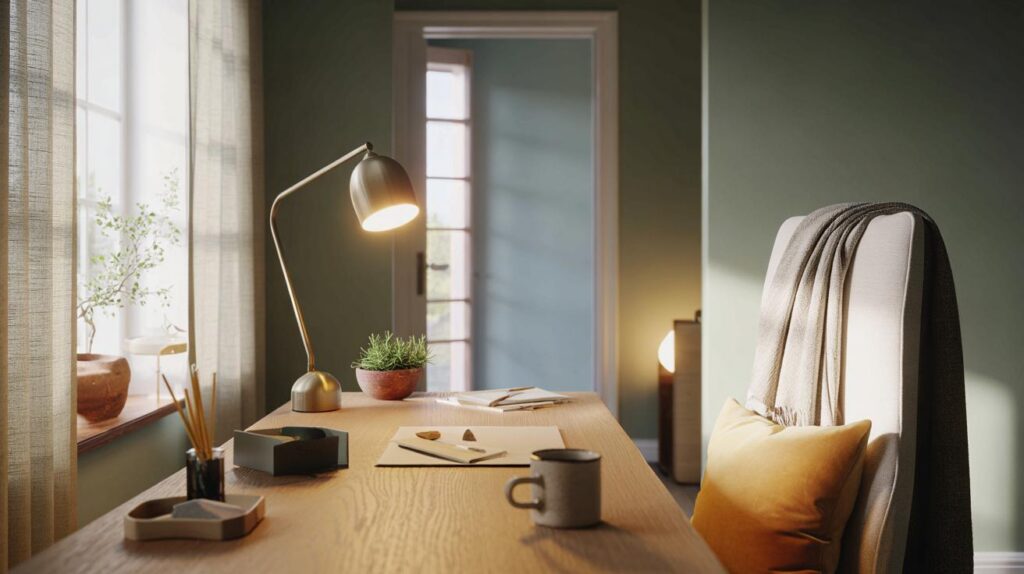
You open the laptop, stare at the blinking cursor, and your gaze slips to a messy side pile of receipts, a mug with yesterday’s tea stain, cables in a shy knot. Your brain feels louder than the room. Decorating a home office isn’t about pretty pictures on Pinterest; it’s about shaping how you think and feel at 10:02 on a weekday. The space talks to you. Some rooms say “scroll”. Others whisper “start”. Which voice do you want to hear?
The first time I noticed the power of a room, I was sitting at a tiny desk by a window in Manchester, rain freckling the glass. A plant leaf brushed my wrist as I reached for a pen. Across the street, a cyclist glided past in a bright yellow jacket, almost cinematic. Something softened. The to-do list was the same length, but my shoulders dropped and I began. We’ve all had that moment when a small detail changes the whole mood without asking permission. It sticks with you. It sparks a thought: what if we could bottle that feeling on purpose?
Light, colour and layout: design foundations that steady your mind
Good focus begins with light you can feel rather than notice. Seek daylight for your main working spot, then add warm, directional task lighting to frame the work zone. Put the lamp slightly behind and to one side of your screen to soothe glare. Your eyes relax, your jaw unclenches, and your brain reads the room as “safe to think”. You stop fighting the environment and start using it.
Think of colour as your co-worker. Soft greens and muted blues lower visual noise, while gentle neutrals give ideas space to breathe. A small hit of energising colour—a terracotta pot, a mustard cushion—adds a pulse without shouting. In one tiny terrace house, I watched someone paint just the inside of a shelving niche in dusty sage. Emails felt lighter, they said. The rest of the room stayed quiet, but the nook hummed with calm purpose. Little move, big shift.
Layout is the silent script your body follows. Place your chair so you can see the doorway and a slice of window, and keep your main reach area clean. The brain likes “prospect and refuge”—some openness, some shelter. A backing wall or a high-backed chair gives that refuge, while a clear sightline offers prospect. It’s old psychology, but your nervous system is modern enough to appreciate it. **Design that reduces micro-stress buys you extra minutes of focus you can actually spend.**
Daily tweaks and tactile choices that fuel focus
Start with a five-minute reset ritual at the end of your day. Stack papers into one tray, drop pens into a pot, wipe the surface, click the lamp off. **Light that supports your rhythm** is more than bulb temperature; it’s the story of “work is done” and “work begins”. Smell also helps. A small bowl of rosemary or a citrus diffuser can become your quiet on-switch. This is your daily anchor point.
Bring in texture you want to touch. A wool throw on the chair, a cork board you actually pin, a ceramic cup with heft. Texture grounds fidgety fingers and keeps you present. Don’t overstuff the room with decor. Two or three personal objects beat twelve. Let’s be honest: nobody does that every single day. Aim for “easy tidy” rather than perfection—one tray, one drawer, one shelf. That’s enough to keep the surface honest and your brain available.
Sound matters as much as sight. If your room echoes, add a rug, curtains, or even a fabric pinboard to soften the bounce. A door sweep can nudge down hallway noise. Some days you need silence, other days a lo-fi playlist or gentle rain track helps you park the worries at the door.
“A calm workspace isn’t empty—it’s edited,” said a London interior stylist when I asked what really helps people get things done.
- Put the desk where your body feels safe: back supported, door in view.
- Choose one colour family and repeat it in small ways for cohesion.
- Use a lamp with a dimmer for late afternoons when eyes get tired.
- Keep a “landing box” for keys, chargers and odds to stop desk creep.
A calmer room, a clearer you
It’s liberating to learn that focus, joy and calm aren’t personality traits; they’re design outcomes you can train into a room. Pick one change to make today—move the lamp, add a plant, swap the chair cushion—and watch how your thoughts behave. The right environment doesn’t scold you into productivity. It invites you into it. **A home office that supports your brain is less about buying more, more about choosing better.** Share what you try. Trade tricks with a friend. A small upgrade in your space might be the nudge someone else needs to begin again tomorrow, a little lighter.
| Point clé | Détail | Intérêt pour le lecteur |
|---|---|---|
| Light layering | Combine daylight with a warm, directional task lamp and dimmer | Reduces eye strain and signals start/stop to your brain |
| Colour discipline | Two calm base tones, one accent repeated sparingly | Creates cohesion without visual fatigue |
| Edited layout | Door in view, back supported, single-tray paper system | Cuts micro-stress and makes tidying fast enough to keep |
FAQ :
- How do I make a windowless office feel alive?Use a full-spectrum task lamp, add a mirror to bounce light, and bring in plants that tolerate low light like ZZ or pothos.
- What’s the best desk position for focus?Face a wall or window with the door in peripheral view, and keep your back protected by a wall or high-backed chair.
- How do I add personality without clutter?Pick three meaningful objects—a photo, a book, a small artwork—and repeat one colour across them for a calm thread.
- Which colours help me feel calmer?Muted greens, soft blues and warm neutrals soothe the eye. Use bright accents in tiny doses for energy without noise.
- How can I hide cables elegantly?Use an under-desk cable tray, fabric sleeves in your palette, and a single charging dock to corral devices. **Clear desk, clear mind.**



This is the first piece that made ‘light’ feel actionable, not just a vibe. Moving my lamp behind and to the side instantly stopped the glare war, and I actually breathed out. The ‘one tray’ rule is gold—my desk no longer grows mysterious piles overnight. Also love the idea of a single accent color echoing around the room; feels cohesive without turning into a showroom. Bookmarked and defintely sharing with my team.
I’m not convinced a mustard cushion buys me more focus. Do you have links to research on ‘prospect and refuge’ improving performance, not just comfort? Also, many rentals don’t allow paint or hardware—how would you adapt these tips for constraints beyond ‘just rearrange’? Honest question, not snark.