
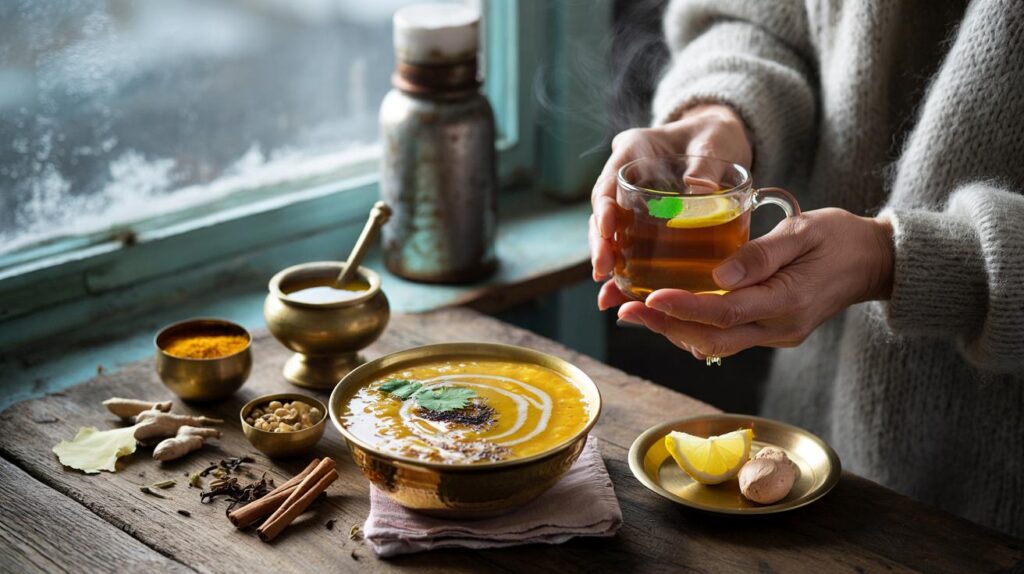
The cold creeps in through windows and sleeves, and somehow into your bones. You can layer jumpers and crank the thermostat, yet your hands still feel like coins from the freezer. That’s the moment Ayurveda quietly taps your shoulder and says: warmth doesn’t only come from outside.
I remember a January morning in a tiny kitchen, breath fogging the window while the kettle rattled. The street was grey, the kind of grey that makes you lose track of time. I dropped ginger coins into a pan, added cardamom and a whisper of black pepper, and watched everything turn fragrant and golden. The first sip felt like light switching on in my chest. Not heat like a radiator. Heat like steadiness. My neighbour, who grew up in Kerala, called it feeding the fire. She spooned ghee on my porridge and laughed at the frost. The day moved differently after that. So I tried eating for heat.
Your inner fire has a name: Agni
Ayurveda talks about agni, the digestive “fire” that turns food into fuel and warmth. When it’s steady, you feel grounded, alert, naturally warm. When it flickers, everything feels off. **Warmth starts in the gut**, not in the wardrobe. Cooked foods, oily enough to carry spice, hit the spot in cold months. Think stews, dals, roasted roots, broths that wake the nose. Raw salads can wait for spring. Warm drinks help the body remember its own fire, while ice cubes ask it to start from zero again.
At a bus stop in Hackney, I met a yoga teacher clutching a dented thermos. Inside: fennel, cumin, coriander seeds simmered into a tea—what some practitioners call CCF. She said it made her feel “alive behind the eyes” on long winter days. Across the country, searches for “cold hands” spike when temperatures drop, yet the same people line up for iced coffees. That little thermos was her cheat code. No drama, no biohacking. Just everyday ingredients with a tradition behind them.
Ayurveda also says bodies run on patterns. Vata types run cool and dry, so they respond to oily, spiced, grounding foods—sesame, ghee, sweet potato, ginger. Kapha runs cool and damp, so lighter, pungent, warming foods help—mustard greens, black pepper, barley soups. Pitta runs hot, which means warmth without tipping into fire—use gentler spices like fennel and cardamom, and lean into sweet and bitter veg. You don’t need a label to notice this. Eat and watch how your fingers, mood, and belly respond.
What to put on the plate, and when
Start your day with heat you can feel. Warm water with ginger and a squeeze of lemon wakes agni without a jolt, followed by porridge or kitchari with ghee, cinnamon and cardamom. Lunch is your main meal when the sun—and digestion—are strongest. Load it with cooked veg, legumes, and a spoon of fat to carry spice. Keep dinner early and simple: soups, stews, a soft scramble with greens. *Think of it as a small fire you tend throughout the day.*
Common trip-ups look small but steal warmth. Icy smoothies at 8am. Raw salads when the sky is iron. A late protein feast that sits like a brick. Heated honey (Ayurveda says never cook honey). Too much caffeine, which sparks and then crashes the fire. We’ve all had that moment when a “healthy” lunch leaves us shivering by 3pm. Try swapping chillies for ginger or black pepper if you run hot. Add fennel when spice feels too fierce. Let’s be honest: nobody really does that every day.
Spices are your toolkit, not punishment. Ginger, cumin, cinnamon, clove, black pepper and ajwain are classic warmers. Toast them lightly to open their nose, then bloom in ghee or sesame oil. A little salt draws the heat through the dish. If your tongue protests, go gentler: fennel, coriander seed, turmeric. Balance matters as much as the ingredient.
“You don’t need fire-breathing curries,” says London-based Ayurvedic practitioner Meera Joshi. “You need steady, friendly warmth that your belly can trust.”
- Morning: warm water, ginger-lemon; porridge with ghee, dates, cinnamon.
- Midday: main meal—dal with cumin and asafoetida, rice, roasted carrots with sesame.
- Evening: early soup—leek and fennel; or kitchari with black pepper and a squeeze of lime.
- Snacks: toasted nuts with ghee and cardamom; baked apples; spiced chai without the ice.
- Always: sip warm water or CCF tea through the day; skip iced drinks.
Make warmth a ritual, not a rule
The body loves rhythm more than perfection. Eat roughly at the same times, leave a little space between meals, and cook your food so the kitchen smells like an invitation. If you can, batch a pot of dal or soup on Sundays and keep a jar of toasted spice mix by the hob. A winter salad can still happen—just add roasted squash, warm lentils, and a drizzle of tahini. **Feed your fire** without turning life into homework. There’s a quiet confidence that comes when your fingers are toasty on a dark afternoon. Maybe warmth is less about being tough and more about being on your own team. The question lingers in the best way: what would dinner look like if it was designed to keep you warm from the inside out?
| Point clé | Détail | Intérêt pour le lecteur |
|---|---|---|
| Agni loves midday | Make lunch your largest, warmest meal | Better digestion and steady warmth through the afternoon |
| Spice as heat, not burn | Use ginger, cumin, cinnamon, black pepper, clove; go gentle with chillies | Warms the body without heartburn or jitters |
| Cooked over cold | Soups, stews, roasted veg, grains with ghee or sesame oil | Comfort that actually lasts on cold days |
FAQ :
- What does “eating for warmth” mean in Ayurveda?It means supporting agni—the digestive fire—so your body produces steady heat and energy. Warm, cooked, spiced foods do the heavy lifting.
- Do I have to give up salads in winter?No. Warm them up: add roasted roots, sautéed greens, warm lentils, and a creamy dressing. Save big raw bowls for lighter seasons.
- Are chillies the best way to warm up?Not for everyone. Chillies can overheat pitta. Ginger, black pepper, cinnamon and cumin give deep, friendly warmth without the sting.
- Can I do this if I’m vegan?Yes. Use sesame or coconut oil instead of ghee, and lean on dals, grains, tofu, and roasted veg. The method—warm, cooked, spiced—remains the same.
- Is alcohol “warming” in this approach?It feels warm briefly, then cools. If you drink, keep it moderate and pair with a hot meal. A spiced tea or broth often warms more reliably.



Loved the framing of agni as “steadiness” rather than blast-furnace heat. I swapped my breakfast smoothie for warm porridge with ghee and cardamom and defintely felt less shivery by 3pm. Also, toasting spices before blooming in ghee = game changer.