
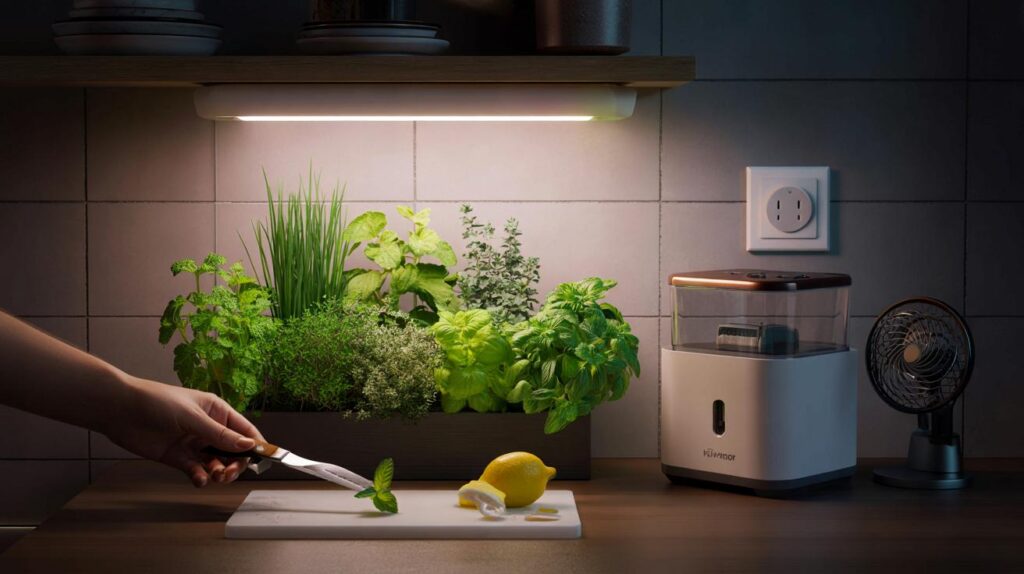
There’s the kitchen with no windows, and the hallway that never sees noon. You want mint for tea and basil for pasta, but the British winter has other plans. Herbs sulk, droop, and die while you scroll recipes. This is how to grow flavour when the sun is a rumour and your patience is on a timer.
It started with a wilting basil from the supermarket, leaning like a teenager against the fridge at 8pm. The window faced a brick wall; the sky was the colour of dishwater. I flicked on the hob and watched tiny, heroic leaves sigh under the strip light. We’ve all had that moment when you promise to “learn plants” and then end up googling at midnight with pesto guilt. The kettle hissed, my phone lit up with ads for sleek hydroponic pods, and somewhere between the pings I realised the obvious: herbs don’t care about sunbeams; they care about light. Real, measurable, switch-on-and-walk-away light. What if the sun was optional?
No sunlight, no problem: teach your herbs to love LEDs
When your flat gets zero sun, you’re not doomed to beige dinners. Swap romance for physics and give herbs the only thing they truly understand: photons. Plants don’t need romantic sunshine; they need photons and routine. Your kitchen can be a green room, even if the sun never shows.
A friend in Manchester turned a dim shelf into a mint forest with a £35 full-spectrum LED bar and a plug-in timer. She set it to 16 hours on, 8 off, hung the light 15cm above the leaves, and ignored it. Three weeks later she was chopping parsley like a TV chef and bruising mint for nightcaps. No windows. No faff. Just a small light, a short routine, and a weekly “how are you doing” pinch.
Here’s the logic in plain English. Herbs indoors thrive at a steady dose of light each day, roughly what they’d expect in June. Aim for 12–16 hours from a cool-white or full-spectrum LED, with the lamp kept 10–20cm above the leaf tips. Don’t chase lumens (that’s for human eyes). Think strength and distance: closer is stronger, too close can scorch, too far makes plants stretch and sulk. If the light casts a crisp shadow, you’re in the right zone.
Gear that cuts corners (so you don’t have to)
If you’ve got zero sunlight and less patience, pick one of three routes. Countertop hydro kit: click in the pods, fill the reservoir, drop the pump on, and set the built-in light to 16 hours. DIY shelf: clamp a 20–40W LED grow bar under a shelf, plug it into a £6 timer, and use small pots of mint, coriander, and chives. Self-watering pots: a wick pot plus a light bar gives you weeks of steady moisture and fuss-free growth. A cheap timer is the best gardener you’ll ever hire.
What catches people out? Over-watering soil herbs until the roots can’t breathe. Buying a tall basil that was forced in a greenhouse, then watching it collapse in two days. Crowding too many plants under a tiny light and getting spindly stems. Set a fan on low for a bit of airflow, feed lightly every two weeks, and pinch little and often. Let’s be honest: nobody does this every day.
Here’s the cheat code: pick forgiving herbs and automate the boring bits. Mint, parsley, chives, lemon balm, and thyme shrug off small errors and bounce back after a rough week.
“Give herbs consistent light and a drink they can manage, and they’ll repay you like a flatmate who actually does the washing up,” says a London grower who supplies chefs from a basement unit.
- Keep the light 10–20cm above leaves; raise it as plants grow.
- Use a wick or self-watering pot to avoid soggy roots.
- Pinch above a leaf pair to make two new shoots.
- Start with mint and parsley; graduate to basil under brighter light.
- Feed a half-strength liquid fertiliser every other week.
Your tiny indoor plot, minus the guilt
This isn’t about becoming a perfect indoor gardener. It’s about small, repeatable wins that make dinner taste like you meant it. You don’t need a window. You need a light you can forget about, a timer, and plants that forgive you for short attention spans. There’s joy in that first handful of mint you didn’t buy, in parsley that smells like a market even on a Tuesday night. **Start small, repeat what works, and laugh when it doesn’t.** Tell people you’re growing herbs under a lamp and watch the scepticism turn into a request for your chimichurri. You might end up sharing cuttings with neighbours you’ve never met. Or you might just eat better eggs. Either way, the sun can sit this one out.
| Point clé | Détail | Intérêt pour le lecteur |
|---|---|---|
| Light, not windows | 12–16 hours under a 20–40W full-spectrum LED, 10–20cm above leaves | Replicates summer day length without chasing the weather |
| Set-and-forget gear | Timer, self-watering pots, basic fan on low | Cuts daily chores and keeps growth steady |
| Easy herb lineup | Mint, parsley, chives, lemon balm; basil with brighter light | Fast success, fewer failures, flavour on tap |
FAQ :
- Which herbs actually cope with “no sun”?Mint, parsley, chives, lemon balm, and thyme. Coriander works, but keep it cool.
- How many hours should I run the light?Start at 16 hours on, 8 off. Drop to 12 if plants look stressed.
- Do I need a fancy grow light?No. A 4000–6500K LED grow bar or strong “daylight” LED works well.
- Why are my herbs leggy?The light is too far or too weak. Move it closer or upgrade wattage.
- How do I harvest without killing the plant?Pinch above a leaf pair, take no more than a third, and let it regrow.



This is the first guide that defintely told me what to do instead of just “put it near a window.” The photon talk clicked. I rigged a 30W bar ~6 inches up with a cheap timer and my mint stopped sulking. Thank you! One ask: could you share more on wick pots and watering rhythm?