
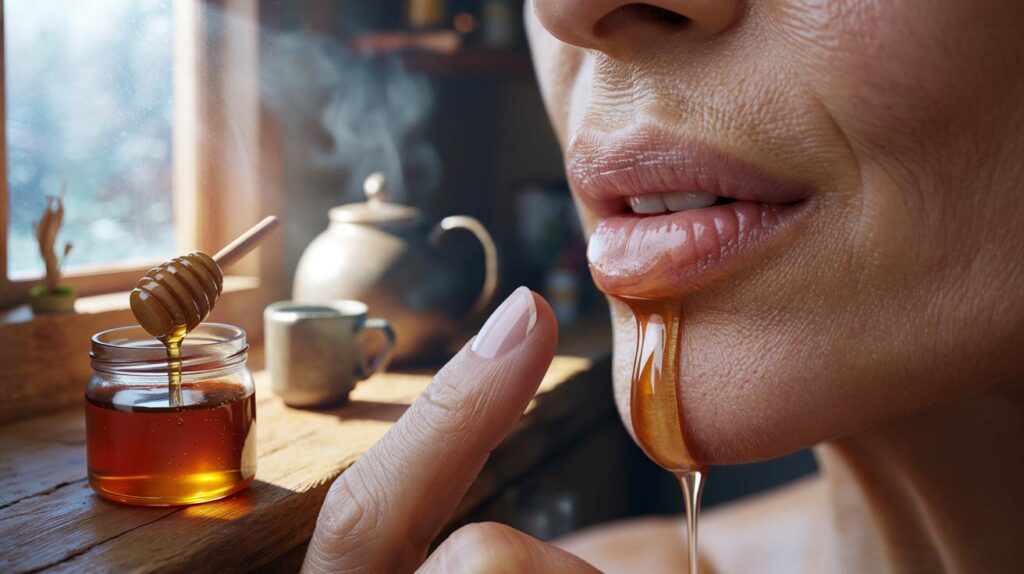
Cold wind, central heating, too much coffee — your lips don’t stand a chance. You buy another balm, swipe it on, feel good for ten minutes, and then the tightness creeps back in. There’s an easier way hiding in plain sight on your kitchen shelf. One jar. One texture. A simple daily gesture that turns flaky into silky.
The first time I noticed it, I was on the morning bus, watching a woman try not to peel the dry skin on her lip. She dabbed at it with a tissue, then gave up and looked out the window. Later that day, making tea, I nudged a small glass jar and thought: this is the thing I trust on sore throats, toast, and tiny cuts. Why not lips?
That evening I pressed a glossy smear across my mouth before bed. Not much. Just enough to feel a soft seal. I woke up and the clingy tightness had gone. The colour looked calm again. The fix was next to the tea bags.
The one-ingredient fix hiding by your kettle
We chase miracle balms when the secret is **one ingredient** your gran would recognise. Honey. The same jar you swirl into tea can smooth cracked corners and calm that pinched, papery feeling. It clings without smothering. It tastes kind, which helps you keep it on long enough to work.
You can see the change quickly. A friend in Manchester started dabbing a pea-sized touch of honey on at night during a brutal cold snap. Two days in, her lipstick stopped catching on the rough bits. By day four, the habit stuck because the results did. Small ritual. Big payoff. We’ve all had that moment when the smallest thing lifts the whole day.
There’s a quiet logic to it. Honey is a humectant, so it draws water to the surface and helps hold it there. It’s also slightly acidic and naturally low in water, which keeps unwanted bacteria at bay. Lips don’t have oil glands and the skin is thinner than your cheeks, so moisture escapes fast. A thin layer of **honey** adds a breathable shield that slows the exit. Science meets comfort in a spoonful.
How to use honey for pillow-soft lips
Keep it simple. In the evening, wash your face, then pat your mouth dry. Warm a tiny amount of honey between clean fingers and smooth it over both lips, right to the edges. Leave it ten minutes if you’re busy, or keep a whisper-thin film on while you sleep. In the morning, rinse with lukewarm water and press dry. *Yes, that pot of honey will do.*
Daytime? Tap on the thinnest layer before a walk or commute, then blot once. It gives a soft sheen without the sticky smudge. Let’s be honest: nobody does this every day. Aim for three or four evenings a week, then taper to when your mouth starts to feel sandpapery. If you’re wearing colour, use your honey at night and your usual balm by day. One supports the other.
Small warnings keep the magic intact. Don’t scrub before every application. Over-exfoliating makes lips angrier, not smoother. If you’re prone to reactions, patch-test on the inner wrist first and keep honey strictly on the vermilion border, not the skin around it.
“Your lips have no oil glands, so comfort has to be added from the outside. Think seal, not scrub.”
- Choose runny or raw honey; thicker varieties stay put longer.
- Use a clean fingertip or cotton bud to keep the jar hygienic.
- Night use is most effective because you won’t lick it away.
- If you must exfoliate, limit it to once a week with a very light touch.
- Stop if you notice stinging, redness, or increased dryness.
Lips, weather, and tiny rituals
Soft lips rarely come from a single heroic product. They come from small, repeatable rituals that fit your life. When the heating clicks on or the wind goes sharp, reach for what you already own and trust. There’s relief in knowing your fix isn’t another £12 tube in the bottom of your bag.
It’s also a little vote for gentleness. Lips are exposed, expressive, and surprisingly needy. A nightly dab of kitchen-shelf comfort becomes your cue to switch off, like locking the door or filling a glass of water for the bedside. You may find yourself noticing tastes differently, speaking more easily, even smiling without that pull. And if a friend moans about their winter mouth, you’ll have a quietly brilliant answer ready.
| Point clé | Détail | Intérêt pour le lecteur |
|---|---|---|
| Ingredient | Honey acts as humectant and gentle barrier | Understands why it works and when to use it |
| Method | Thin night layer, rinse in morning, repeat 3–4 times a week | Clear, doable routine without extra products |
| Common pitfalls | Over-scrubbing, licking lips, using too much | Prevents setbacks and saves time |
FAQ :
- Which type of honey is best?Raw or runny honey works well because it clings and contains natural humectants. Manuka is fine, but you don’t need it for everyday softness.
- How often should I apply it?Start with evenings, three to four times a week. Scale up during cold snaps, then maintain once or twice weekly when your lips feel stable.
- Can I use a sugar-and-honey scrub?Yes, very gently, once a week at most. Keep the grains tiny and the pressure light. The goal is smooth, not polished.
- Is honey safe if my skin is reactive?Often, yes, though everyone is different. Patch-test first. Keep honey on the lips only. If stinging persists, rinse and switch to a plain oil like olive or squalane.
- What if I’m vegan or allergic to honey?Swap to plant oils or butters: olive oil, coconut oil, or shea. Apply a thin night layer and blot. You’ll still get that **soft lips** feeling.



Tried this last night—just a whisper of honey before bed—and I woke up with zero tightness. Even my lipstick went on smoother today 🙂 I blot once so my pillowcase doesn’t get sticky. Simple, cheap, actually works. Thanks for the clear steps!