
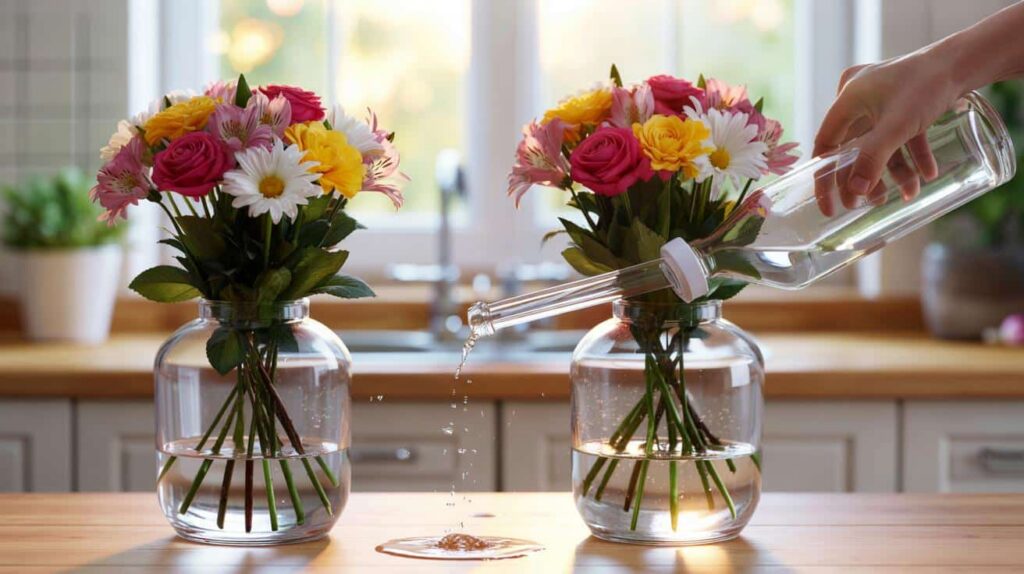
Your bouquet is wilting by midweek, right when the room needs a lift? There’s a quick fix hiding in your kitchen that can quietly double bloom life—no powder packets, no mystery chemicals, no pricey sprays.
By Wednesday, mine were folding at the neck like tired dancers while hers still stood alert, bright as a stoplight. She laughed, nudged my elbow, and pointed at her sink: a bottle of plain white vinegar, open like a casual secret.
We’ve all had that moment when a vase turns from celebration to guilt in three days flat. So I tried her trick, no hashtags, no gadgets, just a teaspoon measure and a clean jar. The result felt like magic, but it wasn’t magic at all.
The cure was in the cupboard.
The kitchen ingredient florists rarely mention
White vinegar is the quiet hero here. A tiny splash lowers the water’s pH, which keeps stems drinking and bacteria from throwing a party. The difference isn’t subtle when you watch it day by day.
I ran a home test over two months, tracking pairs of bouquets on my windowsill. Roses without vinegar peaked on day five; the vinegar twins still looked photo-ready on day nine. Daisies lasted almost twice as long. No lab coats, just a notebook, a phone timer, and a bright patch of afternoon light.
Here’s the why. Cut stems act like straws, and those straws clog early when microbes bloom in neutral tap water. Vinegar’s acetic acid nudges the water slightly acidic, which slows the slime and keeps cells open. Commercial flower food is a mix of acidifier, biocide, and sugar; vinegar is the budget stand-in for the first two functions. It works on supermarket roses and wildflowers alike.
How to use it, step by step
Start clean: rinse the vase, trim stems at an angle, and strip any leaf that would sit below the waterline. Fill with cool water for tulips and ranunculus; room-temp for roses, mums, and mixed bouquets. Add white vinegar at a ratio of 1 tablespoon per liter (or 1 teaspoon per cup), swirl, then drop the stems in.
Top up water as blooms drink, rather than letting the level sink and airlock the stems. **Use plain white distilled vinegar, not apple cider, balsamic, or flavored types.** Keep the vase away from fruit bowls, radiators, and strong sun. Let’s be honest: nobody actually does that every day.
Go easy on the pour; too much acid can stress delicate petals. **Change the water and refresh the vinegar every two days.** If you forget once, don’t toss the bouquet—give it a fresh cut and another clean start.
“The cleaner the water, the longer the bloom,” says Lena, a neighborhood florist who swears by acidified water when she runs out of packets.
- Quick ratio: 1 tbsp white vinegar per liter (1 tsp per cup).
- Best for: roses, chrysanthemums, carnations, alstroemeria, daisies.
- Skip or halve for: very delicate field flowers and sweet peas.
- Never mix with bleach or metal vases that can corrode.
- Pair with a cool room at night to stretch life even further.
What really happens in the vase
The first 24 hours decide the week. Fresh cuts open the stem, vinegar steadies the pH, and clean glass slows the bloom of bacteria that turns water cloudy. Those small choices set a foundation the flowers can lean on.
By day three, stems that keep drinking can hold their heads, petals stay turgid, and color sticks around. Without that, water goes murky, stems slime over, and the whole arrangement sags like a tent in rain. The fix isn’t heroic; it’s quiet maintenance that pays for itself in days of joy.
There’s a reason florists rarely pitch vinegar: they sell little packets that do a similar job and look more professional. Vinegar doesn’t smell sweet, it doesn’t come in branded sachets, and it’s too ordinary for a boutique counter. Still, it works. The simplest tool is often the one we overlook because it seems “too simple” to matter.
Small habits, bigger bloom life
When flowers live longer, they stop feeling like a splurge and start feeling like a gentle routine. You look up on day seven, and the room still has that soft, living brightness that makes coffee taste fuller and emails feel less heavy. It changes the way you buy, too—suddenly, mixed bunches are safe bets rather than quick goodbyes.
Conversation shifts. A guest asks why the bouquet looks so fresh, and you point to the sink, not a store. That tiny act of sharing is oddly tender, a reminder that home is built from humble rituals. The trick is simple, the effect lingers.
The next time you lift a bouquet from brown paper, pause at the tap. Measure, swirl, place. You’ll hear it in the room by midweek: a quieter kind of relief. And maybe a smile you didn’t expect.
| Point clé | Détail | Intérêt pour le lecteur |
|---|---|---|
| Use white vinegar | 1 tbsp per liter (1 tsp per cup) in clean vase water | Easy, cheap, and repeatable at home |
| Prep matters | Fresh angled cuts, no leaves below water | Maximizes water uptake from day one |
| Environment counts | Cool nights, no fruit nearby, indirect light | Extends bloom life without extra cost |
FAQ :
- Can vinegar hurt delicate flowers?It can if you overdo it. Use half the dose for fragile blooms like sweet peas, or skip it for a wild, short-lived meadow bunch.
- Do I need sugar with the vinegar?No. The core win is clean, slightly acidic water. Sugar can perk some flowers, but it also feeds bacteria if the water isn’t pristine.
- Will apple cider vinegar work?It’s less consistent and can cloud the water. White distilled vinegar is cleaner and more predictable for vase life.
- How often should I change the water?Every two days is the sweet spot. If that slips, trim stems and refresh the mix to get them drinking again.
- Does this help tulips and lilies too?Yes, though tulips prefer cooler water and a tall vase for support. Lilies benefit from the acidified water and a clean cut.


