
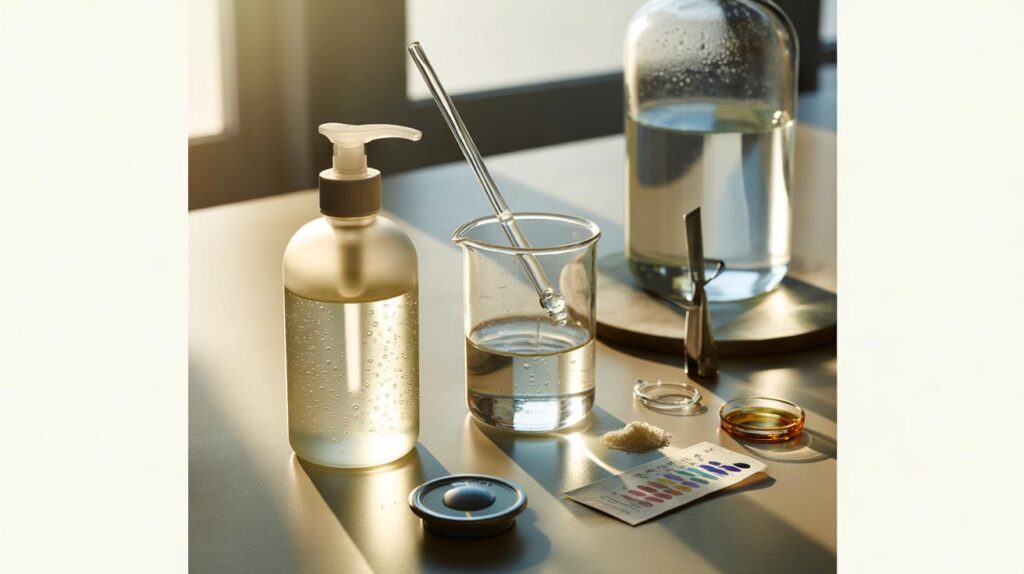
The bathroom shelf was groaning again. Bottles lined up like small soldiers, promising glow, plumpness, dew. I watched the labels blur into a single, expensive fog and wondered why my face still felt tight by lunchtime.
In the kitchen, a jug of distilled water sat next to a tiny scale and a spoon. The set-up looked suspiciously simple. Three ingredients, not ten. Minutes, not hours. I tipped the powder into the glycerin and felt the faint relief of choosing less over more.
Outside, the air was cold enough to pinch. Commuters rubbed their cheeks, phones lighting up with routines, routines, routines. The serum I wanted was small, quiet and effective. No fragrance. No drama.
So I made one.
The case for a stripped‑back serum
Minimal doesn’t mean boring. It means letting water and a good humectant do the heavy lifting while your skin barrier stops playing fire-fighter. The magic is in the balance: pull moisture in, then keep it there under a moisturiser you already trust.
On the 8:02 to King’s Cross, a woman dabbed a travel-size cream along her jaw and winced. We’ve all had that moment when our face feels tight in the office air and every product sounds like hope. A simple hydrating serum — think water, hyaluronic acid, a touch of glycerin — is the quiet fix that sits underneath everything else.
Here’s why it works. Hyaluronic acid holds many times its weight in water, but it needs… water. Glycerin is a reliable, skin-identical humectant that binds moisture and plays nicely with most actives. Keep both **fragrance-free** and at sensible levels, and you get slip without stick, glow without grease. The science isn’t sexy; the feel on your face is.
The formula: three ingredients plus a preservative
You’ll make 100 g — enough for a month or so. Use: distilled water 92.5%, glycerin 3%, sodium hyaluronate (powder) 0.5%, panthenol (optional) 3%, broad-spectrum preservative 1% (e.g., Geogard ECT as labelled). Tools: 0.01 g scale, clean beaker, spatula, pH strips, funnel, 100 ml pump bottle.
First, pre-wet the hyaluronate by mixing it into the glycerin until sandy. Add half the water and let it hydrate for 20 minutes, then add the rest and stir gently. Fold in panthenol if using. Add preservative per its usage rate. Check **pH 5–5.5** and adjust with a tiny drop of lactic or citric acid if needed. Decant, label, and give it 12 hours to fully dissolve.
Use two or three pumps on damp skin after cleansing, then seal with your moisturiser. Morning and night is fine. *This is skincare you can actually finish.*
Common pitfalls are ordinary and fixable. Too much glycerin can feel tacky; keep it near 3%. Powder clumps? Pre-wet it longer in glycerin and stir like you’re folding egg whites. Tap water invites microbes and minerals; reach for distilled. Let’s be honest: no one really does that every day. So batch once a month and keep it simple.
If you’re tempted to throw the whole actives cabinet in, breathe. This serum’s job is hydration, not a fireworks display. You can layer vitamin C or retinoids around it on other days, but keep this bottle focused so your skin knows what it’s getting.
“When people strip a formula back to humectants and water, sensitivity often calms down by itself,” says a London cosmetic chemist I spoke to. “Less distraction, better compliance, nicer skin.”
- At-a-glance recipe: Water 92.5 g, Glycerin 3 g, Sodium Hyaluronate 0.5 g, Panthenol 3 g, Preservative 1 g.
- Order: Pre-wet powder in glycerin → add water in two stages → add panthenol → preservative → check pH → bottle.
- Feel tweak: Add 0.2–0.3% xanthan gum if you want body. Hydrate gum in water before combining.
- Storage: Pump bottle in a cool place, out of sunlight. Use within 8–10 weeks.
- Pro tip: Label the batch date and keep a simple skin diary for a fortnight.
Small choices that change the feel
Think texture like a chef thinks sauce. Low molecular weight hyaluronate gives slip with a longer plump; high weight gives surface dew. A 50/50 blend at 0.5% total is a nice middle ground. If you only have one type, that’s fine — the glycerin carries the comfort.
Bottle matters. A pump means fewer fingers in your formula. A thin-walled bottle helps you see air bubbles rise, and you can judge when it’s time to make the next batch. Label the cap with a marker and a little note to “use me first”. It works.
Application is half the story. Mist or pat water on first, then serum, then moisturiser. If you’re outdoors, sunscreen on top. On windy days, go in with a richer cream or a light drop of squalane on cheeks only. Call it **shake, don’t stir** layering: one change at a time, watch and learn.
What happens when you keep a formula quiet
Something odd happens when you stop chasing the loudest product: your skin remembers its own rhythm. You notice whether a walk helps more than a new toner. You see that office heating dehydrates faster than any cleanser can fix. The serum becomes a habit, not an event, and that’s where skin steadies.
Friends will ask what changed. You’ll point to a small bottle that costs less than a takeaway and works more reliably than the hype cycle. There’s a calm in choosing the same three movements each morning. Not boring — confident.
Share your tweaks. Swap notes like recipes. The minimalist serum is a blueprint, not doctrine, and the best part is what you learn about your skin on the quiet days.
| Point clé | Détail | Intérêt pour le lecteur |
|---|---|---|
| Simplicity first | Water + hyaluronate + glycerin (+ preservative) | Clear shopping list, fewer variables to irritate skin |
| Method matters | Pre-wet powder, add water in stages, check pH | Silky texture, better stability, consistent results |
| Real-world use | On damp skin, then moisturiser, then SPF | Locks hydration where it counts, fits any routine |
FAQ :
- Can I skip the preservative?Not in a water-based formula. Use a broad-spectrum option at its labelled rate. Your skin — and the bottle — will thank you.
- Do I need a pH meter?Strips are fine here. Aim for roughly 5–5.5. If it stings or goes cloudy, stop and recheck.
- My serum feels sticky. What now?Drop glycerin from 3% to 2%, or add a whisker (0.2%) of xanthan for sleeker slip. Layer moisturiser sooner.
- Can I add niacinamide or peptides?Yes, but test changes one at a time and watch compatibility. Keep this bottle about hydration and layer other actives around it.
- How long does a batch last?8–10 weeks in a pump, stored cool and out of sun. If the smell, colour or texture shifts, bin it and start fresh.



Super approche minimaliste ! J’ai testé ce matin: eau distillée + 0,5% HA (mélange LMW/HMW) + 3% glycérine + 1% conservateur, pH ~5,4. Texture nickel, pas collante, sous ma crème ça file tout seul. Merci pour l’astuce de pré-mouiller la poudre, zéro grumeaux. Je vais ajouter 3% panthénol la prochaine fournée.
Question bête: 0,5% de sodium hyaluronate, ce n’est pas un peu haut pour éviter l’effet “seringue” qui tiraille en climat sec ? Mon sérun maison à 0,3% me semble plus confortable. Vous avez testé sur peau déshydratée + bureau climatisé ?