
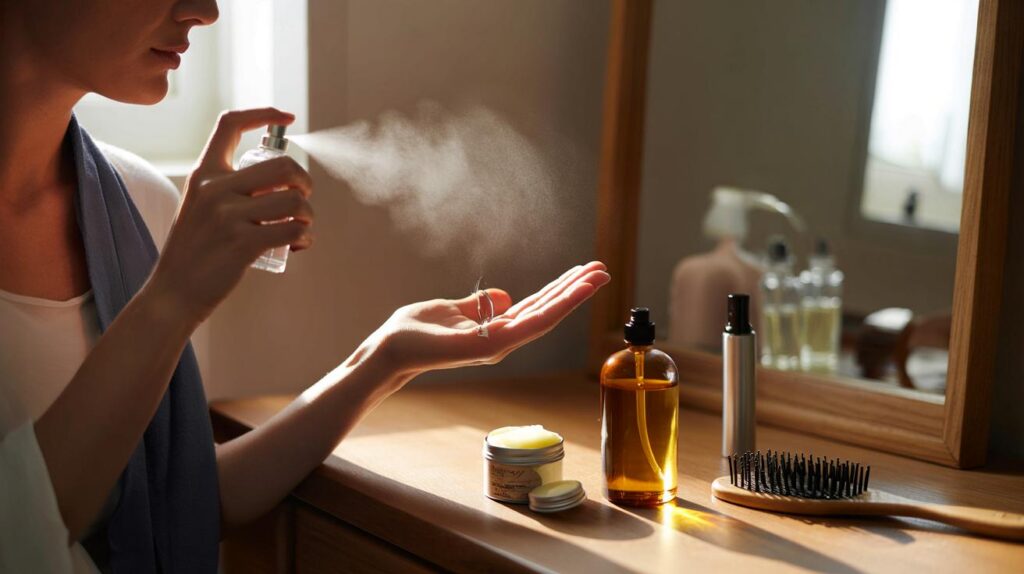
Your fragrance was magic at 8am and gone by lunch. You didn’t sweat, you didn’t switch products, and yet the air around you turned silent. We’ve all had that moment when a favourite scent just… slips away.
The day I realised perfumes have moods, I was on the Victoria line at rush hour. A woman in a navy coat stepped in, and the warm blur of amber she carried hung in the carriage like a memory. Two stops later, nothing. My own spritz from the morning felt shy, like it had retreated behind my jumper.
I started paying attention to the small things: the weather, the moisturiser I used, even where the bottle lived on my shelf. Some days the scent clung. Some days it sprinted. The pattern wasn’t random. Not at all.
There’s a simple trick that changes the whole game.
Why scent vanishes faster than you think
Your skin isn’t a blank canvas; it’s a living surface with moods of its own. On dry days, perfume evaporates at speed and top notes blow away like dandelion fluff. On moisturised skin, the same scent lingers, whispers, returns. **Moisture is your best fixative**.
Heat is another sly player. A warm neck or wrist radiates scent more quickly, which can feel glorious for an hour, then oddly empty by noon. Think of it like simmering a sauce: too hot and the delicate bits fly off. Cooler spots keep things slower, softer, longer.
There’s also the way a fragrance is built. Light citrus and airy florals dance up first, then fade; woody, resinous, musky bases stick around. If your favourite is sheer and breezy, it needs a little help to last the day. That help can be natural, simple, and barely a routine.
I tested this on an ordinary Tuesday. Same shower, same quick coffee, same commute. On one wrist, I sprayed straight onto bare skin. On the other, I patted a drop of jojoba oil first, waited a beat, then spritzed. I forgot about it while emails piled in.
By 3pm, the bare-skin wrist gave me a faint ghost of bergamot. The oil-prepped wrist still had body: sweet, mossy, a breath of smoke. Colleagues leaned in and asked. I kept catching a whisper of it on my scarf hours later.
It wasn’t magic. Oils create a light seal, so fragrance sits with you instead of leaping off into the room. Skin that’s happily hydrated locks in aroma the way a good fabric holds colour. It’s the same perfume, just treated like a guest rather than a passer-by.
There’s science humming under the romance. Perfume molecules volatilise; they lift off with heat, air flow, and low humidity. Your skin’s natural oils slow that exit. Occlusive layers like shea or jojoba give molecules something to hold onto, so the journey from top note to base feels longer, smoother, more you.
Pulse points are warm and expressive, but warmth can be a double-edged sword. A clever map spreads risk: a touch behind the knees under a skirt, the dip of the collarbone, the edge of a sleeve. It reads intimate, not loud. **Pulse points aren’t everything**.
Storage matters too. Light and heat stress the juice and flatten the sparkle. A cool cupboard treats a bottle better than a sunny shelf. Your nose notices, even if you think you don’t.
The natural playbook: small tweaks, longer trails
Start in the shower. Wash, then pat dry. Smooth a light, fragrance-free oil or an unperfumed shea-butter balm over the spots where you’ll spray: wrists, inner elbows, chest, the back of the neck. Let it settle for a minute. Then mist perfume from 10–15 cm, and walk through a single cloud for hair and shoulders.
If you love airy scents, add one more anchor. A drop of vanilla-infused jojoba or a dab of plain beeswax balm at the pulse point creates a gentle stage for your perfume without changing the tune. On fabric, go easy: one light spray on a lined jacket from arm’s length can hold for hours.
Hair grabs scent beautifully, yet alcohol can dry it. Spritz a brush once, wave it for a second, then pull through mid-lengths. No crunchy ends, just a halo that moves when you do. Keep a tiny atomiser in your bag for the late-afternoon lift that feels like clean sheets.
Common slip-ups are tiny and fixable. Rubbing wrists after spraying flattens the top and bruises the heart; tap wrists together if you must, or better, don’t touch. Over-spraying doesn’t make a perfume last; it just turns the opening into a shout and fades in the same pattern.
Storing bottles in the bathroom sounds logical but steam and temperature swings age the fragrance fast. A bedroom drawer is calmer. Spraying into the air and walking through can work for hair and clothes, but if that’s your only step, most of the scent lands on the floor.
Let’s be honest: nobody actually does that every day. Pick two moves you’ll keep—moisturise first, then spray from a little distance—and you’ll notice the difference without feeling like a lab technician.
There’s a softer side to this too: ritual. A second to breathe in, to place scent on skin with care, changes how you carry it. That small pause seems to slow time for the perfume as well.
“Great longevity starts before the first spray—hydrated skin, a cool bottle, a light hand. The rest is poetry,” a London perfumer told me over a clatter of blotter strips.
- Store smart, spray smart
- Oil first, fragrance second
- Map cooler spots, not just hot pulses
- One mist for fabric, from a distance
- Refresh with a mini atomiser, not ten pumps
Make it last without trying too hard
Natural staying power isn’t about turning into a walking diffuser. It’s a handful of habits that fit a real morning. Moisturise the target areas. Spray with intention, not everywhere at once. Tuck the bottle out of the sun and away from the shower’s drama.
If your skin runs dry, lean on oils; if it’s oil-rich, go lighter and focus on textiles and hair. Warm weather? Aim for cooler zones and fabrics. Cold days? Pulse points can sing. This isn’t a rulebook, it’s a map you redraw as seasons and moods change.
The best part is how it feels. A scent that lingers becomes a quiet companion, not a chore. You catch it between tasks, in a lift, on your scarf at dusk, and it feels like a secret you chose to keep. That’s the kind of longevity that matters.
| Point clé | Détail | Intérêt pour le lecteur |
|---|---|---|
| Hydrate first | Use fragrance-free oil or shea on spray zones before perfume | Slows evaporation and deepens the dry-down naturally |
| Map your spray | Mix cooler spots with classic pulses; add a light fabric mist | Longer, steadier sillage without over-spraying |
| Protect the juice | Keep bottles in a cool, dark place; avoid bathroom heat | Preserves brightness and longevity over months |
FAQ :
- Where should I spray for the longest natural wear?Try inner elbows, the chest, and the back of the neck, plus a light mist on clothing from distance. Mix warm and cooler spots.
- Do natural oils really make perfume last longer?Yes—jojoba, almond, or shea create a soft barrier so fragrance evaporates more slowly without altering the scent profile much.
- Is rubbing my wrists really that bad?It can crush the top notes and speed the fade. Spray, let it settle, and resist the rub; a gentle tap is enough.
- How do I keep perfume on in summer heat?Moisturise, target cooler zones, and lean on fabric and hair-brush mists. Carry a 5 ml atomiser for a light refresh, not a flood.
- Can diet or hydration affect my scent?Hydrated skin tends to hold fragrance better. Strong spices and very dry skin can shift how a perfume behaves on you.



Testé ce matin: poignet gauche nu, droit avec une goutte d’huile de jojoba comme vous conseillez. Résultat: à 16h, le droit sentait encore la mousse et un soupçon fumé, l’autre… rien. J’avais toujours un voile sur l’écharpe aussi. Simple et efficace, merci bcp pour l’astuce (je croyais mon parfume “faible”, en fait c’était ma peau trop sèche!).