
The clock goes back, the afternoon shrinks, and the world tilts ever so slightly towards grey. You still get your work done, you still answer messages, yet your energy sags like a wet coat on a radiator. This is the season when mood quietly drifts — not broken, just blunted — and everyday life starts to feel two sizes too heavy.
On a wet Tuesday in late November, I stood on a kerb in Leeds watching car lights smear across the road like melted toffee. People tucked their chins into scarves, moving with that solemn choreography only British drizzle can produce. Inside a café window, faces leaned towards the pale, chilly glow as if gathering around a timid fire. I felt the drag too — a slow pull towards the sofa, snacks, the TV’s blue fog — and part of me wanted to let winter swallow me whole. Then I did one small thing differently. Something shifted.
Why winter hits harder than we admit
Short days upend our internal clocks. Less morning light means your body delays its “wake up” signal, and bedtime creeps later even if the alarm stays cruel. You’re not lazy; you’re out of sync with the sun. Morning light is your biggest lever.
Look at how behaviour changes when the sun clocks off at 4pm. Gyms thin out after work, walks get postponed, and social plans turn into rain checks because it’s “already dark”. In the UK, around one in five people report winter low mood, and a smaller group experience Seasonal Affective Disorder with clinical intensity. The pattern is boringly consistent, which is precisely why it’s convincing.
There’s a straightforward chain at work. Light hits the eyes and talks to your brain’s master clock, which sets the day for hormones, temperature and alertness. Less light means the clock runs slow, melatonin lingers, and serotonin dips. Then routines wobble, movement shrinks, and you see fewer people, which feeds the loop. That feedback is powerful — but loops can be rewritten.
What actually helps, day by day
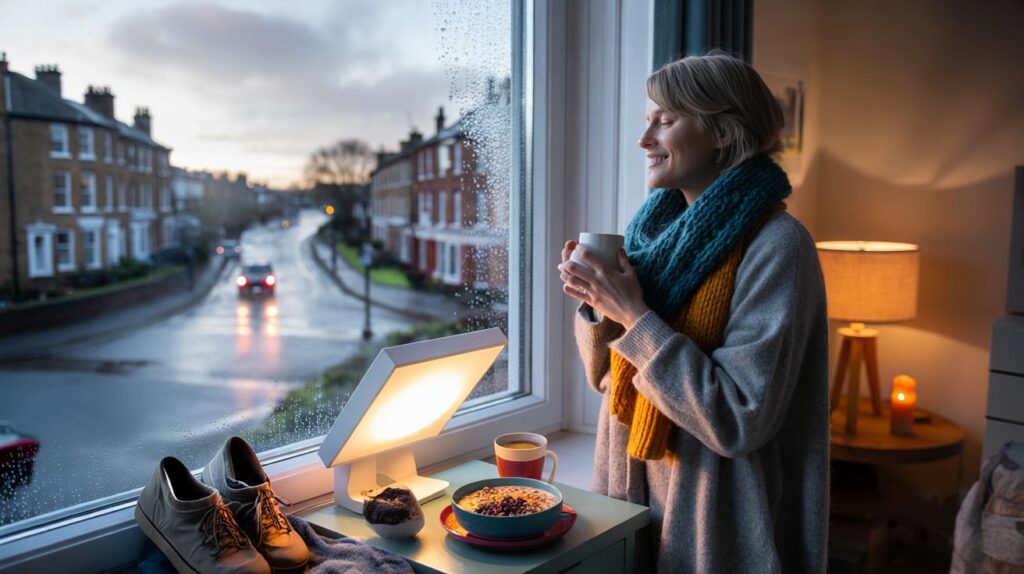
Build a morning “light stack” you can repeat even on rough days. Open curtains the moment you wake, step outside for 10–20 minutes, and, if you can, add a 10,000‑lux lamp angled slightly to the side for 20–30 minutes while you read, email or sip tea. Keep it friendly, not fussy. I promised myself I’d treat sunlight like medicine.
Make it easy to win. Put your walking shoes by the door at night, programme a gentle alarm, and prep a bright breakfast — oats, yoghurt, something with colour. We’ve all had that moment when the duvet weighs a tonne and the sky looks like washing up water. Let’s be honest: nobody does this every single day.
When you miss, shrink the target and try again before noon. A brisk 10‑minute loop round the block still counts, and a lamp session at your desk beats none at all.
“Start with light, then add structure. Tiny beats perfect.”
- Wake at a steady time, even on weekends.
- Morning light within an hour of getting up.
- Move your body, even if it’s two songs in the kitchen.
- Plan one human moment each day.
The small choices that protect your mood
Anchor two daily rhythms: movement and connection. Commit to a “minimum viable walk” — around the block, raincoat on, face in the air — and pair it with one check‑in: a text to a mate, a call with your mum, a hello to the barista who knows your order. Small rituals turn into rails that carry you through the dim hours. Small, repeatable wins beat grand plans.
Eat like you’re fuelling a day, not a hibernation. Aim for one protein source at each meal and plants you can actually see on the plate, and keep vitamin D in the mix if that’s right for you. Many people feel impulsive cravings when the light dips, which is human, not failure. If evening comfort snacks creep up, front‑load your day with a sturdy breakfast and a proper lunch, then choose a deliberate evening treat rather than a free‑for‑all.
Guard sleep from the glow. Dim living room lights after 9pm, switch the phone to warm tones, and park the doom‑scroll one news story earlier than usual. If naps sneak in, keep them short and early. If your mood sinks for more than a fortnight, or you feel stuck, talk to your GP or a mental health professional; you don’t have to white‑knuckle winter alone. Ask for help sooner than you think.
A winter worth noticing
There’s a certain beauty to this season once you’ve got your footing. The early dark makes a candle feel like theatre, and a lunchtime walk can feel like stealing back an hour the sky tried to claim. You don’t have to become a cold‑plunge hero or run 10k in sleet to feel different; you just need a few carefully placed pegs to hang your day on. Start with light, stitch in movement, and make one human moment non‑negotiable. If you’re using a lamp, treat it like a kettle — ordinary, helpful, part of the counter. If you’re on the fence about asking for support, nudge yourself over the line. The season will still be the season. The experience of it can change.
| Point clé | Détail | Intérêt pour le lecteur |
|---|---|---|
| Morning light routine | Outdoor light + 10,000‑lux lamp for 20–30 minutes | Resets body clock and lifts alertness |
| Daily rails | Minimum walk and one planned social touchpoint | Stops isolation loop and keeps energy moving |
| Evening wind‑down | Dim lights, warm screens, earlier digital cut‑off | Protects sleep, reduces next‑day slump |
FAQ :
- How do I tell winter blues from Seasonal Affective Disorder?Winter blues feel like low energy and flat motivation that still let you function. SAD brings persistent low mood, loss of interest, sleep and appetite changes, and it interferes with daily life; speak to your GP if that sounds familiar.
- Does vitamin D really help mood in winter?Many people in the UK run low on vitamin D in darker months, and supplements can support bone and immune health; some report a mood lift. It isn’t a cure‑all, so treat it as one tool among many.
- Is a light therapy box safe?For most people, bright‑light therapy used in the morning is well tolerated. If you have eye conditions, bipolar disorder, or take light‑sensitive medication, check with a clinician first and start gently.
- What’s a quick lift on a bleak afternoon?Step outside for ten minutes of daylight, walk at a brisk pace, and message someone you like with one sentence about your day. That trio often nudges mood upwards fast.
- When should I seek professional help?If low mood lasts beyond two weeks, affects work or relationships, or you experience thoughts of harming yourself, contact your GP, NHS 111, or emergency services. You deserve support.



Loved the “light stack” idea—treating sunlight like medicine is such a helpful reframing. I tried a 10,000‑lux lamp last year and definately noticed less 3pm slump. Any tips for not overdoing it and getting wired at night?
Is there solid evidence that light boxes beat just going outside? Feels like wellness gadgetry unless you’re at high latitudes. Genuinely curious, not snark.