
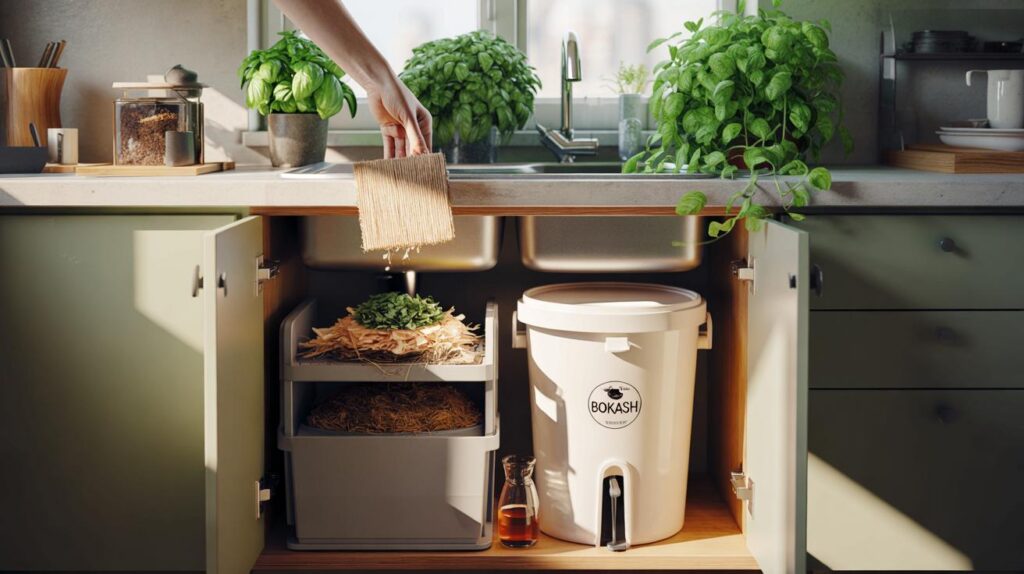
We cram life into tiny spaces and then blame the bin when it smells like regret. Small kitchens. Thin walls. Flatmates who cook fish at 10pm. The idea of composting feels dreamy and impossible at the same time — helpful for the planet, awkward for your hallway. We’ve all had that moment where you open the pedal bin and think, not today. But what if composting didn’t have to look or smell like composting at all?
The first time I saw a wormery under a London sink, I expected a whiff of doom. The washing machine throbbed, steam curled off a kettle, and the tiny bin sat quietly in the dark like an extra appliance. I leaned in and smelled… nothing. Just the faint paper-dry scent of a bookshop. The owner fed it like a pet — small scraps, a sprinkle of shredded mail, lid back down. Five minutes. Done. No drama. It felt a bit like cheating, to be honest. And yet the basil on the sill was thunderously green. That’s what caught me.
Yes, you can compost in a flat — quietly
When people say compost smells, they’re describing rot. Controlled composting isn’t rot. It’s a small, well-fed ecosystem that eats your peels and keeps odour locked down. The trick is balance and containment: the right mix of “greens” and “browns” in a sealed or lidded setup, not a sloppy bin in the corner. Think of it like brewing coffee rather than leaving a mug to go furry. Done well, it hums along and you barely notice it’s there.
Ellie in Hackney runs a two-tier worm bin beneath her sink. She feeds it chopped veg trimmings, adds a handful of shredded cardboard, and keeps the moisture like a wrung-out sponge. Two months in, no smell, no flies, just a little tap at the base where she drains “worm tea” for her pothos. She started after seeing WRAP figures showing UK households bin around 6.6 million tonnes of food a year. It felt absurd to her that lettuce leaves travelled to landfill. So she changed the story inside her kitchen.
Smell control is just physics and biology. Nitrogen-rich food scraps need carbon-rich cover (paper, card, coco coir) to soak up moisture and lock odours. Oxygen keeps microbes happy, so worm bins like a gentle fluff now and then. Airtight “bokashi” bins ferment scraps without air, so they don’t emit smells either — the lid stays shut and a sprinkle of bran powers a clean, pickled breakdown. Both systems turn food into something useful, instead of a bin bag that sweats on a summer night.
Pick your system, set it up once, then go on with your life
Two flat-friendly routes shine. A wormery (vermicomposting) is a ventilated box with bedding (coco coir or damp shredded card) and composting worms. Feed small amounts, cover with dry material, keep moisture like a squeezed sponge, and harvest a rich compost in a few months. Bokashi is even simpler: an airtight bucket plus bokashi bran. Add scraps in layers, press down, sprinkle bran, close the lid. After two weeks, you’ve got fermented “pre-compost” that you bury in a planter or drop at a community garden to finish. **No smell** if you keep lids on and follow the cover rule.
Common wobbles are easy to fix. Overfeeding a worm bin leads to a sour whiff — feed less, chop smaller, add more dry browns. Onion and citrus are fine in small amounts for worms, just not as the main course. Meat and dairy are a no-go in wormeries, but bokashi can handle them, which makes it brilliant for mixed kitchen scraps. Freeze peels if you’re away for a long weekend. Drain liquid from bokashi every few days and dilute it 1:100 to feed plants. Let’s be honest: nobody does that every day. So set a reminder once a week and call it good.
Start small and let the habit become background noise.
“If you can make a cup of tea, you can compost in a flat,” says a community composter in Peckham. “It’s two extra gestures, not a new personality.”
- Begin with one system: wormery for soil-like compost, bokashi for speed and mixed scraps.
- Keep a caddy with a tight lid on the counter; empty it every day or two.
- Remember this mantra: Cover every scrap with dry browns.
- Chop scraps, feed little and often, and keep it out of direct sun.
- Share extras with neighbours or a local garden — Small flat, big impact.
Where the magic goes — and how this fits your life
The end product shouldn’t pile up like Tupperware. Worm castings go into houseplants, balcony boxes, or a friend’s garden; a mugful per pot is plenty. Bokashi pre-compost disappears fast when mixed into soil in a planter; after a few weeks it’s indistinguishable from rich earth. No balcony? Feed it to a community garden, allotment society, or a neighbour with tomatoes. Many UK councils now collect food waste too — your flat system is just a clean staging area. *It feels oddly hopeful when your bin stops smelling like bin day.*
| Point clé | Détail | Intérêt pour le lecteur |
|---|---|---|
| Choose the right system | Wormery for soil-like compost; bokashi for airtight, fast fermentation | Matches your space, diet, and patience |
| Keep odours at zero | Balance greens with browns, lids closed, moisture like a wrung sponge | Flat stays fresh, flatmates stay happy |
| Use the outputs | Top-dress houseplants, mix into planters, or share with a garden | Visible results that make the habit stick |
FAQ :
- Will worms escape into my kitchen?Healthy worm bins keep worms where the food is. They prefer the dark, moist bedding, not your tiles.
- What if I get fruit flies?Cover every new layer with dry card or coir, keep a tight lid on the caddy, and bury food in the bedding. A sticky trap nearby helps.
- No balcony — where do I put bokashi pre-compost?Mix it into a large planter to finish, or take it to a community garden/allotment. Some zero-waste shops accept it too.
- Does an electric “composter” solve this?Those are dehydrators or grinders. Handy, but not true compost. Still need soil time or a garden drop-off.
- How long before I see results?Worm bins yield castings in 2–3 months. Bokashi ferments in ~2 weeks, then finishes in soil over a few more.



Ok but… worms? yikes.