
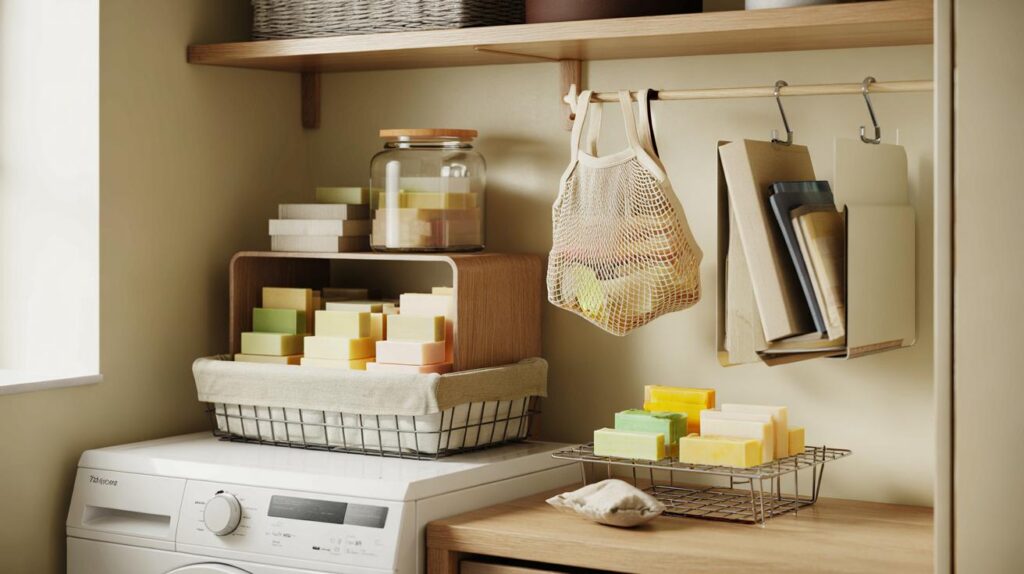
Bulk-buying soap bars saves pennies, then swallows your laundry room. Wrappers split, scents mingle, and a sticky film of lint settles across everything. The room that should feel crisp and practical ends up looking like a corner-shop shelf after a rush hour, and your weekend reset turns into a hunt for a single unscented bar.
The washing machine thumps, the dryer breathes warm air, and on the wire shelf above, twenty-odd soap bars lounge like lazy cats. Some are in their cardboard sleeves, some naked and chalky at the edges, one wedged under a bottle of softener as if hiding from chores. You reach for a fresh bar and pluck three by mistake, because the box they came in tore weeks ago and nobody confessed. Even the air smells indecisive, a muddle of lavender, tea tree, and something that might be sandalwood or yesterday’s detergent. There’s a better way.
Why soap bars take over your laundry room
Soap bars breed clutter for the simplest reason: they’re small, they roll, and they arrive in flimsy packaging that gives up at the first hint of humidity. A half-open sleeve becomes a trap for dust; one bar becomes three as packets split and fall forward. **What looks like “stocking up” quietly becomes visual noise, and noise erodes the calm you need in a chore-heavy space.** Your eye catches the mess each time you load a wash, and that tiny irritation stacks up.
In a terrace house in Leeds, I watched a family of four try to find the “good” bar, the one that doesn’t set off a teenager’s eczema. Nine spare bars clattered around a basket next to pegs and odd socks. The mum had started keeping a stash in a bread bin, which sounded clever until the bin trapped moisture and turned a couple of glycerin soaps slick. We’ve all had that moment when you find the thing you wanted, only to realise it’s been ruined by where you put it.
The soap problem is really a moisture-and-movement problem. Cardboard softens, scents transfer, and glycerin-based bars “sweat” in damp rooms. If soaps can cure — a gentle pre-dry that hardens them — they last longer and feel nicer in use. If they can breathe in storage, they won’t go mushy. Group them by type, stop them sliding, and you remove the chaos from the moment you reach out your hand.
Smart, tidy storage that actually works
Start with a simple three-step: pre-dry, sort, contain. Lay new bars on a wire rack or a spare oven shelf for seven days in a dry hallway or airing cupboard. Then sort by scent and purpose — everyday, guest, sensitive. **Store bars dry and exposed to gentle airflow in breathable containers, not sealed plastic.** Wire baskets, mesh produce bags, or glass jars with vented lids keep dust off but let moisture out.
Small upgrades make a big difference. A magazine file turned on its back becomes a neat soap cubby; drawer dividers stop bars nudging forwards; an over-door caddy keeps a week’s supply within reach while the bulk lives higher up. Don’t mix unscented with strong florals if you care about a clean smell. Let’s be honest: nobody really does that every day. The trick is setting it up once so the space stays on your side even when you’re rushing.
Think of rotation like a mini pantry rule: first in, first out. Add a subtle mark — a dot with a pencil — and put newer bars behind older ones so you don’t create orphans at the back.
“Airflow beats airtight every time in a laundry room,” a home organiser told me. “If your container would make bread go stale, it’s probably perfect for soap.”
- Keep a one-week “active” stash at eye height; store the rest higher.
- Use a peg rail with a mesh bag for guest soaps and sample bars.
- Slip a silica sachet under baskets if the room steams up often.
- Label by scent family: citrus, herbal, neutral.
- Give glycerin bars extra pre-dry time before boxing.
Make space feel calmer, not just tidier
When your laundry room looks quiet, your day feels a notch easier. **Labelled, breathable containers signal order without shouting, and a small “active” zone stops the constant rummage.** Once a month, glance at your stash as you would a fruit bowl, nudging older bars forward and donating the odd scent you’ve fallen out of love with. You’re not chasing perfection; you’re giving yourself one less thing to trip over, literally and mentally.
| Key points | Details | Interest for reader |
|---|---|---|
| Pre-dry bars | 7 days on a wire rack or airing cupboard shelf | Harder bars last longer and feel better |
| Choose breathable storage | Wire baskets, mesh bags, vented jars, not airtight tubs | Prevents mushy soap and scent muddle |
| Set a simple rotation | Mark lightly, place new behind old, keep a weekly “active” stash | Reduces clutter and waste without effort |
FAQ :
- Should I remove the cardboard packaging before storing?Yes, if the room is humid. Let bars cure out of the sleeve, then place them in breathable containers. Keep ingredient labels if allergies are a concern.
- Can I store soap bars in airtight plastic boxes?You can, but it traps moisture and can make glycerin soaps sweat. Aim for vented lids or a few pinholes, or pick wire/mesh instead.
- How do I stop scents from mixing?Group by scent family and keep unscented bars separate. A simple divider or a labelled jar per family keeps everything clear.
- Is it okay to keep bars in the bathroom?Short term is fine; long-term backups are better in a drier spot like a hallway cabinet or laundry shelf with airflow.
- What about handmade or natural soaps?Give them extra pre-dry time and avoid direct sunlight. Treat them like a good loaf: air first, then a breathable home.



This is the first guide that actually explains why my loundry shelf always looks chaotic. Pre-drying on a wire rack and using vented jars instead of plastic tubs make so much sense. I tried it this weekend and the bars already feel harder, less gummy. Bonus: grouping by scent stopped that weird lavender–tea tree mashup. Thanks for the calm-back, honestly.
Seven days to pre-dry feels excessive. In a small flat, where would I even put a rack? Any quicker workaround?