
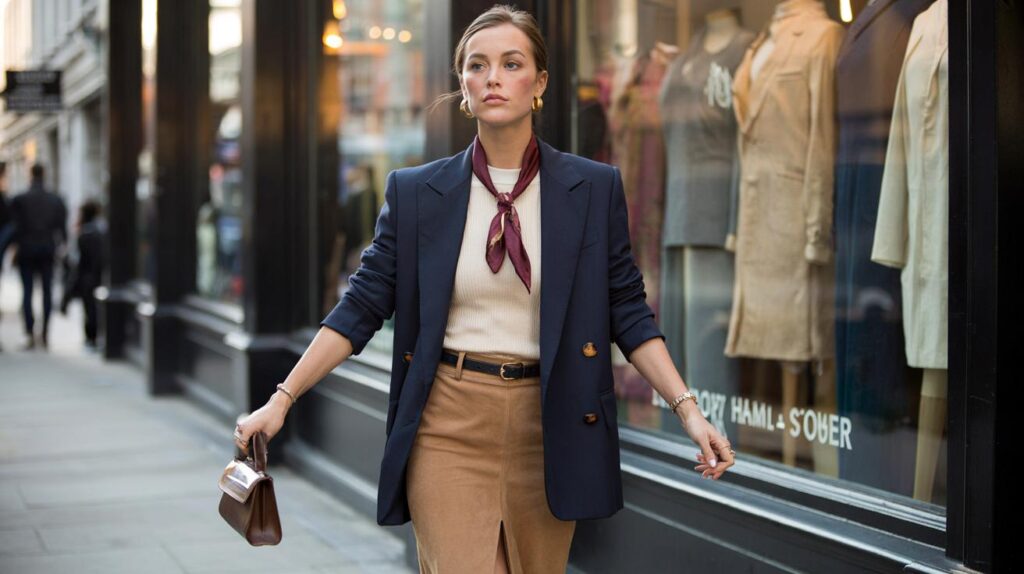
There’s a quiet thrill in sliding a £6 blazer from a charity-shop rail and realising it could pass for designer. The trick isn’t luck. It’s how you style it so no one even thinks to ask the price.
The woman in front of me at the till was buying a silk scarf for £3. She looped it once around her neck, caught her reflection in a dusty mirror, and stood taller in that small way people do when something works. I’d found a navy men’s blazer, slightly too big, with beautiful shoulders and wooden buttons. On the pavement outside, buses roared, a pram clattered by, and the city kept moving while I rolled the sleeves, popped the collar, and felt the outfit shift from “secondhand” to “intentional.” Someone asked where it was from. I smiled. They didn’t expect the answer.
Read the signals that look expensive
Price and polish don’t always travel together. What people clock first is silhouette, texture, and the hint of quality in movement. Look for weight in fabric, a sleeve that drapes rather than collapses, and seams that sit flat without puckering.
Pick up a knit and pinch the rib: does it spring back or go limp? Lift a coat by the hanger loop and see if the collar sits straight. If a dress has a lining and the zip moves smoothly, you’re halfway to “oh that old thing?” chic.
Shoulders matter more than logos. A blazer that lands cleanly on the edge of your shoulder makes everything else look sharper, even a T‑shirt. If the shoulder is right and the hem is neat, you can fake the rest with styling and confidence. Fit beats brand every single time.
Turn “good” into “great” with tiny tweaks
Pressing is the cheapest luxury on Earth. Steam a thrifted shirt and it stops looking tired; press a trouser crease and strangers will assume tailors are involved. Swap cheap plastic buttons for matte horn or tortoiseshell and watch a £7 cardigan jump three tax brackets. A lint roller is a miracle wand in a world of bobbles and stray fluff.
We’ve all had that moment when a bargain looks almost right but not quite. Shorten a hem with iron-on tape, or do a clean crop at a repair café and show an ankle to sharpen the line. Let’s be honest: nobody really does that every day.
A neat belt can turn volume into shape, and a French tuck stops a top from swallowing you whole. Rotate cuffs to show a crisp stripe under a jumper and add gleam with one deliberate piece of jewellery. Polish your shoes and your whole outfit instantly reads richer.
“The eye forgives a lot if the edges are cared for: collars, cuffs, hems, and shoes,” said a stylist friend who swears by charity-shop tailoring.
- Change buttons to upgrade knitwear or coats.
- Steam, lint-roll, and de‑pill knits for a studio-fresh finish.
- French tuck, cuff, and roll sleeves to shape the silhouette.
- Add one sharp accessory: a structured bag, a clean belt, or a silk scarf.
- Polish leather and keep soles tidy; shoes do more talking than labels.
Build the high-low mix people trust
Anchor your find with one piece that already looks premium: a structured coat, clean trainers, a leather belt with a subtle buckle. Keep the palette tight and tonal—navy with ink, cream with oat, black with charcoal—so fabrics blend and look dearer than they are. The secret isn’t to hide the price; it’s to give the eye a story that makes sense.
Use the rule of thirds to stop outfits feeling accidental. One third statement (your £8 suede skirt), two thirds quiet support (a ribbed knit and a long-line coat). Vary textures—soft with glossy, brushed with smooth—to get depth without shouting.
Check three details before you leave the house: shoulders, hem, and hardware. Trim loose threads, tighten a button, and switch out flimsy belts for something solid. A tiny spritz of fabric spray takes out that “shop floor” scent and adds freshness without fuss.
Truth is, most people see confidence and cadence more than price tags. Walk like you meant to wear it and let the light catch one beautiful element. Conversation will follow, and it won’t be about money.
| Point clé | Détail | Intérêt pour le lecteur |
|---|---|---|
| Fabric and fit first | Weight, drape, clean shoulders, flat seams | Quickly separates “cheap” from “quietly luxe” |
| Micro upgrades | Steam, de‑pill, lint‑roll, swap buttons | £2 tweaks that elevate the whole look |
| High‑low harmony | Tonal palette, one sharp anchor, balanced proportions | Makes under‑£10 finds look intentional and expensive |
FAQ :
- How do I spot quality fabric fast?Pinch or scrunch it: if it bounces back, you’ve likely got a winner. Look for natural fibres or blends with texture, not shine.
- Can I make polyester look expensive?Yes—keep it matte, steam it well, and pair it with richer textures like wool or denim to cut the glare.
- What buttons should I use for an upgrade?Horn, corozo, or tortoiseshell-style in a matte finish. Choose weighty ones and keep the scale in proportion.
- How do I style a too‑big blazer?Roll the sleeves, nip the waist with a slim belt, and pair with slim trousers or a pencil skirt to balance volume.
- What one thing pays off every time?Pressed edges and polished shoes. They frame the outfit and make everything else look considered.



Tried the French tuck + steamed blouse and my £4 skirt suddenly looked designer—wild! 🙂