
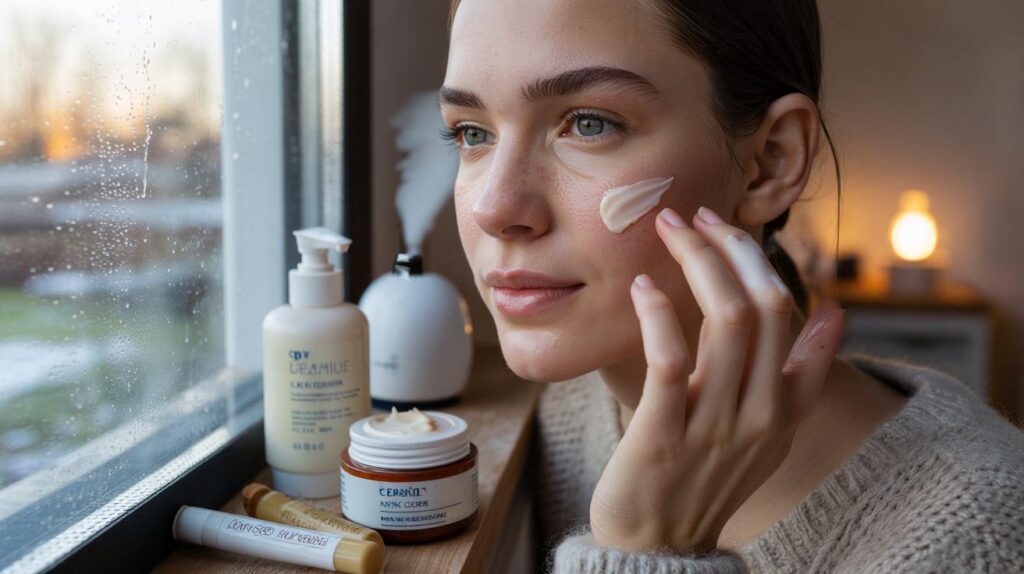
The clocks go back, the air gets that crisp bite, and your skin starts asking questions you can feel. In the bathroom mirror, cheeks look a touch tight, lips are already rehearsing their winter crackle, and that light gel moisturiser you loved in July suddenly feels like wearing a T‑shirt in a draught. Commuter carriages steam with breath, then offices hum with central heating that drinks the room dry. You swipe balm on your mouth, you dab cream under your eyes, and still there’s that faint drift towards dull. We’ve all had that moment where you wonder if your face is thirsty or just tired. November is not the villain. It’s the signal that your routine needs to shift gears. And that shift is gentler than you think. Watch what happens when you treat your skin like it lives both indoors and out.
The November skin shift you can feel
Stand at a bus stop at 8 a.m. and you can sense it: cold wind, low sun, then a wave of dry indoor heat on the other side of the day. That back‑and‑forth strains the skin’s outer layer, which is basically your weatherproof jacket. When that jacket thins under friction and dry air, water slips out faster than you can put it back in.
Last week I watched a barista in a wool beanie steam milk under a skylight while their knuckles went pink; later, in the same café, three people quietly rubbed lip balm like a ritual. Search interest for “dry face November” climbs every year right about now, and dermatology clinics see more flare‑ups of redness and rough patches as heating clicks on. None of this is dramatic. It’s that slow fade where makeup sits oddly and your face feels a size too small by 4 p.m.
The logic tracks back to water movement and oil balance. Cold air carries less moisture, and radiators lower indoor humidity to a level your skin reads as desert. Humectants like glycerin help pull water in, but without a richer seal on top, that water can drift right back out. So November becomes the month of strengthening the skin barrier, the way you’d switch from a light rain jacket to a lined coat. November isn’t a punishment for your skin.
What to actually change, step by step
Start where most people overdo it: cleansing. Swap foamy, sulphate‑heavy washes for a low‑lather cream or a mild gel with glycerin. Wash in warm, not hot, water, and leave a trace of dampness before your next step so your products have something to work with.
The quiet upgrade is in moisturising. Layer a hydrating serum with humectants, then a mid‑weight moisturiser with ceramides or squalane, and seal dry zones with a pea of balm. Soyons honnêtes : personne ne fait vraiment ça tous les jours. Let’s be honest: nobody does that every single day. Do it on nights after wind, long runs, or any day you’ve felt the tightness creep in.
Dermatologists often suggest small edits over big overhauls.
“The goal isn’t a heavier routine; it’s a smarter cushion between your skin and the environment,” says Dr. Leila Moore, a London consultant dermatologist. “Think barrier support first, then everything else.”
Use this as your simple swap map:
- Cleanser: foaming to creamy/milky
- Moisturiser: gel to cream with ceramides
- Serum: pure hyaluronic to multi‑weight humectants + panthenol
- Retinoid: steady dose to one rest night each week
- SPF: daily, but look for hydrating filters or a moisturiser‑SPF hybrid
A routine that breathes with your month
There’s a tiny habit that smooths the whole month: time your skincare to your environment. Do hydrating steps right after your shower when the bathroom still holds a hint of steam, then give your moisturiser 60 seconds to settle before dressing. If you use a retinoid, apply it on fully dry skin, then buffer with cream around the corners of the mouth and nose.
The biggest November misstep is trying to scrub back glow that was really just summer humidity. Over‑exfoliation shows up as stinging, roughness, and lip corners that split when you smile. Pull back to once weekly chemical exfoliation with lactic or mandelic acid, and skip the grainy stuff for now. If your skin still protests, pause exfoliation altogether for two weeks and rebuild your barrier with ceramides and a drop of oil.
One more reality check: SPF still matters, even when the sky looks like a blank page. UV doesn’t clock off for winter, and pigmentation loves routine lapses. Think of it as seatbelt skincare: boring when it works, sorely missed when it doesn’t. SPF in November is about prevention, not perfection.
Still worried about looking shiny indoors? Dab a touch of translucent powder only where you need it and keep cheeks dewy. Makeup reads better on moisturised skin than on over‑stripped skin, and powder clings more kindly to a calm surface. Your goal isn’t matte. It’s comfortable.
Hydration from the inside helps, but you don’t need to drown yourself in litres. Keep a bottle at your desk and sip steadily, then let your environment do part of the work. A small bedroom humidifier can keep night air around 40–50% humidity, which your skin will greet like a warm scarf.
Hands and lips are the canaries in the coal mine. Park a tube of fragrance‑free hand cream by the sink and apply while hands are still a touch damp; swap your lip balm for one with lanolin or beeswax, and put a spare in your coat pocket. These small, boring moves are where winter comfort is made.
Body care wants the same logic. Shorter showers, gentler washes, and a body cream with urea or shea that sinks without stickiness. If you itch after towel‑drying, you waited too long — moisturise within two minutes of stepping out. Your skin is asking for rhythm, not rigor.
On nights when everything feels tight, try the lightest version of slugging: a whisper of ointment over cheekbones only, not the whole face. Do it on wind‑bitten days and skip it if you’re acne‑prone or already shiny by noon. Small experiments count more than big gestures.
If central heating is pumping, give your face a mid‑afternoon reset. A mist with glycerin, then a fingertip of cream pressed over makeup, can stop that 4 p.m. tightness. You’re not doing “extra”. You’re matching your skin to your day.
Now the curveball: your scalp is skin, too. If it’s flaking, switch to a gentle shampoo and bring in a once‑weekly anti‑dandruff formula with zinc pyrithione or ketoconazole. Warm oils can soothe, but rinse well so you don’t trade comfort for greasiness.
If you’re testing a new retinoid or vitamin C, space launches. Start one, ride it for two weeks, then add the other. Stacking actives in November is like wearing new boots and a new coat on the same day — you won’t know what’s rubbing where.
Lastly, temperature. Hot showers and radiators pressed close to your face are satisfying in the moment and taxing by dinner. Keep things warm, keep your face a step back from the heat, and give your skin the chance to keep its own balance.
Keep your expectations kind. November is a month of adjustment, not transformation. If your skin looks the same on Monday and a little flushed on Wednesday, that’s not failure. That’s feedback. Swap one step, live with it, then swap another. The most resilient routines this month are the ones that flex with your life, not fight it.
There’s also the alcohol thing, and yes, it matters. Rosé season might be gone, but cosy pints and mulled wine bring their own flush. If your cheeks go crimson after one glass, add an extra moisturiser layer that night and don’t chase it with a steamy shower. Small balances steady the whole week.
I kept a skin diary once for November and learned more in ten lines than in ten blogs. Windy day, tight cheeks. Office meeting under a vent, red patches at 6 p.m. Early night with a richer cream, calm by morning. A few notes can show you patterns faster than any trend. And then you only change what moves the needle.
One last whisper: ignore the guilt. You missed SPF on Tuesday? You over‑exfoliated last weekend? You’re human. Shift the next step, drink some water, and choose the comfortable option tonight. Your skin forgives more quickly than you think.
The November mindset that sticks
Think of November skincare like changing the duvet. You’re not redesigning the bedroom; you’re swapping the weight to match the weather. Choose comfort, choose consistency, and give your face that soft buffer between street and radiator. Share the trick that helped you most — the milky cleanser, the two‑minute body cream rule, the lip balm in the coat pocket — and watch how many people nod. The month moves fast. Your skin is doing its best to keep up. What happens if you meet it halfway?
| Point clé | Détail | Intérêt pour le lecteur |
|---|---|---|
| Switch to barrier‑friendly textures | Creamy cleanser, ceramide moisturiser, balm on dry zones | Less tightness, fewer flare‑ups, makeup sits better |
| Dial back exfoliation | Once weekly lactic/mandelic, pause if stinging or roughness | Prevents redness spiral and protects the skin barrier |
| Keep SPF in play | Hydrating formulas or moisturiser‑SPF hybrids | Steady protection against UV and pigmentation drift |
FAQ :
- Do I need a heavier moisturiser or just more of the one I have?Try your current cream in a larger pea with a drop of squalane first. If tightness lingers by afternoon, step up to a ceramide‑rich cream.
- Is hyaluronic acid enough for November?It helps, but it needs backup. Apply on damp skin and seal with a moisturiser so water doesn’t evaporate away.
- Should I stop retinoids when my skin feels dry?Not always. Buffer with moisturiser, reduce frequency to every other night, and add one full rest night weekly if needed.
- Do I still need sunscreen on grey days?Yes. UVA penetrates clouds and windows. Pick a hydrating SPF to make it feel like skincare, not a chore.
- What about “slugging” in winter?Use it like a spot treatment over cheeks or around the nose on windy days. Skip if you’re acne‑prone or already oily.



Loved the “lined coat” analogy. I swapped my foamy cleanser for a milky one and my face no longer feels a size too small. Thanks for the gentler, barrier‑first approach — SPF as seatbelt skincare definitley made it click 🙂