
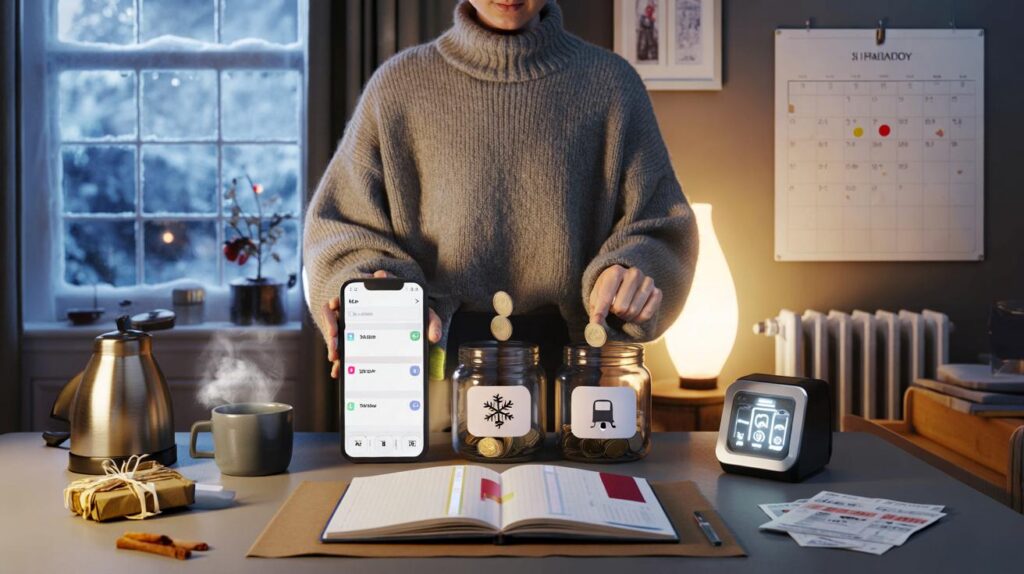
Energy prices twitch, daylight shrinks, social plans multiply. Winter spending creeps in sideways: a higher gas bill here, a last‑minute train fare there, a big food shop that wipes the week’s wiggle room. You promise yourself you’ll keep track, then the month melts away and the card statement bites. A budget planner sounds boring until you realise it’s the only warm light in the room. This is about staying steady when the season isn’t.
On a cold Tuesday, the kettle rattles and the radiators hum like sleepy bees. You open your banking app, half squinting, and it’s all there—little leaks you didn’t notice: a subscription you forgot to cancel, a take‑away after a frozen commute, a top‑up for the smart meter that made sense at the time. The house smells faintly of damp wool and cinnamon. You scroll back a month and see a pattern that looks like weather. Part of you wants to close the phone and put it under a cushion. Another part leans in. Winter money isn’t random. It’s rhythmic.
Why winter derails your budget — and how to see the pattern
Heat, light, travel, gatherings—winter stacks costs in clumps. You don’t spend a bit more each day; you spend in bursts. That’s why budgets feel broken in December and numb in January. One icy week can push your energy usage to the top of the graph, then the boiler rests and you think you’re safe. You’re not reckless. You’re human in a season that arrives like a drumbeat.
Take Amira, 32, who thought she’d gone “off track” in November. She wasn’t. Her spend rose in three spikes: the first cold snap, the office do, and the family visit that meant trains, snacks and a last‑minute gift. When she mapped those on a calendar, the numbers stopped feeling like failure and started looking like a forecast. Smart meter data tells a similar story—usage surges on the first frost, not the fifth. The budget planner isn’t just a spreadsheet; it’s a weather map for your wallet.
What’s going on is part maths, part mind. The maths is simple: heating degree days, peak travel dates, grocery prices that swell before holidays. The mind part is trickier. We overvalue warmth and convenience when we’re tired and cold. We also “mentally account” for parties and treats as if they aren’t real money. A planner gives your future self a voice at the table. Open the app and face the numbers. The chill lifts when your plan reflects reality instead of fighting it.
Build a winter budget planner that actually sticks
Start with a four‑box blueprint. Box one: fixed costs (rent, council tax, broadband, insurance). Box two: energy and travel, which you track weekly, not monthly. Box three: food and essentials, with a ring‑fenced “cold weather buffer” of £10–£20 per week. Box four: joy and gifting—yes, a real line. Then drop these boxes onto a calendar. Mark known spikes: first frost week, office party, school holidays, long trips. Now split your pay into weekly envelopes, digital or paper. Budget becomes choreography, not chaos.
People trip over two things: ambition and friction. Ambition says “I’ll cut my grocery spend by half overnight.” Friction says “I’ll log every purchase as soon as I make it.” Both collapse on week two. Let’s be honest: nobody really does that every day. Instead, run a ten‑minute check‑in each Sunday. Round to the nearest pound. Use categories that fit your life, not perfect templates. If your home gets draughty in cold snaps, your “energy” line is a spring. Let it stretch, but keep it anchored.
One small rule changes everything: pay winter‑you first. Skim 5–10% of income into a “heating and travel” pot on payday and pretend it doesn’t exist until needed. Saving at the start isn’t harsh; it’s humane. Then give yourself a simple toolkit you’ll actually use:
“A good budget planner is a winter coat for your money: light enough to wear daily, warm enough to matter.”
- Winter calendar: highlight energy peaks, events and travel days.
- Two‑pot system: “Musts” and “Nice‑to‑haves”, with caps you can see.
- Weekly snapshot: bank balance, category totals, next seven days.
- Frost buffer: £10–£20 for cold‑day extras, reset each week.
- Gift tracker: names, caps, bought/not bought, and postage dates.
Make savings feel effortless in the cold months
We’ve all had that moment when the house is quiet, the heating sighs, and you wonder where the money’s gone. The trick isn’t to become a monk. It’s to lower the effort. Link your energy account to your planner, even if it’s just a monthly export. Set a standing order into a 4–5% easy‑access pot labelled “Heat & Moves.” Put your best‑value supermarket shop on repeat for three weeks out of four, then plan one special shop when you want it. Small frictions removed, small comforts kept. Momentum beats willpower in winter.
Inside the planner, let categories breathe. Food can have a “staples” lane and a “batch cook” lane. The latter saves you on the wettest Thursdays. Travel can split into “commute” and “family.” Energy can sit next to “home fixes,” so a cheap draught stopper earns you a visible win. If you share money, agree three signals: a green light spend (no chat needed), an amber (quick message), a red (pause and plan). Money talk gets warmer when it’s simple and short.
Deal with the sneaky stuff. Those three months of “free” streaming end mid‑January, not June. Pop the end date in your planner now. Refrigerate your leftovers and your habits: same containers, same shelf, labelled with a date. Batch cook when the oven’s already on for a roast. Small changes compound through the season. Add a reward line you’ll keep—hot chocolate after the weekly check‑in, a longer bath on no‑spend days. You’re building a winter you can live in, not a spreadsheet you resent.
Winter money is a conversation with yourself across colder weeks. A planner is the language. It turns feelings—chill, rush, guilt—into lines you can move and shape. You don’t need to track for hours or become that person with colour‑coded receipts. You need a calendar, five categories and ten minutes on Sundays. The rest is human. Share what works with a friend, swap recipes that save gas, trade train tips. The numbers matter, but the warmth comes from habits you can keep. There’s comfort in knowing what’s coming, and a quiet pride in meeting it on your terms.
| Key points | Details | Interest for reader |
|---|---|---|
| Map winter spikes | Use a calendar to mark cold snaps, events, and travel | Fewer surprises, calmer spending |
| Pay winter‑you first | Auto‑save 5–10% into a “Heat & Moves” pot | Less pressure when bills jump |
| Weekly ten‑minute review | Round to pounds, adjust caps, look seven days ahead | Easier tracking, no guilt spiral |
FAQ :
- What’s the simplest winter budget layout?Four lanes: Fixed, Energy/Travel, Food/Essentials, Joy/Gifting. Put them on a calendar and split by week.
- How much should I set aside for energy spikes?Start with 5–10% of income in a separate pot. Adjust after two weeks based on your meter or statements.
- Is it worth switching suppliers mid‑winter?Check exit fees and current caps. If the maths works in three months, do it. If not, add draught fixes and usage tweaks first.
- How do I track gifts without killing the vibe?Use a simple list with names, caps, and a tick for bought/posted. Keep one “wildcard” slot for last‑minute kindness.
- Do I need to log every transaction?No. Track categories weekly and round to the nearest pound. Precision is nice; momentum is gold.



This made winter money feel less scary—“pay winter-you first” is genius. I’ve already set a 7% auto-save into a Heat & Moves pot. Thankyou for the four-box blueprint; feels doable, not preachy.