
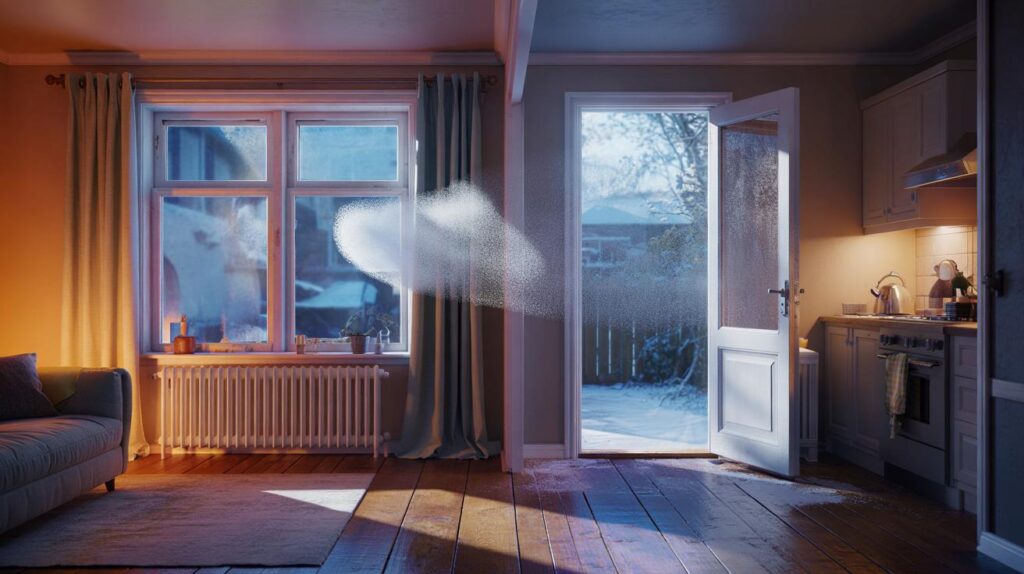
Your windows mist up, the heating ticks away, and that familiar winter worry creeps in: open the window and lose heat, or keep it shut and risk damp? The choice feels unfair. It isn’t.
The cold outside had a bite that morning, the kind that makes you hold your breath. Steam curled from the kettle, and a fine glaze of water gathered on the kitchen window like a quiet warning. I reached for the latch, then hesitated. The radiators were already warm. The smart meter had already scolded me once this week. In the hallway, there was a faint, sweet-sour smell only old houses know. Behind the sofa, a dark bloom was starting in the corner, a shy patch of mould creeping like ivy. I thought of the tiny lungs sleeping upstairs and the towels that never seem to dry in winter. The easy choice was to keep everything sealed. The right choice was stranger. The fix is colder than you think.
Cold air, warm home: the counter‑intuitive truth
Here’s the oddity most of us miss: cold air carries very little moisture. Bring that cold air inside and warm it up, and it becomes thirsty. It wants to soak up the damp from showers, cooking, and wet laundry. A brisk, short blast of fresh air doesn’t freeze your home; it resets the moisture level so your rooms can dry out. That’s why a five‑minute cross‑draught can do more for comfort than an hour of sulking next to a radiator. *Cold air isn’t your enemy; stale, damp air is.*
Two flats, same street, same weather. In one, a window sat on tilt all day, bleeding heat like a slow puncture. In the other, the tenants did “purge ventilation” twice a day—opposite windows wide for eight minutes, then shut tight. A cheap hygrometer told the story: the first hovered at 68–72% relative humidity most evenings, the second settled around 45–55%. The kicker? Heating use barely budged in the second flat. Air has a low heat capacity; your walls, floors and furniture do the heavy lifting. Warm the fabric, then refresh the air quickly, and you keep both warmth and health.
Mould loves the edges of life—cold corners, behind wardrobes, around window reveals. That’s not a moral failing; it’s physics. When humid air touches a cold surface, moisture condenses at the dew point and feeds the black spots. Keep your indoor relative humidity between **40–60%** and the risk drops fast. Watch CO₂ as well: under 1,000 ppm by day, lower for sleep. In winter, focus on short, controlled air changes that dump moisture and CO₂ without chilling the building fabric. Your lungs, and your paintwork, will both thank you.
Practical moves that don’t waste heat
Do ventilation like a ritual, not a whim. Morning and evening, create a cross‑flow: open two opposite windows or a window and back door for 5–10 minutes. Close internal doors to rooms you don’t want to chill. Hit the bathroom extractor on “boost” during showers and keep it running for 15 minutes after. Use lids when cooking and run the cooker hood to outside, not just the recirculating filter. Dry laundry next to a dehumidifier or in a well‑ventilated room, not on a radiator in a sealed space. It’s boring, yes. It works, also yes.
Common trip‑ups are small, very human things. We shut trickle vents because they feel draughty. We turn off noisy extract fans. We push sofas tight to external walls, then act surprised at the furry surprise in spring. On a freezing night, it’s easy to skip the window blast and hope for the best. We’ve all had that moment when the shower fog sits in the mirror like a stubborn cloud and we think, “It’ll clear.” Let’s be honest: nobody actually does this every day. That’s why simple habits, on a timer or routine, save you from negotiating with yourself.
Think of it as swapping damp for data. Get a £10–£20 hygrometer and let it nudge you. If evening RH climbs past 60%, do a short purge. If your bedroom CO₂ is high in the morning, crack a window for three minutes before making the bed. **Short, sharp airing beats a window‑on‑tilt** for hours. In older homes, leave a gap behind wardrobes and keep big furniture off cold outside walls. In new builds, use trickle vents as designed, not as decoration. **Use your extract fans daily.**
“Ventilation isn’t about making rooms cold,” says a building physicist friend. “It’s about replacing stale air quickly while the fabric stays warm. Short and decisive wins.”
- Target RH: 40–60%. Above 65% for long periods invites condensation and mould.
- Do two purge vents a day, 5–10 minutes with a cross‑flow.
- Run bathroom/kitchen extractors during and 15 minutes after wet activities.
- Keep trickle vents open in winter; they stabilise background freshness.
- Dry clothes with ventilation or a dehumidifier, not in a sealed room.
Make a simple winter plan that fits your life
Start with the rooms that make moisture. Bathrooms and kitchens are your front line. Put the bathroom fan on a humidistat or a run‑on timer. Teach a two‑step routine: door shut, fan on, window popped during the shower; fan continues, window closed after, door opened to the hallway once the mirror clears. In the kitchen, lids on pans, hood to outside, and a quick blast of fresh air after you plate up. In the bedroom, a morning micro‑airing does wonders—window wide, duvet folded back, three minutes while you dress. Add a quiet dehumidifier near laundry day if you dry indoors. If your home is very sealed, consider a continuous‑running fan or mechanical ventilation with heat recovery (MVHR) to keep freshness without thermal guilt. None of this needs to be perfect. It just needs to be regular enough that moisture never gets the jump on you.
There’s also the fabric story. Draught‑proof gaps that whistle at your ankles but keep those trickle vents open. Under‑cut internal doors so air can reach the extract fans. Move furniture a hand’s width off cold walls and lift heavy curtains off window sills so air can circulate. Wipe early mould with detergent and leave the surface dry; treat persistent patches with a fungicidal wash once the root cause is tackled. If you’re in a basement flat or a top‑floor sauna, a small continuous‑running fan can keep a gentle, low‑cost exchange going all day. In rentals, simple habits travel with you: a hygrometer, a fan you actually use, and the confidence to open a window without panicking about the bill. You’re not wasting heat. You’re spending a little to save a lot.
Some extras for the keen and the curious. A CO₂ monitor tells you when a room is “full of people air”; aim below 1,000 ppm, under 800 if you can. Watch for “microclimates”: that cold corner behind the wardrobe can sit several degrees lower than the room, so it’s the first to sweat. Plants are lovely, but a jungle in a small flat raises humidity. Tumble dryers that vent inside are a mould machine; condenser dryers still dump some moisture. If you air‑dry, pick one room, crack the window, shut the door, and let either a fan or dehumidifier do the rest. High‑spec kit helps, but the real win is a rhythm that suits you. Air, reset, warm, repeat.
The house that breathes is the house that lasts
Think of your home as a living thing: it needs to exhale. Winter makes us clamp down, yet the healthiest rooms are the ones that swap their air promptly and hold their warmth in the walls. A little knowledge softens the fear. Cold air is dry; warm fabric is patient; moisture wants an exit. Once you’ve felt the snap of fresh air and noticed the windows staying clear, you start trusting the process. You might even enjoy the ritual—kettle on, windows wide, deep breath, close up, warmth still there. Share the trick with a neighbour or a mate who’s battling a black patch behind the wardrobe. Fresh air isn’t a luxury. It’s the quiet, everyday way to keep your home kind.
| Key points | Details | Interest for reader |
|---|---|---|
| Short, sharp airing | 5–10 minutes with opposite openings creates a fast air swap without chilling walls | Keeps heat while dumping moisture and CO₂ quickly |
| Control humidity | Keep RH at 40–60% using extract fans, trickle vents, and a hygrometer | Reduces condensation and mould risk with simple, cheap tools |
| Habits over gadgets | Regular routines in bathrooms, kitchens, and bedrooms do most of the work | Actionable steps that fit busy lives and tight energy budgets |
FAQ :
- What’s the best time of day to ventilate in winter?Morning and evening work well. Do a short cross‑vent as you wake up and another after dinner or showers when humidity peaks.
- Won’t opening windows waste all my heating?Not with short purges. The building fabric holds most of the warmth; you’re swapping air, not cooling the bricks. Heat loss is modest compared with the cost of damp.
- Should I leave windows on tilt all day?It’s a slow heat leak. Better to do decisive, timed airing or use trickle vents plus extract fans.
- Dehumidifier or ventilation—what’s better?They complement each other. Ventilation removes pollutants and CO₂; dehumidifiers help with laundry and persistent damp. Use both smartly.
- How do I stop mould behind furniture?Leave a hand’s‑width gap, avoid outside walls for big pieces, keep RH under 60%, and give the room a daily fresh‑air reset.



Tried the 8‑minute cross‑vent this morning—windows stopped fogging and the place still felt warm. Mind blown 🙂 Any tips for doing this with a cat who sprints for open doors?