
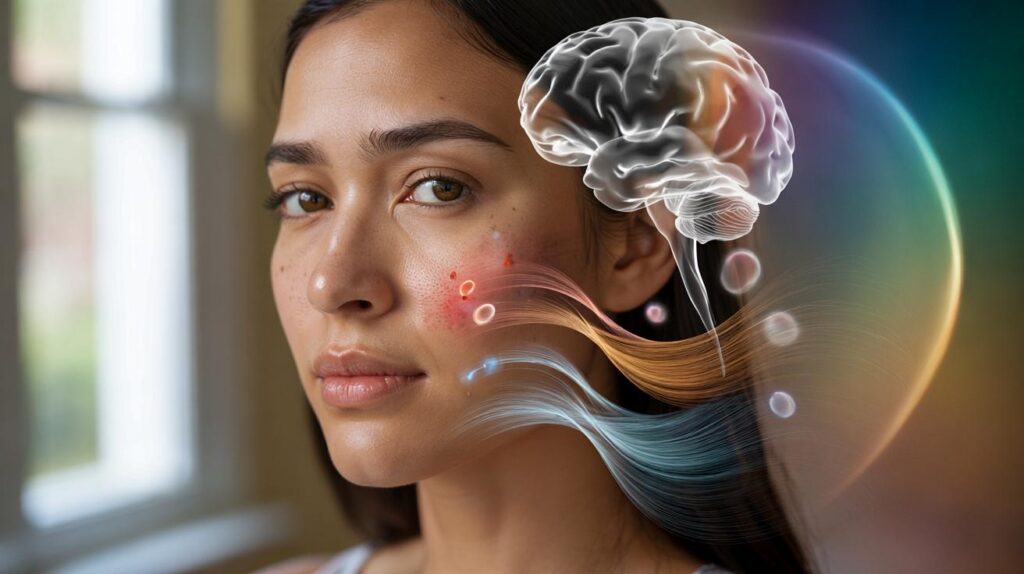
One morning your face feels glassy and calm. A week later, it’s oily, prickly, and your temper is one nudge from snapping. You change cleanser, curse the pillowcase, wonder if it’s the weather. **Your skin isn’t fickle; it’s responsive.** And it’s answering to something deeper than a serum.
On a bus into Brixton, a student leans into the window, trying not to touch a tender spot on her jaw. A mum texts her group, “Period due. Face’s gone rogue.” A man in a hi-vis scratches at new bumps along his hairline, still tired from the night shift. I notice the same choreography in my own mirror: sharper thoughts on the days a cyst pushes up on my chin, calmer skin on mornings I wake rested and oddly buoyant. Someone will say it’s the new moisturiser. Another blames the takeaway. The truth hums below all that. The pattern was hiding in plain sight.
Your skin is a hormone diary
Skin and mood don’t misbehave randomly. They move with the same tides: oestrogen, progesterone, testosterone, cortisol, insulin. Oestrogen plumps and brightens, which is why some days you look lit from within. Testosterone and cortisol push oil and inflammation, and suddenly your jawline feels like a protest march.
Take the luteal phase, those final days before a period. Sebum ramps, pores feel tighter, patience thinner. Studies suggest about two in three people who menstruate notice breakouts then, and many also report feeling more irritable or flat. A GP in Leeds told me her clinic’s “spotty Fridays” arrive right on schedule before bank holiday weekends. Not science textbook tidy. Real life tidy.
There’s a mechanism for the mood bit, not just vibes. Androgen receptors on sebaceous glands respond to hormonal swings, increasing oil. Oestrogen boosts hyaluronic acid and collagen, so when it dips, skin can look dull and thin. Progesterone shifts fluid, puffing pores. Cortisol—our stress signal—weakens the barrier and spikes inflammation, which nudges nerves and brain chemicals. *Hormones aren’t villains; they’re messengers with messy timing.* When the skin flares, the nervous system hears it too. That’s the brain–skin axis in action.
What to do when your face and feelings flare
Match your routine to your cycle or life stage, not the other way round. Early-cycle (days 1–10): keep it simple—cleanser, light moisturiser, SPF; add a gentle lactic acid once or twice if dullness shows. Mid-cycle (ovulation): pores are lively, so reach for a gel texture and a non-comedogenic SPF. Late-cycle (luteal): think calm—niacinamide 4–5%, azelaic acid or zinc, and a fragrance-free barrier cream at night. Period days: nourish with ceramides, glycerin, and a soft cloth, not a scrub. **Small, consistent tweaks beat big overhauls.**
Mind the habits that quietly fan the flames. Skipping breakfast can send insulin swinging, and that can push oil and breakouts—try protein plus fibre first thing. Over-exfoliation is a classic panic move; two nights of acids won’t “erase” a cyst, it will just anger your barrier. Let’s be honest: nobody really does that every day. We’ve all had that moment when a single, angry chin spot steals your mood for a morning. Breathe, then choose one path: soothe, hydrate, protect. Not ten products at once.
Build one tiny ritual for stress days. Two minutes of box breathing before bed, warm shower, then press a pea of moisturiser into damp skin—no rubbing, just press and pause. Your nervous system reads the slowness. Your skin follows.
“Your skin listens to your hormones, not your diary,” a dermatologist once told me. “So write in both.”
- Track a month: note spots, mood, sleep, and meals. Patterns beat guesses.
- Pick one active per phase (like azelaic late-cycle). Keep the rest bland.
- Go easy on sugar surges; anchor with eggs, Greek yoghurt, beans, or nuts.
- Move daily in any way you can—a brisk walk lowers cortisol more than doomscrolling.
- If cycles are irregular, acne is severe, or hair growth changes, speak to your GP about PCOS, thyroid, or perimenopause.
When to look deeper
Not every flare is a cycle plot twist. Oral contraceptives can calm or spark acne depending on the type; devices with progestin may shift mood and skin in either direction. During pregnancy, high oestrogen glows some faces and triggers melasma in others. Perimenopause often brings drier, itchier skin with surprise jaw breakouts and a wobblier mood, because oestrogen and progesterone no longer dance in predictable steps. **Your skin is not the problem; it’s the messenger.**
If you’re noticing extremes—painful, deep nodules; sudden flushes that feel like a siren; relentless itch with poor sleep—it might be time for a joined-up look: hormones, skin, and mind. Bloods and a chat can unlock options: topical retinoids, spironolactone for androgen-driven acne, or HRT choices that respect both mood and skin. And yet, there’s also the quiet work that costs nothing. Consistency, rest, a kinder inner voice. Share your notes with a friend, swap what actually helps, and compare the days the world looks softer. The body keeps a diary. Maybe we should read it aloud.
| Point clé | Détail | Intérêt pour le lecteur |
|---|---|---|
| Hormones sculpt skin texture and tone | Oestrogen supports collagen and hydration; androgens and cortisol push oil and inflammation | Explains why your face swings from dewy to congested without changing products |
| Cycle-synced, gentle routines work | Adjust textures and actives across the month; prioritise barrier on flare weeks | Practical steps you can try tonight, not a 10-step overhaul |
| Skin and mood share the same signals | The brain–skin axis links stress, nerves, and inflammation | Makes sense of those “snappy days” and spots arriving together |
FAQ :
- Which hormones are most likely to trigger breakouts?Androgens such as testosterone stimulate sebaceous glands, increasing oil and clog risk. Cortisol can amplify inflammation, especially during stress. Insulin spikes also nudge oil via IGF‑1.
- Why does my skin feel drier right before or during my period?Oestrogen dips reduce natural hydration and skin lipids, so water escapes more easily. The fix is simple textures with ceramides, glycerin, and a soft cleanser for a few days.
- Can birth control help my skin and mood—or make both worse?Combined pills can lower free androgens, often calming acne. Progestin-only methods can be neutral or trigger flares and mood shifts in some people. Track for three months and discuss options if the pattern feels off.
- Does stress really cause spots, or is that a myth?Stress raises cortisol, which weakens the barrier and fuels inflammation. Sleep, small movement breaks, and a steady breakfast are unfancy but reliable buffers.
- What happens at perimenopause and menopause?Oestrogen declines, so skin can turn drier, thinner, and more reactive, while androgens still drive jawline breakouts for some. Target barrier repair, consider retinoids slowly, and talk about HRT if symptoms stack up.



Super intéressant. J’apprécie les conseils sur la phase lutéale — niacinamide 4–5 % et acide azélaïque. Avez-vous des sources sur le lien insuline/IGF‑1? Je me demande si un petit‑déjeuner riche en protèines suffit quand on s’entraîne tôt. Et pour les peaux sèches: lactic vs mandélique, vous préférez quoi?