
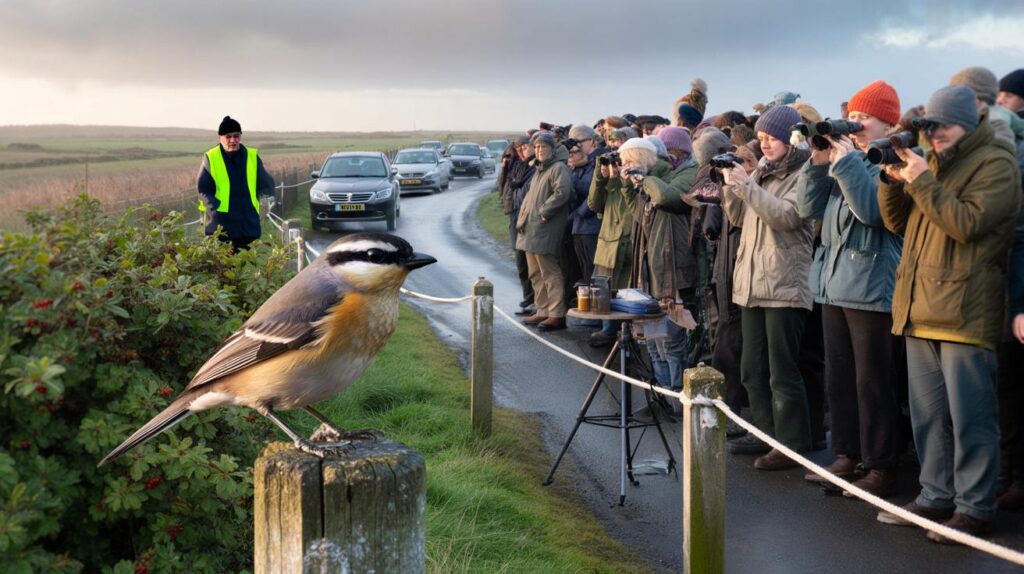
For a few breathless hours on a salt-stung morning, a quiet British lane turned into a pilgrimage. A small, sandy bird — the kind that makes even seasoned watchers blink twice — dropped into a hedgerow and lit up phones across the country. By lunchtime, the verge was a ribbon of tripods, thermos flasks, and trembling hands. Not seen in the UK for 34 years, and suddenly here. That’s how fast the world can tilt.
It began with a whisper over a walkie-talkie and a flurry of pings on rare-bird apps. I arrived to find a line of people staring at a single hawthorn, holding their breath as if the hedge might cough. A man in a weathered beanie grinned at the sky, waiting for the tiny silhouette that had drawn him four counties east. A woman passed a biscuit to the stranger beside her. A warden murmured about the “no flush zone” while scanning the ditch. It perched like a comma in the margin of the day. Then, a ripple rushed down the line like current. There it is.
The day the hedgerow stopped traffic
By mid-morning, the hard shoulder read like a road atlas — Hampshire, Fife, Gwent, Antrim. Car after car, then boots on gravel, then the soft hush of people resetting their heart rate. The bird — a soft gray-brown visitor with a neat black mark and quick, nervous head — sat long enough for tremoring hands to steady. We’ve all had that moment when you realise your phone camera is wildly out of its depth and your eyes need to do the work.
On the first pass, it flicked to a fencepost and shook off a raindrop. The hedge seemed to grow ears. A teenager whispered the ID to his dad, like sharing a secret. The old guard in waxed jackets didn’t cheer; they just exhaled. It flew again, low and tight, landing on a gate where someone had chalked “bird here →” in a rush of hope. For one man, it was his second attempt in two days after a red-eye from Glasgow. He finally got it in bright, ordinary daylight.
Why the frenzy? Rarity is part of it, yes, but the real magnet is story. A small, trans-Atlantic drift migrant, blown off course by weather and luck, suddenly writes itself into British bird lore after a three-decade blank page. Strong westerlies have been bullying the map all autumn, nudging wayward travelers into our hedges and farm tracks. Climate patterns are shifting the dice, too. When a species hasn’t been logged here since 1991, you aren’t just seeing a bird. You’re witnessing a line reappear in the ledger, a footnote become a headline.
How to watch a once-in-a-generation rarity without wrecking the moment
Stand back. That’s the first, least glamorous tip, and it’s the one that saves the day. Keep a car-length from the hedge. If one person steps closer, the front row ripples forward and the bird bolts. Find your sight line, plant your feet, and let the view come to you. Use the fence or a signpost as a landmark so you can call it cleanly: “On the second post, left of the gate.” Details calm the crowd.
Pack light but smart: binoculars, layers, water, and a small fold-up stool if your knees complain. Turn your phone to silent – the bird doesn’t need your notification chime — and switch your rare-bird app to reduced alert volume while you’re on site. Park where the warden asks. Close gates. If you’re new to all this, find the person with the calm voice and watch how they watch. Let’s be honest: nobody does this every day.
There’s an etiquette to rarity-chasing that isn’t written on the signs but matters more than any list. Speak quietly, share the view, and don’t push into private land just for a closer photo. If the bird drops out of sight, resist the urge to swarm the hedge bottom. Wait. Patience brings the bird back more often than pressure.
“I’ve waited thirty years for this,” said a birder named Diane, eyes shining. “I’m not risking the next thirty by taking one step too many.”
- No flush zone: stay behind the agreed marker line.
- Keep dogs on a short lead, away from hedges.
- Share directions in clear, simple landmarks.
- Use pull-ins; don’t block lanes or farm access.
- Leave no trace: cups, tape, chalk — take it all home.
Why a rare bird can change a place for a weekend — and linger in memory for years
For the village café, it was the biggest Saturday takings since last summer’s heatwave. Bacon rolls vanished by 10 a.m. The landowner, gently bemused, stood with tea in a builder’s mug and watched tripods bristle along his ditch like reeds. A police van eased through the parked line, blue lights off, windows open. Birders waved, sheep blinked, someone passed around jelly babies. Small economies wake up when a rarity touches down, and you could feel it ripple from the car park to the B&B check-ins.
There’s the science angle too. Every confirmed sighting feeds a network: grid ref, photos, plumage notes, wind direction, food sources. One quiet presence in a hedge plugs into a bigger map of how weather fetch and jet stream shifts are bending bird routes. Mild seas, late storms, longer growing seasons — the pattern is messy, but the spreadsheet doesn’t lie. Even a single record, cleanly documented and ethically observed, can nudge conservation conversations in the right direction.
And then there’s the bit that resists data. A rare bird reminds you that the world can still surprise you on a damp Tuesday. The mix of luck, grit, and community makes adults cry a little and teens look up from screens in pure, unguarded wonder. For some it’s a once-only story; for others, the spark that starts a lifetime of early trains and foggy cliff paths. The hedgerow empties by dusk, but the afterglow lingers on the A-roads all the way home.
| Key points | Details | Interest for reader |
|---|---|---|
| Rarity returns after 34 years | A drift migrant touched down on a British hedgerow, drawing hundreds within hours | Sense of history and the thrill of witnessing a ledger-entry moment |
| Ethical watching matters | Distance, quiet voices, and clear landmarks keep the bird settled and visible | Practical steps to see more and stress less, even in a crowd |
| Community ripple effect | Local cafés, B&Bs, and volunteers rallied as traffic and excitement surged | How a bird can energise a place and knit strangers together for a day |
FAQ :
- Where was the bird seen?A coastal hedgerow in eastern England, near farmland and a sheltered lane. Exact locations change fast; always check the latest alert before travelling.
- What time of day gives the best chance?Early morning and late afternoon, when feeding is likely and disturbance is lower. Midday can work on overcast days if the bird feels settled.
- Can I bring my dog?Only if leashed and kept well back from the hedge. Better yet, leave them at home for rarity days. Stress rises when dogs move close to cover.
- Do I need a telescope?Binoculars will do for most views. A scope helps share the bird with others and keep your distance. Team up and take turns if you don’t own one.
- How do I help without getting in the way?Follow the warden’s guidance, park considerately, and share clear directions. Upload clean notes and photos to your preferred reporting platform after you leave.



Thirty-four years and it shows up on a hedgerow like a comma—what a line to read again. Thanks for stressing the etiquette: stand back, share directions, no flush zone. Too many twitchs go sideways when folks creep forward. Packed light, found a calm voice, and got the best view of my season. Huge kudos to the warden and the landowner for keeping it humane and organised.
Genuine question: which species are we talking about exactly? The description sounds like a wheatear-type. If it’s the rare drift migrant hinted at, can someone link a clinching photo (tail pattern, primary projection)? After 34 yrs you definitley want nailed-on ID. Wind data + plumage notes would help.