
The scale used to decide my mood by breakfast. Clothes were a scoreboard I always seemed to lose. I stepped off the numbers treadmill and started dressing for the body I actually live in, and something unlocked I didn’t expect.
The bathroom tiles were cold, the scale sulking under a towel like a pet that knows it’s in trouble. I’d step on, inhale, exhale, bargain. In the wardrobe, jeans blinked at me with that familiar threat: try us and you’ll pay. On the bus, I found my reflection in the window and pulled my jacket closed like armour. We’ve all had that moment when a day is already decided by a number, before the sun’s even up. One week, after a scratchy hotel-room scale told an outrageous lie, I stopped. I hid it in the loft and walked out in soft trousers that actually fit. I didn’t know it yet, but that small act was the start of a bigger one. Something else began to weigh less.
When I stopped chasing a number
I didn’t make a speech about it. I simply removed the scale and listened for the silence it left behind. The first morning felt odd, like leaving the house without keys and realising the door doesn’t lock anyway. I noticed other metrics instead: how my shoulders dropped in a T-shirt that skimmed rather than squeezed, how breakfast tasted when it wasn’t a punishment. The relief was physical, like unclenching a fist I’d been holding for years.
Two weeks in, a friend’s wedding forced the issue: nothing “for later” would do. I walked into a small shop near the station, sweaty and under-slept, and said, “I want to look like me, but happy.” The assistant handed me a dress with a waist that met me where I stood. It wasn’t the size I used to buy. It didn’t matter. I danced in it until midnight, and when the photos arrived I saw laughter first, then the colour, then me. The number, somewhere, didn’t make the cut.
Scales are tidy. They offer one answer to a thousand messy questions. For me, the ritual had become a proxy for control. If the number dipped, I felt good; if it rose, I braced. That’s a fragile way to build a day. Removing the feedback loop let other cues speak: energy, appetite, the quiet confidence of fabric that cooperates. I realised I’d outsourced my self-respect to a bathroom gadget. Reclaiming it meant swapping surveillance for curiosity, chasing ease over precision, and dressing my body like a home instead of a project.
Learning to dress the body I have
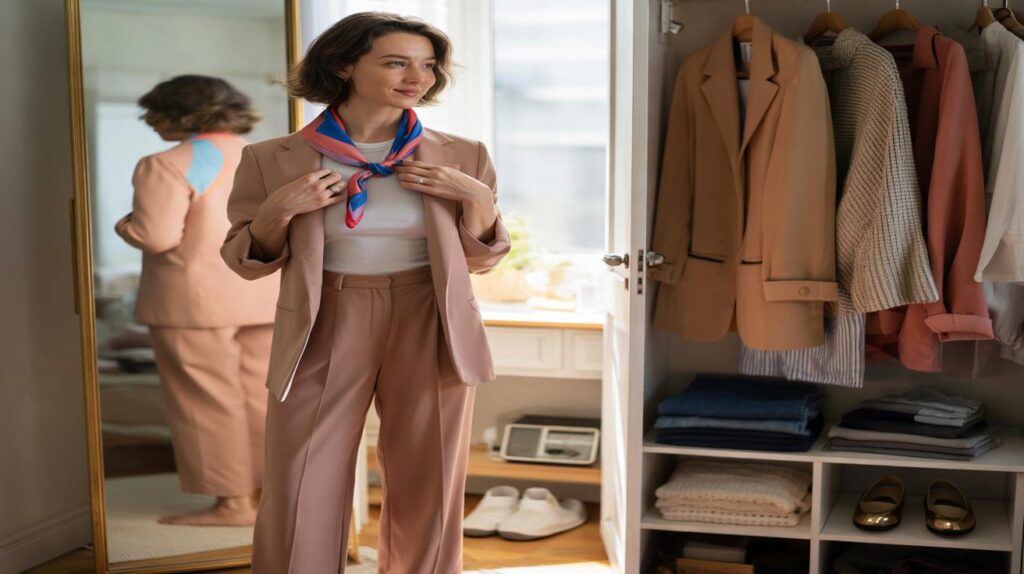
The first practical shift was a wardrobe audit with no drama. Three piles on the bed: love, maybe, no. If I put something on and immediately adjusted the waistband or tugged the hem, it went into the no pile. I built outfits on the “rule of three”: a base (tank and trousers), a structure piece (blazer, cardigan), and a texture or colour pop (scarf, trainers). Tailoring did more for my silhouette than any boot-camp ever did. A hem lifted to the ankle bone, a waist nipped where mine actually sits—instant presence.
The second shift was buying clothes for today’s life, not some future spreadsheet. That meant investing in a pair of trousers that glide over the hip, not wage war with it. It meant noticing necklines that flatter my collarbones, sleeves that hit mid-forearm, fabrics that breathe. Let’s be honest: nobody really steams their outfit every day. So I built a rail that thrives on low effort—creases that look intentional, knits that don’t sulk. I stopped treating size tags as morality plays, and saw them for what they are: wildly inconsistent guesses.
Small rituals stitched the change into my mornings. Shoes by the door I actually like. A mirror moved to better light. One signature thing—mine is a chunky ring—that makes even a supermarket run feel considered. On days when old habits whisper, I anchor to one phrase: dress for comfort and clarity, not apology. Dress the body you have, not the one you’re told to earn. And I mean that on weekdays, in rain, when the bus is late, when the meeting overruns.
“Style is a conversation with your day. If your clothes argue with you, change the script.” — a tailor in Brixton who quietly saved my Tuesdays
- Start point: one outfit formula that works on repeat (mine: wide-leg trousers, fitted tee, soft blazer).
- Fit check: sit, reach, walk—if it pinches, it’s not coming home.
- Colour lift: one shade that loves your skin next to the face, always.
- Micro-upgrades: swap scratchy for soft, flimsy for lined, dull for textured.
- Confidence cue: a tiny ritual—lip balm, watch, ring—that says “present”.
What changed — and what might for you
Something subtle started to happen. I was on time more, because there was less bargaining in the mirror. I spoke up sooner in meetings. I took more photos with friends because I liked how I looked on normal days, not just curated ones. The scale-free space gave me room to notice the rest of me: how I listen, the jokes I’m good at, the way a walk untangles a thought. I didn’t become a different person; I met the one who was waiting. It’s not a fairytale fix. There are mornings when I pull on three tops and sigh. On those days, I reach for my failsafe formula and keep moving. Confidence, it turns out, isn’t a summit. It’s tiny, repeatable choices that add up—micro-doses of courage stitched into fabric and habit. And some days that’s as simple as soft trousers and a bright scarf on a grey London bus.
| Key points | Details | Interest for reader |
|---|---|---|
| Replace the scale with signals | Track comfort, energy, and how clothes move on your body | Gives daily control without the mood rollercoaster |
| Dress for the life you have | Use a repeatable outfit formula and tailor key pieces | Makes mornings faster and kinder to yourself |
| Build rituals that stick | One signature accessory, better light, easy-care fabrics | Low-effort habits that quietly lift confidence |
FAQ :
- Should I throw out my scale?You don’t have to. Try a break—box it up for a month—and see how you feel. The space you gain is the real data.
- What if I have health goals that need tracking?Use behaviour metrics instead: sleep hours, steps, strength progress, meal consistency. Share goals with a clinician if that’s part of your plan.
- How do I shop on a budget?Prioritise fit and fabric in two or three hero pieces. High-street and charity shops are full of gems; spend on tailoring, not just labels.
- Work dress code feels strict—now what?Keep the silhouette professional and add ease through fabric and fit. Soft waistbands, breathable shirts, proper hems—comfort without breaking code.
- What if the confidence dip returns?It will, sometimes. Default to your outfit formula, go for a ten-minute walk, and revisit your “love” pile. Tomorrow is another canvas.



“Dress the body you have, not the one you’re told to earn” stopped me in my tracks. The way you described the wedding dress and seeing laughter first—wow. Thanks for turning fit into a feeling, not a number. Saving this for rough mornings.
Honest question: without weigh-ins, how do you make sure small health issues don’t creep up? Do you track labs or waist measurements instead? Curious where the line is between freedom and ignoring data.