
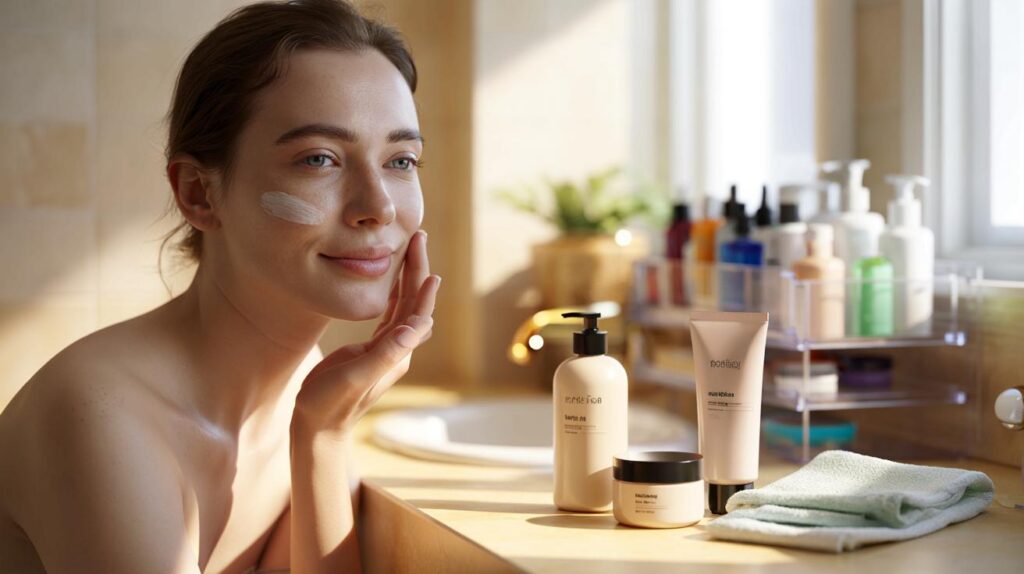
My bathroom shelf looked like a skincare orchestra warming up: vitamin C, retinal, acids, mists, oils, toners, boosters. My sensitive skin? Playing the triangle, offbeat and red. After one flare-up too many, I did the thing beauty forums whisper about and dermatologists debate: I stopped almost everything for 30 days. Not a detox, not a cleanse. A minimalist skin fast. I wanted to see whether quiet could do what noise couldn’t.
The first morning felt like stepping outside without a coat in April. Cool air, bright light, a familiar tingle rising on my cheeks. We’ve all lived that moment when your face throws a strop at the worst possible time, and your first instinct is to pile on more. Instead, I rinsed with lukewarm water, patted dry, and applied a plain, fragrance-free moisturiser. Then SPF. That was it. No tingle, just a quiet hum of doubt in the back of my head. What if less really is more?
The Month I Let My Skin Breathe
I didn’t arrive at skin fasting from a place of zen. I arrived frazzled, with a barrier as thin as my patience. Sensitive skin pings off tiny triggers—wind, hot showers, a new serum, even a hurried morning. I’d been throwing actives at a problem that needed peace, not performance. **My barrier didn’t need more; it needed mercy.** The idea was simple: give the skin a break, keep it clean and protected, and see whether the redness and stinging would back down.
The turning point came after a late train, a takeaway curry, and a dab of glycolic “for glow” before bed. I woke up to cheeks that looked like I’d fallen asleep under a heat lamp. The kind of flush that makeup can’t hide and a meeting can’t ignore. I spent that day in the loos, splashing cool water and whispering apologies to my face. That evening, I opened my cabinet and quietly slid everything except cleanser, moisturiser, and SPF to the back. It felt dramatic, like breaking up with a band you love because the gigs keep ending in a headache.
Skin fasting isn’t about punishing your face or binning science. It’s a reset. The skin barrier is clever—lipids, corneocytes, a fine acid mantle that holds the peace. When it’s stressed, it leaks water and flares with irritation, and you can end up in a loop of treating the side effects of your last treatment. By stripping back to essentials, you remove friction points and let the epidermis restore its rhythm. Think of it as stepping out of the algorithm and letting your skin’s own settings load. I wasn’t seeking perfection. I was seeking silence, and a reliable baseline.
How I Did a Minimalist Skin Fast (Without Freaking Out)
I set three rules and stuck to them like a label to a bottle. Morning: lukewarm rinse, pat dry, bland moisturiser, broad-spectrum SPF 50. Evening: gentle, fragrance-free cleanser if I’d worn makeup or SPF; otherwise, a rinse. No acids, no retinoids, no exfoliating toners, no essences, no oils, no masks. One moisturiser, no swapping. I kept showers short and warm, not hot. I switched to a soft, clean flannel and washed pillowcases twice a week. I logged sensations in my notes app: tightness, stinging, itch, shine, calm. It wasn’t ascetic. It was deliberate.
There are landmines. The first week can feel dull, like cancelling a night out because your feet hurt. Resist the urge to “just add a dash” of acid. Over-cleansing is the silent saboteur—your skin isn’t dirty, it’s thirsty. Keep makeup light, and remove it gently. Hydrate in low-stakes ways: sipping water, a humidifier by the bed, a non-foaming cleanser. Manage your expectations. Sensitive skin isn’t a straight-A student; it’s a quiet kid who thrives when you stop shouting instructions. Let’s be honest: nobody actually does that every single day.
I also prepped a small script to hush the product FOMO. *I’m not quitting skincare, I’m listening to my skin.* When friends asked why I’d “sacked” my shelf, I said I was taking my barrier off the rollercoaster. A consultant dermatologist told me something that stuck once I stopped trying to outsmart my face.
“The most healing routine is often the one you can repeat half-asleep. If your skin is reactive, predictability is medicine.”
- AM: Rinse, moisturiser with ceramides, SPF 50. No actives.
- PM: Gentle cleanse if needed, moisturiser. Stop at comfort.
- Always: Fragrance-free, no scrubs, patch-test any reintroduction after 30 days.
What Changed After 30 Days
By week two, the hot flushes mellowed. The itch that used to skitter along my jaw in central heating just… didn’t. My cheeks weren’t glassy or “snatched”; they were plain, hydrated, even-toned in that quietly competent way a good cardigan is. I noticed I rubbed my face less during Zoom calls, which probably tells you everything. Here’s the twist: the lack of drama gave me back attention I didn’t know I’d lost. I thought I’d miss the tinkering. I didn’t. I missed my face being boring in the best way. **Less became a habit, not a dare.**
| Point clé | Détail | Intérêt pour le lecteur |
|---|---|---|
| Essentials only | Rinse or gentle cleanse, simple moisturiser, daily SPF | Reduces triggers and sets a calm baseline fast |
| One-month rule | Hold steady for 30 days before reintroducing actives | Helps you see real cause-and-effect without guesswork |
| Barrier-first mindset | Ceramides, glycerin, squalane; skip fragrance and scrubs | Supports sensitive skin to look healthier with less effort |
FAQ :
- What is “skin fasting” exactly?It’s a short-term reset where you strip your routine to the bare minimum—cleanse, moisturise, SPF—so your skin barrier can recover.
- Is it safe for sensitive or eczema‑prone skin?Usually, yes, if you keep it gentle and consistent. If you have an active skin condition or are on prescription topicals, speak to your GP or dermatologist first.
- Can I wear makeup during a skin fast?Light, fragrance-free, non-comedogenic makeup is fine. Remove it softly with a gentle cleanser and avoid scrubbing.
- How long until I see changes?Some people feel less stinging in a week. Visible redness and texture often settle by weeks two to four, with steady, subtle improvement.
- What should I absolutely avoid?New actives, strong acids, physical scrubs, fragrance-heavy formulas, hot water, and product-hopping. Reintroduce one product at a time after 30 days.



Love this. My reactive skin is loud too, and the “predictability is medicine” line hit hard. I’m going to try your AM/PM rules for 30 days—did you notice any purging or wierd dryness around week one?
Not to be a skeptic, but is there any evidence beyond anecdotes that “skin fasting” improves barrier recovery versus just using a minimal, well-formulated routine? Curious about studies/derm sources.