
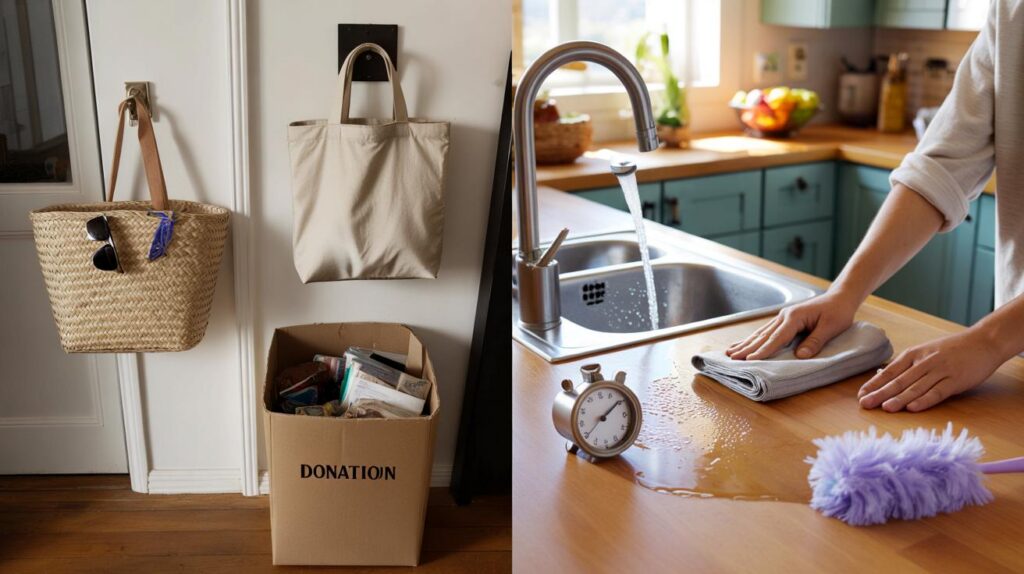
The mess never arrived all at once. It grew, sly and steady, until my hallway looked like a coat shop explosion and the kitchen table became a document archive nobody asked for. Friends texted “I’m outside” and I’d stall for five minutes to move piles from chair to bed and back again. I needed something gentler than a clear-out binge and stronger than wishful thinking. Enter FlyLady.
The first night I shined the sink, I felt ridiculous. It was 10.47pm, the radio was murmuring a late-night phone-in, and I was polishing stainless steel like it might read me a bedtime story. Outside, the street was quiet aside from a fox barking. Inside, I watched the plughole glow back at me and thought, that’s odd — my shoulders just dropped. I went to bed without dishes glaring at me from the corner of my eye. Morning light hit the basin and it winked like a tiny victory. It felt like cheating. Why was this working?
Why FlyLady felt different to everything I’d tried
Clutter had become a story I told about myself: “I’m messy, I’m busy, I’ll sort it at the weekend.” Weekends never came. FlyLady arrived like a calm aunt with a pocket timer and a feather duster, saying: start where you are. The method breaks your home into zones, gives you short daily missions, and has you do a weekly “home blessing hour” that’s more swish than sweat. Importantly, it treats perfectionism as the actual problem, not dust. That shifted something in my head. The rules were kind, almost cheeky. Fifteen minutes. Stop when the buzzer goes. Do the next right thing.
We’ve all had that moment when you open a cupboard and a baking tray attempts an escape. My moment was a “hot spot” by the front door — post, keys, tote bags, mystery screws — that regenerated every day like a hydra. I timed it. In a fortnight, it soaked up 48 minutes of my life. A UCLA study once linked household clutter to higher stress levels; I didn’t need lab results to feel my pulse rise when I stepped over the same parcel for the fourth time. So I ran a 27-Fling Boogie, FlyLady’s goofy name for chucking 27 things. Three carrier bags later, the hydra went quiet. For a week.
The logic is simple. Short bursts lower the barrier to starting, so you start more often. Zones reduce decision fatigue. Routines create cues your brain can lean on when your energy is gone. The sink isn’t magic; it’s a billboard saying “You did something”. That billboard nudges the next action. It also messes with the story you tell yourself. If the sink can shine, maybe the hob can be clean; if the hob can be clean, maybe the floor deserves a quick once-over. Progress begets progress. Not perfection. The method keeps whispering, “You are not behind.” It’s disarming.
What I actually did for 30 days
I built a tiny morning and evening routine: dress to shoes, make the bed, start laundry, five-minute room rescue, then at night, clear and shine the sink, set out clothes, quick “swish and swipe” of the loo and basin. I kept a Control Journal in a scruffy notebook — days, zones, and a short list for each. Monday became the “home blessing” with six ten-minute jobs: vacuum high-traffic spots, dust open surfaces, wipe mirrors, change bedding, empty bins, mop kitchen. A minute timer became a metronome, snapping me out of dithering. And yes, I did shine the sink at 10pm more nights than not. *I didn’t expect my sink to change my mood.*
Let’s be honest: nobody really does this every day. I missed three evenings, two mornings, and a whole Saturday when a friend begged for help lugging a sofa up four flights. The magic wasn’t in perfect streaks. It was in how small the restart felt. I didn’t “catch up” on missed missions; I just jumped back into that day’s zone. Tuesday was bathroom. So on Tuesday, I did the shower tiles for 12 minutes, then stopped. On Thursday, I ran a 27-Fling in the bedroom and found eleven odd socks, a brochure from a gym I never joined, and five pens that didn’t write. Lightness crept in, inch by inch.
There were wobbles. The “hot spots” still flared. Mail is my kryptonite. I set a tray by the door labelled “Triage”, with a rule: stand, scan, sort for three minutes max. It wasn’t perfect. My Control Journal got jam on it. I skipped dusting for a week and no one died. What kept me going was a whisper I wrote on a sticky note and stuck to the kettle:
“You are not behind. I don’t want you to catch up; I just want you to jump in where you are.” — FlyLady
- 15-minute timer: start, stop, walk away.
- Zone lists on the fridge: three items per day, no more.
- “Hot spot” basket by the door: clear daily, reset nightly.
- Weekly home blessing hour: six jobs, ten minutes each.
- Control Journal: simple pages, not pretty.
What worked, what didn’t, and what surprised me
FlyLady’s starting act — “shine your sink” — sounds daft until you live with it. A clean sink blocks late-night dish creep. It also reframes the kitchen as finished, which made me less likely to abandon mugs “for later”. The 27-Fling Boogie became a party trick on grotty afternoons. I counted fast, made brutal choices, and kept moving. The feather duster felt theatrical and, annoyingly, worked on bookshelves without disturbing my precarious penguin-shaped bookend. The biggest surprise: I began to set micro-thresholds. Shoes away before tea. Coat hung before kettle boils. Tiny games, low stakes, real results.
What didn’t work: overplanning. The minute I fancied the perfect Control Journal, I fell into stationery research and forgot to clean. Also, zones can become a hiding place if you use them to ignore obvious mess. My living room floor didn’t care that it wasn’t “its turn” when someone spilled popcorn. When I drifted, I went back to basics: timer, five-minute room rescue, bin bag in hand. If you try this, be kind to future-you. Keep supplies where you use them. Avoid “floater” baskets that invite dumping. And if your sink refuses to shine because it’s old and stubborn, pick a different “beacon” — stove top, bedside table, even your desk.
FlyLady talks a lot about perfectionism. It sounds like a slogan until you catch yourself delaying action because the “right” cloth is in the wash. Perfectionism breeds procrastination, which breeds piles. The hack is motion. Start small, stop on time, celebrate the tick.
“Housework done incorrectly still blesses your family.”
- Pick one habit for week one — sink or five-minute rescue — and let it settle.
- Use a silly timer tone. A duck quack works wonders on doom brain.
- Make a “not today” list for tasks that can wait without guilt.
- Stash a micro kit in the loo: cloth, spray, loo brush. Two minutes, out.
- Keep a giveaway box by the door. Full box = donation trip.
So, did it cure my chronic clutter?
Thirty days in, my flat isn’t magazine-neat. The hallway still collects umbrellas when the weather sulks, and my desk likes to wear two notebooks at once. The difference is momentum. I no longer stare down a room and think “mountain”. I think “timer”. My evenings feel lighter because the kitchen closes on a clear note. The bedroom breathes. And the living room no longer shouts at me when friends pop by unannounced. Instead of dread, I have a groove. Instead of shame, I have a sequence. The clutter didn’t vanish; the story did. That’s rarer than a spotless sink.
| Point clé | Détail | Intérêt pour le lecteur |
|---|---|---|
| Start where you are | Skip catching up; do today’s zone and move on | Removes overwhelm and decision fatigue |
| Short bursts win | 15-minute timer, five-minute rescues, weekly hour | Makes cleaning doable on busy days |
| Anchor habit | Shine the sink or choose a different visual “beacon” | Creates a daily win that nudges the next action |
FAQ :
- What exactly is the FlyLady method?A routine-based system by Marla Cilley that uses zones, daily habits, and short timed tasks to tame clutter without burnout.
- Do I have to shine my sink?No. Many people pick a different anchor if their sink won’t cooperate — try the hob, dining table, or desk.
- How long before I see results?Within a week you’ll feel it in the kitchen and bathroom. Visible changes stack up by week three.
- Can I do this with kids or flatmates?Yes. Keep tasks short, make a shared “hot spot” basket, and use a goofy timer. Small jobs make easier asks.
- What if I miss days?Don’t catch up. Jump in where you are. The system is built for real life, not streaks.



This was the first FlyLady write-up that didnt feel preachy. The “you are not behind” line hit hard. I tried a 27-Fling Boogie while your video played and filled a bag in 11 minutes—wild. Not perfect, but my evening felt lighter. Bookmarked for when motivation leaks.
Genuine question: how is this substantively different from a basic Pomodoro plus a chore list? The evidense you cite (UCLA clutter/stress) isn’t specific to FlyLady. Not trying to dunk—just wary of branded systems that repackage common sense. What’s the unique mechanism beyond timers and zones?