
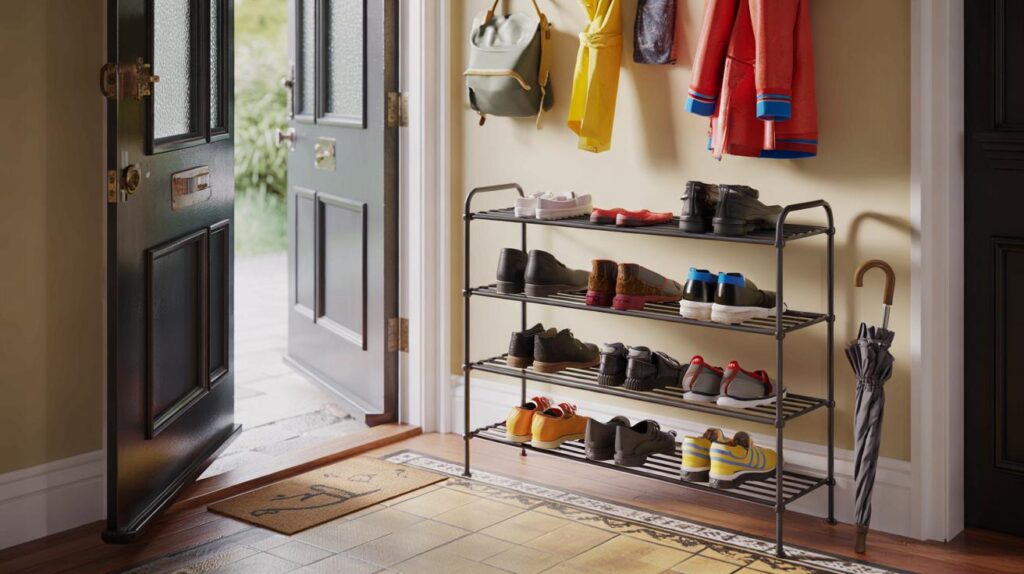
Crowded hallways, soggy trainers, and mud-caked school shoes are testing family patience. A low-cost fix is catching attention.
The newest talking point in small-space storage is IKEA’s ÄLGANÄS shoe rack. Parents are praising its slim shape, smart shelf angles, and bargain £15 price, saying it tames messy porches and tight corridors without hogging space.
Why this budget rack is hitting the mark
ÄLGANÄS trades bulk for brains. The powder-coated black frame looks neat and wipes down fast after a drizzly school run. At 76 x 24 x 59 cm, it slides into awkward corners, behind utility doors, and in flats where every centimetre counts. Capacity lands at a tidy 12 pairs, which is enough for the daily rotation of a busy household.
£15, 12 pairs, 76 x 24 x 59 cm: a footprint built for British hallways and the school-run shuffle.
The clever bit is the shelf layout. Each tier can sit flat for chunky soles or tilt diagonally so light trainers and school shoes perch without sliding. Flip the diagonal with the narrow edge up, and shoes stay put while air circulates, helping reduce damp and odour. It feels more like a small piece of furniture than a stopgap rack.
Fits where other racks do not
The shallow 24 cm depth means front doors still swing clear, and landing spaces do not become obstacle courses. Landlords and students will like that it can move with you, unlike heavier benches or cupboards. Renters can also tuck it inside a wardrobe to keep floors free.
Short on floor space? The depth is about the width of a folded umbrella—easy to live with, hard to trip over.
Parents’ early verdict
Feedback points to three recurring themes: it feels sturdy for the price, it assembles quickly, and it stays steady when kids grab shoes in a rush. Users say the frame does not wobble, which matters when little hands tug at laces and hooks.
Set-up in minutes, not an afternoon
Build time runs to about a quarter of an hour for one person with a standard screwdriver. Shelves slide into place with clear positions for either flat or angled use. The finish arrives smooth, so there are no rough edges to catch tights or scuff leather.
- Holds everyday pairs in one place, so mornings start calmer.
- Angled shelves stop trainers rolling off, even in tight corners.
- Black powder coat shrugs off mud and wipes clean in seconds.
- Lightweight enough to move for hoovering without emptying it.
How it stacks up against common options
| Option | Typical capacity | Depth | Ventilation | Typical price | Best for |
|---|---|---|---|---|---|
| IKEA ÄLGANÄS rack | Up to 12 pairs | Shallow (24 cm) | Open, good airflow | £15 | Narrow halls and porches |
| Wooden bench rack | 6–10 pairs | Medium | Open or slatted | £30–£80 | Entryway seating plus storage |
| Closed shoe cabinet | 8–16 pairs | Medium to deep | Limited airflow | £50–£150 | Visual tidiness, hiding clutter |
| Over-door organiser | 8–18 shoes | Minimal floor use | Fabric pockets | £8–£25 | Behind doors in very tight spaces |
Making the most of a 12-pair capacity
A family of four often cycles through three pairs each for the weekly grind: school or office shoes, trainers, and something smarter. That equals 12 pairs—exactly one ÄLGANÄS. Boots can live elsewhere, while the rack handles the daily grab-and-go. Rotating seasonal pairs keeps it efficient and stops the floor pile creeping back.
Think vertically when space is thinner than a letterbox. Two racks stacked side by side still use less depth than a storage bench and keep circulation free near the door. If you own lots of boots, angle one shelf flat and use the lower tiers for trainers and pumps.
Placement tips that avoid door clashes
- Measure door swing and allow 3–5 cm clearance in front of the rack.
- Leave a 2 cm gap to the skirting for easy hoovering.
- Keep the top tier for keys and post if you lack a console table.
- Use felt pads under the feet to protect wooden floors.
Care, safety and longevity
Metal racks tolerate British weather better than chipboard near drafty doors. Wipe with a damp cloth and dry to avoid water spots. If you place it on uneven stone or older boards, shim one foot or use pads so the frame sits flat. Distribute weight evenly; put heavier boots on the lowest tier to keep the centre of gravity down. Homes with toddlers can place it beside, not behind, a door to prevent pinched fingers.
Who will love it—and who will not
It suits compact homes, rentals, student digs, and families who need a cheap fix that works on day one. If you want hidden storage or a bench to sit on, a cabinet or seat will still appeal. Shoe collectors will likely need two units or a larger system. The black finish fits most schemes, but those set on pale wood tones may prefer a timber rack in the living area and keep this one by the back door.
Cost per pair stored: £1.25. That is the kind of maths that makes small upgrades feel like big wins.
Beyond shoes: simple ways to repurpose
Sports households can dedicate a tier to shin pads and water bottles, letting gear dry fast between matches. Gardeners can park clogs on the bottom shelf and tuck gloves to the side. In utility rooms, it doubles as a drip station for wet kit, with a mat beneath catching runoff. During winter, place boot dryers or paper inside shoes and use the angled shelves to keep airflow moving.
What to check before you buy
- Measure the tight spot you have in mind—width first, then depth.
- Count the pairs you reach for weekly; aim for one rack per 12 pairs.
- Decide which shelves you want angled versus flat before assembly.
- Plan a parking spot for long boots if you wear them daily.
Small-space living rewards clear systems. A visible landing zone for footwear cuts morning search time, keeps mud out of bedrooms, and sets a calmer tone as you leave the house. For £15, ÄLGANÄS gives families a tidy start without a major rethink of the hallway.



Just grabbed one for our flat—fits behind the door and finally stops the trainer avalanche. £15 well spent! 🙂
12 pairs? Really?