
Cold nights, closed windows and busy homes can trap more than warmth. Dust, smells and pollen linger where you least expect.
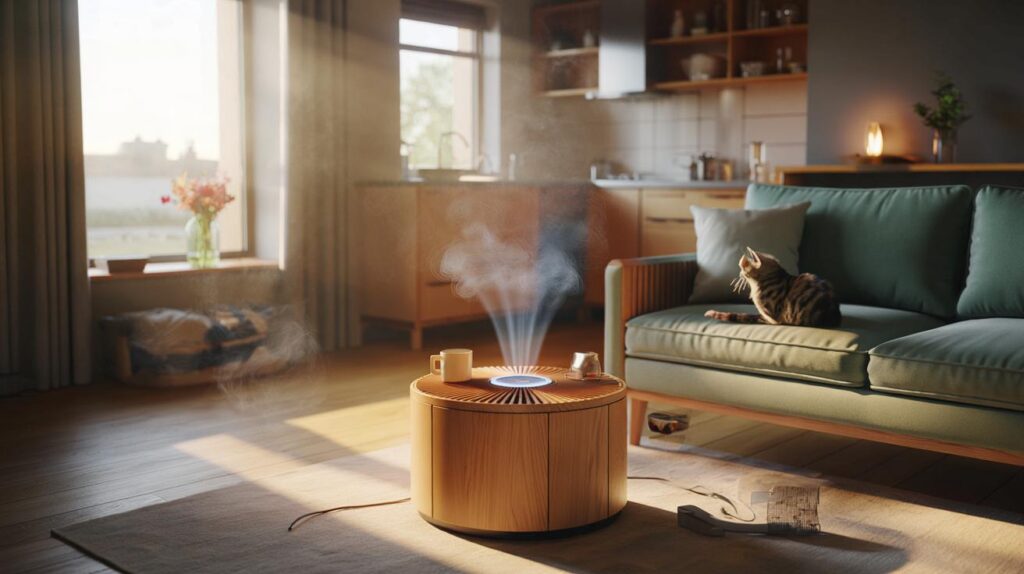
That’s why one unassuming piece of furniture is turning heads: a compact oak side table that quietly filters the air while holding your lamp and morning brew.
A side table that takes on indoor air
IKEA’s STARKVIND looks like a neat, round side table in stained oak veneer, available in white or dark brown. Under its tabletop sits a fan and filter system designed to reduce airborne particles and tame everyday odours. The idea is simple: keep the footprint of a small table, gain the function of a dedicated purifier, and leave more floor space free in tight rooms.
A £165 table that plays double-duty: a practical surface for your sofa side, and a discreet way to clean the air you breathe.
For families short on space, or renters who prefer furniture that earns its keep, this two-in-one approach lands at the right moment. Windows stay shut longer as temperatures drop, and cooking, candles and pet dander all build up. A purifier that slots in beside the cot, the sofa or a home office chair becomes more than a design flourish.
How the technology works
Filters designed for real homes
STARKVIND uses a layered system: a pre-filter catches hair and larger dust, while a particle filter targets fine matter such as pollen, pet dander and small dust. IKEA states the particle filter captures around 99.5% of small particles passing through the unit under test conditions. In practice, that means fewer irritants circulating while you read or the kids play nearby.
Auto mode steps up the fan when it detects a rise in airborne particles, then eases back when the air clears.
Run it manually with a simple speed setting, or let it manage itself in auto mode for day‑to‑day fluctuations from cooking, vacuuming or opening the front door to a busy street.
Smart controls when you want them
Paired with IKEA’s DIRIGERA smart hub, the table connects to the IKEA Home smart app and works with Amazon Alexa, Hey Google and Apple HomeKit. Voice commands can nudge the fan up during dinner prep or schedule a low, quiet cycle overnight. None of that is mandatory; out of the box, it functions as a standard table and purifier without extra kit.
Design touched by practicality
The circular top fits a lamp, book and cup without hogging space, and the cable routes through a leg to keep the look tidy. Because the fan draws air in and pushes cleaned air out, placement matters. Give it a little breathing room from walls and heavy curtains for best results, and avoid tucking it completely behind a sofa arm.
- Round top reduces sharp corners in kids’ rooms.
- Cable neatly concealed inside a leg to cut visual clutter.
- Fits awkward corners that a boxy purifier can’t reach.
- Creates a gentle airflow that feels cooler on warm days.
Who stands to benefit
Parents juggling homework, pets and laundry piles. City dwellers close to traffic. Students in compact flats. Anyone who wants cleaner air without adding another white plastic box to the living room. It’s also a sensible pick for guest rooms, where a conventional purifier might spend months in a cupboard.
Running costs, maintenance and what to expect
As with any purifier, results depend on room size, layout and habits. Keep doors ajar to allow circulation, vacuum regularly, and swap filters on schedule. The pre-filter is washable; the particle filter should be replaced periodically to maintain performance. Many households change filters every 6–12 months, with faster changes in homes with pets, smokers outdoors bringing residue inside, or on pollen-heavy streets.
| Topic | What it means for you |
|---|---|
| Price | £165 for the side table model with built‑in purifier. |
| Filter upkeep | Vacuum or rinse the pre‑filter; replace the particle filter when the indicator suggests, typically 6–12 months. |
| Energy | Low to modest draw. A daily schedule at low speeds can cost only a few pounds per month at current tariffs. |
| Noise | Whisper‑quiet on low; a steady fan sound at higher speeds for rapid clean‑ups after cooking or cleaning. |
| Smart control | Optional app and voice control with DIRIGERA hub; manual buttons work fine without it. |
What the filters tackle — and what they don’t
Particle filters are aimed at solids and droplets such as dust, pollen, pet dander and smoke residue. Many users notice odour reduction because scent molecules often hitch a ride on particles, and air movement helps. That said, no domestic purifier solves stale air on its own. Open windows when practical to refresh CO2 levels, wipe down dusty surfaces so particles don’t re‑enter the air, and avoid burning candles for long stretches in small rooms.
Placement tips for better results
Living rooms
Set the table beside the main sofa, leaving a hand’s width to the wall so the intake isn’t blocked. If you cook with the door open, use a medium fan speed for an hour after dinner to reduce lingering particles from the hob.
Kids’ rooms
Place the table away from curtains and soft toys, which can shed fibres and obstruct airflow. Keep it on low overnight; auto mode can nudge speeds up after playtime or during pollen surges.
Home office
Next to the desk, the unit doubles as a place for your mug and keyboard tray. Schedule a low run during work hours, with a brief higher-speed burst after vacuuming.
How it fits into IKEA’s wider smart range
Fans of IKEA’s connected products will recognise the approach: accessible prices, clean lines and simple integration. STARKVIND sits alongside LED bulbs, motion sensors, wireless blinds for better sleep hygiene, and speakers co‑designed with Sonos. You can build routines that dim the lights, lower the blinds and switch the purifier to low at bedtime, without juggling separate apps.
The bigger picture on indoor air in Britain
People spend most of their time indoors, often with windows closed for warmth and noise control. Everyday activities add to particle levels: frying on a gas hob, shaking out bedding, lighting incense, even walking in dust from the street. Allergens vary by season, so a purifier that adapts to changing loads through auto mode helps smooth the peaks when pollen counts rise or rush‑hour pollution drifts in through vents.
Key reasons people are paying attention
One purchase, two jobs: a space‑saving table that quietly trims particles while serving daily life.
It’s the combination that resonates: form where it matters and function where you feel it. For a small flat with limited sockets, it’s the difference between a cluttered corner and a calm one.
Practical scenarios to test at home
Try a simple routine in a 12–18 m² living room: run the fan on low throughout the day, then switch to medium for 60 minutes after cooking or hoovering. In a nursery of around 8–10 m², set auto mode and keep a window trickle vent open to maintain fresh air. If you live by a main road, move the table closer to the doorway on weekdays to intercept particles drifting in at peak times.
Final pointers before you buy
- Measure the intended spot so the top remains useful for a lamp and book.
- Plan filter changes ahead; keep a spare particle filter on hand during hay fever season.
- If you use smart speakers, consider the hub for easy voice commands and schedules.
- Keep surface clutter light so airflow across the tabletop grille stays steady.
If you want cleaner air without sacrificing space or style, a dual‑purpose table like STARKVIND earns its place beside the sofa. It blends in, takes on the everyday messiness of modern homes and frees you from the look of a boxy purifier standing lonely in the corner.



Finally, a table that does more than hold my coffee—it vacuums the air and my guilt about candles 🙂 Does auto mode ramp up fast after frying?
£165 for a side table purifier sounds fair if the CADR is decent, but I can’t find numbers here. What room size is realistic, and it definately won’t drop CO2 or VOCs much. Marketing tends to blur that line—any independent tests?