
Short days creep in, rooms flatten, and energy bills bite. One small wall light can shift mood, texture and spend.
A sculptural lamp from IKEA is suddenly everywhere in designers’ moodboards, and it is not just a pretty face. It behaves like art, throws a soft halo, and claims thrifty running costs. Here is why people are double‑taking, and how to use it without wasting cash or space.
A sculptural wall light with a gallery feel
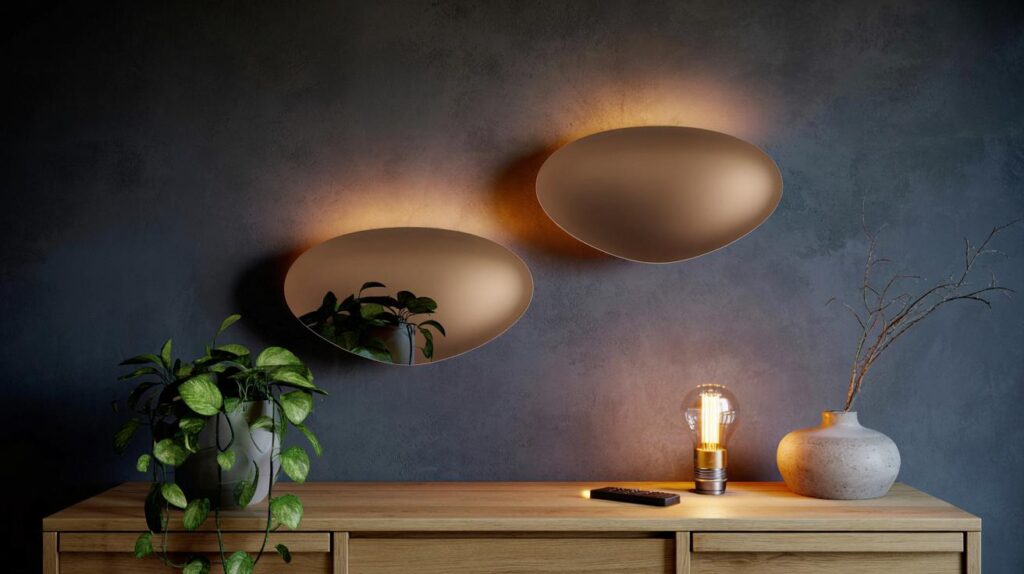
The talking point is the IKEA VARMBLIXT, a dimmable LED wall light that doubles as a mirror. Dutch designer Sabine Marcelis gives it an oval, softly convex face with a bronze‑tinted sheen. The result is a glowing portal rather than a standard sconce. At €79.99 (about £69 at recent exchange rates), it lands in the sweet spot: artful enough to star on a white wall, affordable enough to buy in pairs.
Price check: €79.99 gets you a dimmable LED module, a mirrored face with anti‑shatter film, and a statement piece.
When daylight shrinks, warm, wraparound light does heavy lifting. VARMBLIXT throws a feathered halo across plaster, catching reflections in its mirrored face. The bronze tone adds depth without glare, and the integrated dimmer lets you nudge brightness from a whisper to a lively glow.
What makes VARMBLIXT different
- Mirror plus lamp: the reflective face enlarges tight spaces and doubles the halo.
- Integrated dimming: dial brightness for reading, dining or late‑night wind‑down.
- Energy‑saving LED: typical LED modules use about 85% less power than old bulbs.
- Longevity: LED modules can last up to 20 times longer than incandescent lamps.
- Safety in daily use: an anti‑shatter film on the mirror helps contain fragments if damaged.
Where it works and how to place it
Think of VARMBLIXT as wall‑mounted mood lighting with bonus drama. You get best results when you treat it like an art object rather than a task light.
- Make a mini installation: hang two or three at staggered heights on a feature wall to create depth.
- Boost an entryway: mount beside a hallway mirror to bounce light and make the space read larger.
- Bedside upgrade: use a pair as headboard companions; dim low for night‑time calm.
- Quiet corners: pick a neglected alcove or reading nook and give it a soft, sculptural glow.
- Dining drama: place one opposite framed prints to add reflections and a gentle, social brightness.
Tip: avoid eye‑level glare. Mount so the brightest part of the halo sits just above seated eye height.
Small‑space tricks that change the room
Mirrors change perception. Place VARMBLIXT where it can catch movement or plants in its reflection. A trailing pothos or a vase with branches becomes part of the composition. Keep the surrounding palette simple—wood, boucle, linen, raw ceramics—so the light, not busyness, does the storytelling.
Energy, lifespan and your bill
Rising tariffs make accent lighting look like a luxury. LEDs shift that maths. A typical integrated LED module draws a fraction of the power of a 40W incandescent, yet gives a warm, even glow. Dimming trims consumption further.
Up to 85% less energy. Up to 20 times the life. Lower heat, lower waste, calmer bills.
Here is a quick UK‑based estimate for one wall light used three hours a day. Figures use 0.27 £/kWh as a typical unit rate and round to the nearest penny.
| Light type | Assumed wattage | Annual use (kWh) | Estimated annual cost |
|---|---|---|---|
| Incandescent wall light | 40 W | 43.8 | £11.83 |
| LED module (VARMBLIXT‑style) | 7 W | 7.67 | £2.07 |
That single swap saves roughly £9.76 a year per lamp under the stated usage. Multiply by a trio on a feature wall and you still spend less than many floor lamps to run.
Why designers rate it this season
Designers love pieces that pull double duty. VARMBLIXT reads as sculpture by day and soft ambience at night. It slips into minimal flats, boho living rooms and sharp, contemporary kitchens because the bronze mirror warms cool schemes and softens earthy palettes.
Pairings that never clash
- Matte limewash walls: the halo graduates beautifully across the plaster texture.
- Light oak and cane: the bronze tint adds depth to blond woods and woven fibres.
- Charcoal paint: high contrast turns the lamp into a glowing portal.
- Greenery: glossy leaves catch the reflection and appear fuller after dusk.
- Art grids: mount two lights flanking a gallery of frames for subtle theatre.
Think of it as lighting plus a frame. It stages whatever sits nearby—books, ceramics, foliage.
Controls, finish and practicalities
The lamp ships with an integrated dimmer, so you can fine‑tune the halo for winter evenings or bright weekend brunches. The mirror carries an anti‑shatter film for everyday bumps. The LED module is replaceable when it reaches end of life, which prevents needless scrapping of the full unit.
Keep fingerprints off with a soft microfibre cloth. Avoid harsh chemical sprays that can dull the bronze tint. If you plan a pair, mark centres with painter’s tape and test heights with someone seated and someone standing. Aim for symmetry with a hint of play: five to ten centimetres’ height difference between two units can energise a wall without looking messy.
A quick room plan you can copy tonight
Layered lighting stops rooms feeling flat. Use this simple ratio for a typical 12–15 m² living room:
- Three to four light sources in total.
- One ceiling light on a dimmer for general glow.
- One sculptural wall light (like VARMBLIXT) for ambience.
- One task lamp near seating for reading.
- Optional accent: a picture light or LED strip for shelves.
Set each light at a different height. Stagger dim levels so the room reads layered, not uniformly bright. Your eyes relax, and the space feels larger because shadows help shape the furniture.
Costing a two‑lamp feature wall
Thinking of a pair? Here is a back‑of‑envelope guide. Two lamps at €79.99 each total €159.98 (roughly £139). Add wall fixings and basic tools if you do it yourself. Running cost at three hours nightly stays around £4.14 per year for both under the tariff above. Swap incandescent equivalents and you would pay close to £23.66. The difference buys a couple of good candles or a hardcover art book, every year.
Risks, tweaks and smart add‑ons
Mirrored lights can create hotspots if you face them head‑on. Tilt the centreline slightly away from your main seating or mount a touch higher to keep the brightest ring out of direct view. In narrow halls, pair the lamp with a low‑glare bulb elsewhere to keep sightlines comfortable.
Want smarter control? Put the circuit on a plug‑in dimmer remote or a smart plug with schedules. Morning ramp‑ups reduce harsh transitions; evening fades help you wind down. If you work from home, set a midday 30‑minute boost to lift concentration during grey spells.
Bottom line for winter comfort
VARMBLIXT hits a rare triangle: sculptural presence, practical dimming, and wallet‑friendly running costs. It warms Nordic‑leaning spaces and polishes eclectic rooms without shouting. If your walls feel underdressed and your electricity app nags, this is a tidy, art‑leaning fix that earns its keep as the clocks go back.



Didn’t expect a wall light to double as a mirror and ‘glowing portal’—IKEA doing sci‑fi on a budget 🙂 Anyone tried a trio at staggered heights? Wondering about glare at seated eye‑hieght.