
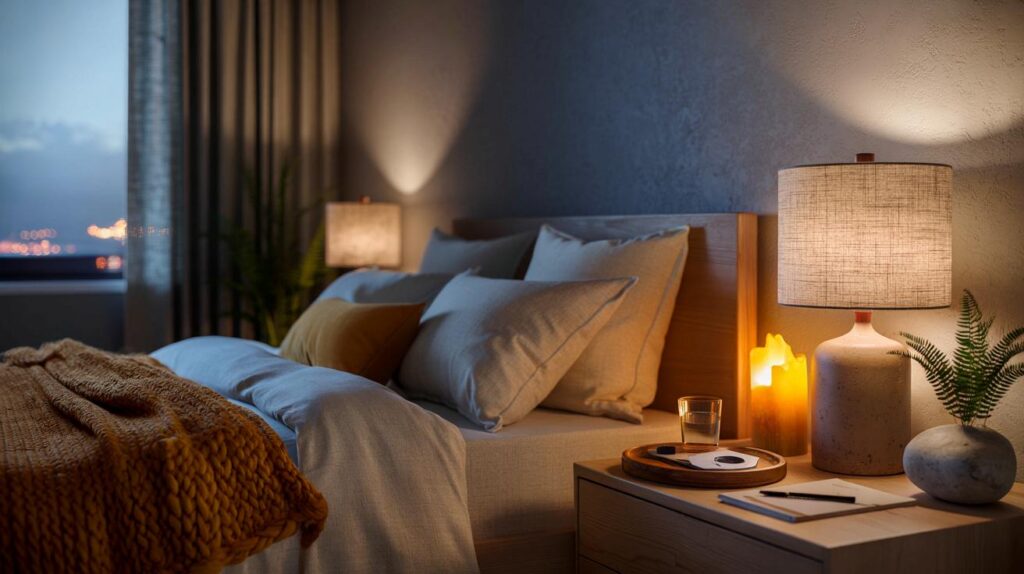
When sleep feels fragile and the world keeps jangling, your bedroom might be fuelling the noise. A few design changes can transform it into a hygge sanctuary where your shoulders drop without you even noticing.
Outside the window, the streetlights glowed like distant embers. I slipped off my shoes, nudged the bedroom door, and felt the cold blue of the overhead bulb slap me awake. The sheets were clean, the room tidy, yet everything felt sharp, airless, too loud for a late Tuesday.
I turned on a low lamp instead, struck a match for a small candle, and pulled a softer throw across the end of the bed. The room changed temperature without the thermostat touching it. The edges of the day finally blurred.
We’ve all had that moment when a room either holds you or hurries you along. A cosy bedroom doesn’t happen by accident. It’s a sequence of gentle cues that tell your body: you’re safe now. Watch what changes first.
Start with light, end with calm
Warmth starts with light, not blankets. Overhead glare asks your brain to keep working; low, warm pools of light ask it to rest. Aim for three light sources: a soft bedside lamp, a warm floor lamp, and a tiny accent like a candle or salt lamp.
Swap bulbs to 2200–2700K and you’ll feel the drama melt. It’s not just “warm” versus “cool”; it’s the colour of late afternoon instead of a spreadsheet. Dimmers help you land the plane. Light that skims surfaces — not blasts down — makes your room feel like a whisper.
In Manchester, Aisha told me she slept forty minutes longer the first week she ditched her bright ceiling light. She added a clip-on dimmer, two linen-shaded lamps, and one beeswax candle she lights to read. Her room didn’t change size. It changed pace.
Layer texture like a winter evening
Texture does what paint can’t: it gives your nervous system something to trust. Think of the bed as a landscape — smooth percale or linen sheets, a weighty duvet, then a knitted throw or wool blanket at the foot. Close the laptop, open the window for two minutes, breathe.
Choose three textures you love and repeat them: linen, wool, and wood is a forgiving trio. Linen creases beautifully and breathes; wool adds depth and warmth; wood grounds the space. A simple method: one crisp base (sheets), one soft mid-layer (duvet), one tactile topper (throw). That’s your hygge stack.
Common misstep: piling on cushions like a shop display, then tossing them to the floor every night. It looks lovely at lunch and exhausting at midnight. Let’s be honest: nobody actually does that every day.
Go for two pillows per sleeper and one supportive cushion if you read in bed. Keep a rug where your feet land first — a small shag or flat-woven runner is fine. Texture isn’t clutter; it’s cadence.
“Hygge isn’t a look; it’s a temperature for the soul.”
- Pick a warm palette: oat, clay, caramel, soft grey, smoked blue.
- One natural element per side: a small plant, a stone, or a wooden tray.
- Mix matte and nubby finishes; avoid too much gloss.
- Hide cables with a fabric sleeve or a woven basket.
- Scent lightly: cedar, lavender, or bergamot before bed.
Make space for rituals, not rules
Rituals turn rooms into refuge. Keep one small tray by the bed with tonight-only things: a book, a pen, lip balm, and a glass of water. Not a scene from social media — just what serves you on a Tuesday. Texture is a shortcut to comfort.
Anchor the room with something you can touch and something you can hear. A weighted throw at the end of the bed, a cotton robe hooked to the wardrobe, and a quiet white-noise app if your street is busy. Your brain relaxes when it knows what’s next.
Noise travels differently at night, so draft-proof the window and add lined curtains to soften sound. If you can, leave a 30cm strip of clear floor by each side of the bed. That little runway signals ease. Your bedroom can’t fix your life, but it can hold it gently.
Details that calm the room down
Think in circuits: entry, bed, and window. At the door, add a small hook for tomorrow’s jumper and a bowl for rings or keys you forgot to drop elsewhere. At the bed, a low lamp, a book, and a tissue packet. By the window, a chair you actually sit in.
Handle colour like the sky at dusk. Paint or bedding in muted palettes — warm white, mushroom, stormy blue — calms the eye. If you love pattern, choose one hero: a gingham pillowcase or a block-printed quilt. Let the rest breathe. Your nervous system will thank the negative space.
Keep tech humble. Put the phone to charge across the room or in the hallway; use a small analogue clock with a quiet tick. If your alarm is on your wrist, flip your watch to theatre mode after 9pm. The room will feel more yours in ten minutes than it did all week.
What to buy, what to keep, what to let go
Start with what you own. Wash the duvet, rotate the mattress, and swap the harsh bulb. Then edit: two pillows per person, one good throw, one lamp per side. If you’re renting, it’s fine to layer a simple linen curtain over the blinds with command hooks.
Spending list, smallest to largest: bulbs and a dimmer, bedside lamps with fabric shades, a textured throw, a soft rug, lined curtains. If the floor is cold, a small woven mat just where your feet land matters more than a giant rug you never vacuum.
Don’t overthink scent. One candle you actually light beats five you never touch. Light it while you read a few pages or stretch for two minutes. The act, not the label, is the hygge part.
A sanctuary you grow into, night after night
There isn’t a single correct hygge bedroom. There’s your version, tuned by trial and gentle error. Maybe it’s the low hum of a fan, the weight of a wool blanket, and that tricky corner finally softened by a floor lamp and a fern. Maybe it’s plain sheets and silence.
Your room learns you as you learn it. Add one tactile thing, remove one visual shout, and keep a small ritual that marks off the day. The rest is margin. Share what’s working with a friend who’s staring at the ceiling at 1am. That’s how calm multiplies.
| Point clé | Détail | Intérêt pour le lecteur |
|---|---|---|
| Layered warm lighting | Use 2200–2700K bulbs, dimmers, and low lamps | Softer evenings and better wind-down |
| Three-texture rule | Linen sheets, wool throw, wood accents | Instant cosy without clutter |
| Small nightly ritual | Tray with a book, water, lip balm | Signals safety and routine to your brain |
FAQ :
- What is hygge in a bedroom context?It’s the feeling of safety and ease created by warm light, soft textures, and simple rituals that welcome rest.
- Do I need to buy new furniture to get hygge vibes?No. Start with bulbs, bedding layers, and a small declutter. Furniture can wait.
- Which colours are best for a cosy look?Muted, warm-leaning tones: oat, mushroom, clay, soft grey, and stormy blues.
- How many cushions are ideal?Two pillows per sleeper and one supportive cushion if you read in bed is plenty.
- Is scent essential for hygge?Not essential, but helpful. Keep it light — cedar, lavender, or bergamot — and tie it to a simple pre-sleep routine.



Swapped my harsh ceiling bulb for a 2700K lamp last week and wow, the room instantly felt like late afternoon instead of an office. I also added a small linen shade and one beeswax candle, and I swear my bedtime routine got calmer. Thanks for the practical steps — the “three light sources” tip is one I can actually stick to. Any brand reccomendations for dimmable warm LEDs that don’t flicker?