
Homes are being asked to do more with less: less carbon, less waste, less guilt. At the same time we want warmth, texture, and the calm feeling of a space that makes sense. The challenge isn’t picking a trendy finish. It’s choosing materials that last, feel good in the hand, and tread lightly on the planet without making your living room look like a science project.
I’m standing in a Victorian terrace in Bristol, watching mid-morning light skim across a cork floor. The owner, a filmmaker, runs a hand over a reclaimed ash shelf as if it’s a pet. She tells me the plank used to be a school lab bench; the nicks are still there, tiny commas of history that survived sandpaper. The room smells faintly of plant oil, not paint. Her heating clicks off early because wool insulation in the party wall keeps the chill at bay. *It feels like the room can finally breathe.*
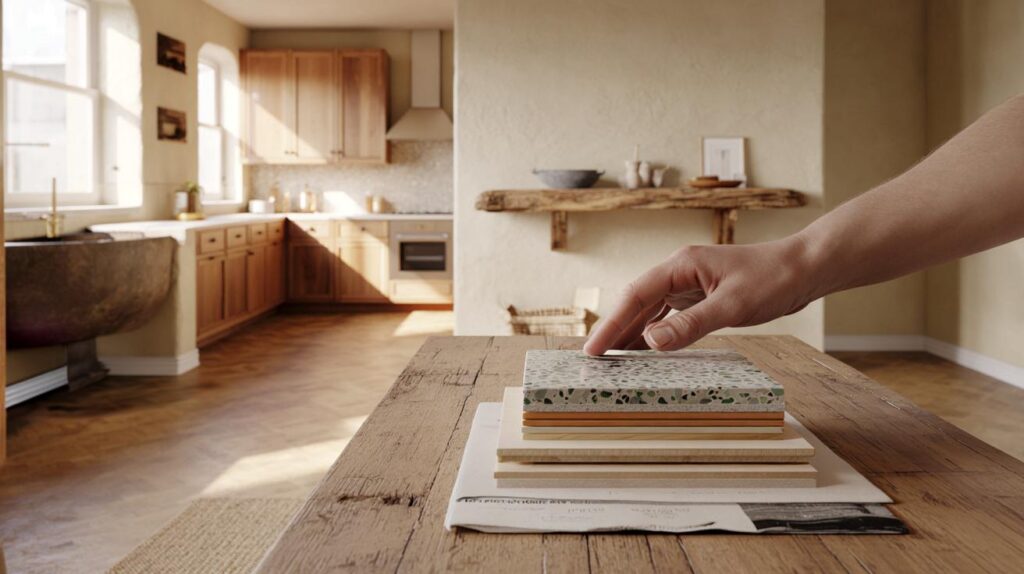
On the coffee table sits a stack of samples: bamboo in several tones, a square of recycled terrazzo, a sliver of clay plaster. She’s still undecided about the hallway. “I want it to be tough,” she says, “but I don’t want plastic pretending to be stone.” She taps the terrazzo. It flickers with bottle-green shards. A decision hovers in the room like dust motes in sun. Something quietly significant is happening here.
Why sustainable materials suddenly look and feel better
For years, “eco” interiors meant worthy but wobbly: rough hemp, muddy browns, good intentions. That’s changing fast. Designers are pairing natural finishes with clean lines and smart light to create rooms that look effortless, not earnest.
Texture is leading the charge. Clay plasters diffuse glare and add a soft matte depth. Cork floors bounce gently underfoot and warm up in minutes. Reclaimed timbers carry history, which gives a new scheme instant soul. There’s nothing hair-shirt about it.
The design language is shifting toward honest surfaces. You can see the fibres in a limewash, the grain in ash, the sparkle of recycled glass in terrazzo. Instead of plastic veneers that mimic marble, people are choosing materials that tell the truth. The result is calmer rooms that age well because they don’t have to pretend.
Look at the data and purpose meets pragmatism. The UN Environment Programme says buildings account for around 37% of energy-related CO2 emissions. That’s not just heating; it’s the stuff we fill them with. Interiors hold surprising “embodied carbon”, from adhesives to metals, and picking wisely can trim a project’s footprint without losing style.
Small swaps add up. Natural rubber underlays instead of foam. Plant-based hardwax oils instead of polyurethane. A single decision like choosing FSC-certified timber over mystery wood can ripple through a supply chain. Less carbon, fewer toxins, better indoor air — and your table still looks gorgeous.
There’s also a circular economy story growing up. Salvage yards and platforms like Salvo, Reuse Network, and Facebook Marketplace are treasure maps. A pair of reclaimed radiators in Brighton finds a second life in Leeds. Those school lab benches in Bristol become kitchen worktops with a patina money can’t fake.
How to choose, source, and finish: a practical, human method
Start with one room. Make a “materials audit” on your phone: floors, walls, joinery, textiles, metals. Circle the surfaces you touch daily and upgrade those first. A durable, low-toxin finish on the dining table beats an eco chandelier you never touch.
Build a simple sample library. Ask for offcuts from suppliers, order small pots of limewash and casein paint, snag tile misfires from a local studio. Live with them for a week. Spill coffee. Step on them with wet socks. If a surface survives real life, it’s a friend.
When you buy timber, look for FSC or PEFC certification and ask for an Environmental Product Declaration (EPD) if it exists. For paints and sealers, look for low-VOC numbers and full ingredient lists. Metals? Recycled content is your ally — recycled aluminium and steel often carry less embodied carbon than virgin stock.
Let’s be honest: nobody does this every day. So shrink the task. Pick three “hero” materials for the room — say clay plaster, cork, reclaimed ash — then fill the rest with steady basics that match them. If one element runs over budget, keep the palette and switch to a similar, widely available option.
Don’t panic about perfection. Aim for “low-tox, long-life, low-waste” as your drumbeat. The greenest purchase is often the one you already own, refreshed. Reupholster a chair in undyed wool. Oil a tired floor. Swap a plastic rug pad for a natural latex underlay and watch the pile relax.
Common traps? Green labels without substance. A “natural” sticker can sit on a product full of synthetic binders. Bamboo can be brilliant, yet if it’s glued with high-formaldehyde resins, the benefit slips. Tropical hardwoods may look eternal but carry heavy freight. Ask simple questions: what’s in it, where was it made, how long will it last, who takes it back?
There’s a softer, human trap too. We chase novelty. We all know the hit of a parcel at the door. On a tight budget, repeat the textures you love instead of mixing five new ones. The room will breathe easier, and your head will, too.
One more nudge: buy finishes you can repair with your own hands. Plant-oil or hardwax on timber is sand-and-recoat friendly. Clay plasters patch invisibly. A linoleum sheet can be heat-welded and buffed decades in. **Buy once, buy well.**
“Sustainability isn’t a style — it’s a behaviour. Materials are just the vocabulary,” says London-based designer Tasha Kumar. “Choose words you can live with.”
- Think reuse first: salvage yards, community swaps, architectural reclamation.
- Check credentials: FSC/PEFC for wood, EPD/HPD/Declare labels where available.
- Lower toxins: low-VOC paints, plant oils, mineral plasters, wool textiles.
- Design for repair: finishes and fixtures with available parts and simple maintenance.
Room-by-room swaps that change the feel, not just the footprint
Kitchen: swap petrochemical worktops for recycled paper composite, reclaimed hardwood, or recycled glass terrazzo. Pair with solid wood cabinets finished in plant-based oil. Hardware in recycled brass brings weight and warmth without the eco-tax aesthetic. **Think reuse first** for sinks and taps; old fireclay loves a second act.
Living room: cork tile or engineered wood with a thick, repairable wear layer beats quick-fade laminates. Choose undyed wool or sisal rugs on natural latex. Steer away from mystery foam sofas; a timber frame and replaceable feather or recycled-fill cushions will last years longer, and you can re-cover later.
Bedroom: limewash or clay paint softens morning light, and wool insulation dampens street noise. Opt for organic cotton or TENCEL sheets. A small, satisfying fix: swap plastic curtain linings for wool interlinings to regulate heat and stop that clingy, boxy silhouette. **Low-VOC isn’t low-impact by default** — check what’s actually inside.
Bathroom: mineral paints and tadelakt or microcement (lime-based) offer a breathable, sculptural feel. Recycled content tiles deliver sparkle without the guilt. Ventilation matters here; pair beautiful materials with quiet, efficient extraction so they stay beautiful.
Hallway: high-wear zone. Marmoleum (true linoleum made from linseed oil, wood flour, jute) is tough, repairable, and warms fast underfoot. Reclaimed quarry tiles tell a different story, with that slight, human wobble under the toe that factory-perfect porcelain never offers.
Garden rooms and extensions: if you’re building, interrogate structure as well as surfaces. Timber frame with cellulose or wood-fibre insulation is a smart baseline in the UK climate. Hemp-lime blocks and straw-based panels are appearing in more mainstream suppliers, and they deliver tactile interiors that don’t need plasterboard to feel finished.
We’ve all had that moment where a fast-buy looks tired a year later. The fix isn’t harsher discipline; it’s better cues. Put a tiny card in your sample box: “Can I repair it? Where does it go when I’m done?” If the answer wobbles, move on. Your future self will thank you.
Care is part of the design. A quarterly buff of oiled timber, a gentle soap on linoleum, a wool brush instead of chemical sprays — these rituals keep materials alive. **Sustainability feels good when it fits your life**, not when it scolds it.
“Sustainability lives in the maintenance schedule,” notes conservation specialist Aisha Noor. “Design for Sunday-afternoon energy, not for a specialist workshop.”
- Timber: clean with pH-neutral soap, refresh with oil when it looks dry.
- Linoleum: wipe with diluted soap, avoid harsh alkalines, occasional polish.
- Wool textiles: vacuum low, spot-treat with cold water, sun-air to refresh.
- Clay/plaster: dust with a dry cloth, patch small marks with a dab of the mix.
What this shift really buys you
Sustainable materials don’t just cut carbon; they change the rhythm of your home. Rooms get quieter, edges soften, and light moves differently across mineral and fibre surfaces. You start noticing the season on your walls. A scuff becomes character, not a crisis.
This is the subtle luxury emerging now: not branding, but breathability and touch. Spaces that stay handsome because they’re honest. You might spend a little more in the moment, or spend the same in a different place — on the finish you can fix, on the timber with a known origin, on the tile that will outlive the grout. The result is a house that feels less disposable and more like a companion. Share your sources. Show the offcuts. Pass a shelf to a friend when you’re done. That’s how a trend becomes culture.
| Point clé | Détail | Intérêt pour le lecteur |
|---|---|---|
| Choose honest materials | Reclaimed timber, clay/lime finishes, cork, true linoleum, recycled metals | Timeless looks, lower toxins, easier maintenance |
| Interrogate credentials | FSC/PEFC labels, EPD/HPD/Declare, recycled content figures | Cut greenwash, reduce embodied carbon with confidence |
| Design for repair | Plant-oil finishes, patchable plasters, replaceable sofa components | Longer life, lower total cost, less waste |
FAQ :
- Are sustainable materials more expensive?Sometimes upfront, yes, though not always. Costs even out when you factor in longevity, repairability, and reduced maintenance — a cork floor or oiled oak can outlast two rounds of cheap laminate.
- Will a “green” palette limit my style?No. The new wave is about texture and light, not a single look. Clay on a modern wall reads minimal; reclaimed timber in a sleek kitchen adds warmth without clutter.
- Where can I find reclaimed or recycled materials?Start with local salvage yards, Salvo-approved dealers, Reuse Network hubs, and online communities. Ask contractors about surplus stock — builders often have end-of-lot tiles or timber lengths they’re happy to sell.
- What about indoor air quality?Go for low-VOC paints and finishes, avoid high-formaldehyde resins, and pick natural fibres like wool or linen. Good ventilation plus low-toxin materials is a powerful combo for clearer air.
- I rent. Are there reversible options?Yes. Limewash over a compatible base, cork click flooring with underlay, freestanding storage in FSC wood, and fabric panels for warmth. Use plant oils on loose furniture pieces you can take with you.



Love this piece! The shift from “eco = earnest” to tactile, calm spaces really lands. Cork floors + clay plasters have totally changed my living room vibe, and “buy once, buy well” needs to be on a poster. Could you add a quick cheat-sheet of low-VOC oils vs hardwax for beginners? Thank you 🙂
Honest question: in real-life budgets, how do recycled terrazzo and reclaimed ash price out versus mid-range laminate/engineered wood? Also, my contractor claims microcement needs frequent resealing—are those sealers truly low-VOC, or marketing? Any sources on availability/lead times in the UK? I’m wary of eco-faff and hidden maintanence.