
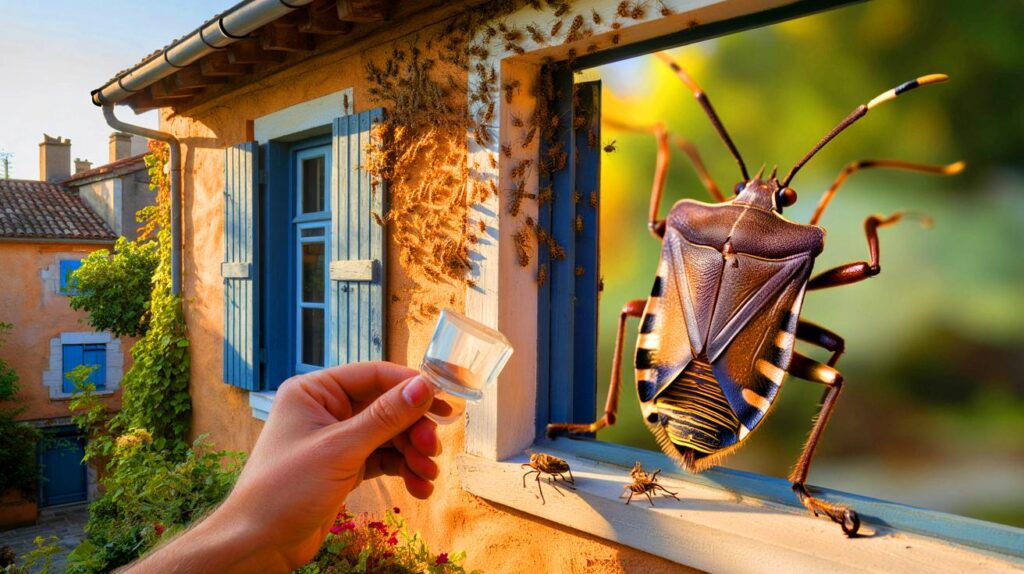
A fingernail-sized shield bug with white-banded antennae is slipping indoors as the evenings cool across towns and villages.
Why now, why your house, and what can you do today without chemicals? Here is what specialists are seeing.
What is the ‘devil’ stink bug
The so-called “devil” stink bug is the brown marmorated stink bug, Halyomorpha halys. It is an Asian native now settled across much of continental Europe. In France, public research bodies such as INRAE classify it as invasive because it spreads fast and feeds widely on fruit trees and other crops.
Adults measure around 12 to 17 millimetres, with a shield-shaped back and banded antennae. Their mottled brown colour blends with bark and stone. When threatened or crushed, they can release a strong odour from glands on their abdomen.
How to recognise one
- Shield-shaped body, marbled brown, with pale speckles.
- Alternating light bands on the last two antenna segments.
- Striped edges on the abdomen visible from above.
- Slow, deliberate movement; adults fly but prefer to crawl indoors.
It does not bite, does not carry disease, and feeds on plants, not people or pets.
Why they surge into homes in autumn
As day length shortens and nights cool, adults look for dry, sheltered voids to overwinter. South- and west-facing facades warm up in weak autumn sun and act as beacons. The insects gather in clusters on shutters, window frames and cladding, then slip through tiny gaps into lofts, cellars and curtain rails.
France recorded the species in 2012. Since then, reports have spread to more than half of departments. The pattern is seasonal. Numbers build from September, peak through October and November, and taper off as winter sets in. On milder days, the same bugs may re-emerge to bask, then retreat again when temperatures drop.
They do not breed inside homes in winter. They shelter, wait, and leave again when warmth returns.
Are they dangerous to you or pets
Entomologists make the same point again and again: they do not bite and they do not transmit diseases in France. The main nuisance is psychological and olfactory. If you squash one, you may release a sharp smell that lingers on fabrics and fingers. Pets usually ignore them after one sniff. The risk sits with fruit growers, not with families on the sofa.
The species feeds by piercing plants to sip sap. It has a very broad diet—research lists around 120 host plants, including apples, pears, peaches, tomatoes and ornamental species. In orchards, large numbers can blemish fruit. In living rooms, a handful of strays simply sit still and wait out the cold.
Practical fixes you can use today
Five zero-chemical actions
- Do not crush them. Use a glass and a card to slide them into a container, then release outside.
- Vacuum clusters carefully. Tie off or seal the bag, then place it in the freezer for 24 hours before disposal.
- Seal entry points. Fit fine insect mesh to vents, repair torn screens, and use silicone to close gaps around frames.
- Reduce light lures. Switch off outdoor lights at dusk and draw curtains; bright lights attract wandering adults.
- Tidy resting spots. Clear leaf litter and stacked wood near walls where bugs stage before slipping indoors.
What not to do
- Avoid indoor insecticide sprays. They can drive insects deeper into walls and are rarely needed for this species.
- Do not flush large numbers. It wastes water and solves nothing if access points remain open.
- Be cautious with DIY potions. Garlic sprays get mentioned; results vary, and strong scents can bother you more than the bugs.
Why your home, not the neighbour’s
Two houses on one street can see very different numbers. Orientation matters. Sun-warmed walls, dark cladding, and pale render that reflects heat all influence where bugs gather. Micro-gaps under eaves or loose seals around attic windows offer perfect winter hideaways. Even nearby planting plays a role: fruit trees, ivy and shrubs provide daytime resting sites a short flight from your facade.
Researchers note that once a few pioneers find a promising wall, others follow. The species uses aggregation cues, so a “good” facade can host dozens while the opposite side of the road gets almost none.
Farming impact and the bigger picture
There is a reason for the “devil” nickname. Orchards feel the pinch when numbers soar. Small punctures on skin can distort fruit and lower market value. In France, growers and researchers track hotspots and test traps that target aggregation pheromones. Biological control—tiny parasitic wasps that attack the bug’s eggs—is also under assessment in parts of Europe, with careful monitoring by institutes such as INRAE due to ecological risks.
For households, the key message is calm management. Most indoor encounters end by spring. If you see persistent heavy influxes, record dates and rough counts. This helps local naturalist groups map movement and advise communities.
Not bedbugs: a quick comparison
| Feature | Brown marmorated stink bug | Bedbug |
|---|---|---|
| Size | 12–17 mm, shield-shaped | 5–7 mm, oval and flat |
| Colour | Mottled brown with banded antennae | Reddish-brown |
| Seasonality | Clusters in autumn to overwinter | Active year-round indoors |
| Bites | No | Yes, feeds on blood |
| Smell | Strong odour if crushed | No notable odour |
| Where found | Windows, shutters, lofts, wall voids | Beds, skirting boards, luggage |
Autumn timeline: what to expect week by week
- Early autumn: first scouts appear on sunlit walls during warm afternoons.
- Mid-autumn: peaks of 20 to 50+ individuals on certain facades; indoor sightings rise.
- Late autumn: movement slows; most individuals settle into hidden overwintering spots.
- Mild winter spells: occasional reappearance at windows; activity wanes again after sunset.
France first recorded the species in 2012. Today, reports span more than half of all departments.
If numbers explode in your hallway
Act methodically. Close the room door, open a window, then work from the top down with a jar-and-card routine. If you use a vacuum, keep the nozzle just above the surface to avoid smearing. Freeze the bag before binning it, or empty the canister into a paper bag, fold it tight, and place it with general waste destined for incineration.
Next, address structure. Fit draught excluders to loft hatches. Caulk gaps where cables enter. Brush seals on external doors pay off fast. A small tube of clear silicone can shut dozens of tiny access points in an hour.
Extra notes that save you time
The smell comes only when the insect feels attacked. Gentle capture avoids odour, and a rinse with soapy water removes any trace from glass or plastic. If you want a deterrent near window frames, some households try a mild garlic solution on exterior sills. Results vary and the effect fades quickly, so treat it as a short-lived nudge, not a fix.
For growers and gardeners, monitor fruit trees next season. Light feeding by a few bugs rarely matters. Once counts reach dozens per tree, damage becomes visible. Hand-picking at dusk, netting small trees, and removing weedy hosts near trunks can cut pressure without spraying.
A simple way to gauge your risk
Pick two evenings this week, one sunny and one cloudy. Count the bugs on a single south-facing window frame every 15 minutes for an hour before sunset. If the total stays under 10, routine sealing and nightly checks should suffice. If you exceed 50, plan a short weekend session to seal gaps and fit mesh. Repeat the same count once you finish; a sharp drop shows your work paid off.



So it’s basically a tiny armored fart machine invading my shutters? Great. 🙂 Any tips for apartment balconies?