
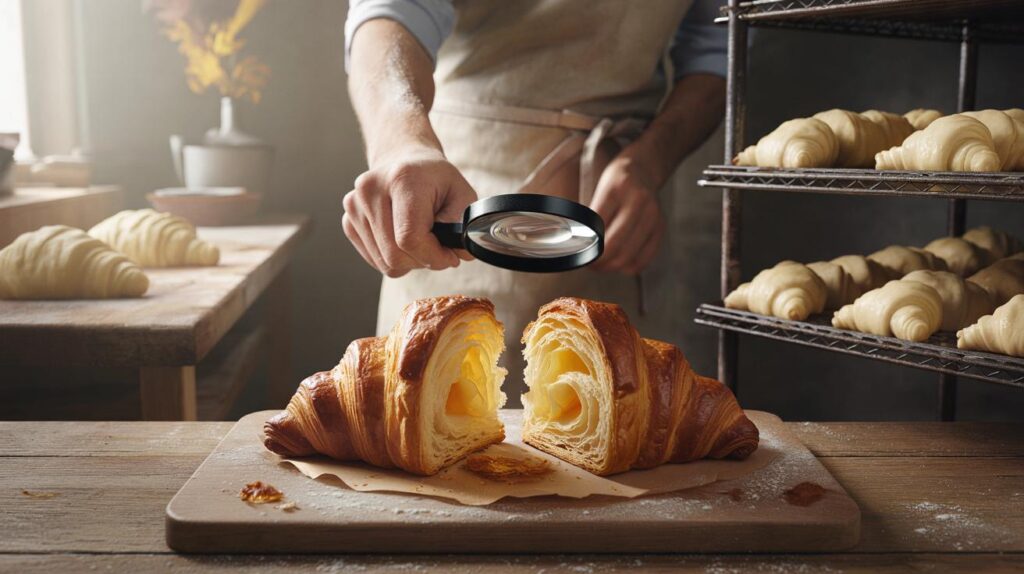
Autumn comforts draw you to warm counters and golden crusts, yet a colder reality may lurk in the floury glow.
Across Europe this season, shoppers face a swirl of sweet promises and sour tricks. Labels seduce. Prices creep. Butter claims wobble. Frozen dough masquerades as fresh craft. Here is what your morning queue might be hiding, and how to protect your taste buds and your wallet.
What lies behind the morning queue
The ‘pure butter’ problem
Many buyers chase a buttery croissant without compromise. Some counters sell a look-alike. The glaze shines. The layers seem neat. The aroma feels faint. In too many cases, the fat is not all dairy. Vegetable oils creep in. Additives push colour and shelf life. A rich egg wash boosts gloss and hides shortcuts.
In 2025, genuine butter costs more. That pressure pushes some bakers towards blends and frozen dough. The label stays vague. The word “butter” on a sticker can mean mixed fats if no strict definition sits beside it. Ask for detail. You pay for flavour. You deserve clarity.
A true butter croissant offers a clean dairy scent, crisp shards on top, and a melting crumb that never chews like rubber.
Frozen dough, fresh claims
Thaw-and-bake products now mimic handmade loaves. Some shops buy pre-shaped dough, bake on site, then call it “freshly baked.” Freshly baked does not always mean freshly made. Shaping and fermenting elsewhere changes texture and timing. You taste it by mid-afternoon when the crumb dries and the crust dulls.
Signage can confuse. The phrase “artisan bakery” appears in windows while deliveries of frozen trays slip in at dawn. A real craft operation does the mixing, kneading, shaping and baking on site. Many show the bakehouse. Many welcome questions. Transparency signals pride, not theatre.
The price and weight shuffle
Shrinkflation reaches the bread basket. Baguettes slim down yet keep a bold price. Steam drives off more moisture during a hard bake. The loaf weighs less. The till does not blink. In tourist streets, the price can double with no clear notice in the window. That breaks the trust that bread once anchored in every neighbourhood.
Check the price per kilo and the stated weight. A smaller, lighter baguette at a standard price inflates the margin, not the flavour.
Why shoppers pay more and taste less
People expect comfort in colder months. Many take home disappointment. A “tradition” baguette tastes bland. A croissant tears like foam. The crust shatters without depth. The crumb lacks aroma. Standardised doughs flatten personality. Speed wins over patience. Margin wins over method.
That gap erodes confidence. A loyal customer loses trust fast once the bag holds a pale chew instead of a warm crackle. It shows in repeat sales and word of mouth. The damage extends beyond one shop. It dents the reputation of the craft itself.
How to spot the real artisan bakery
You can reduce risk with a few street-smart checks. Use your eyes, nose and a quick question at the counter.
- Look for signs of on-site work: flour on aprons, shaped dough resting, and a visible bakehouse.
- Ask about ingredients: butter origin, flour type, and fermentation times.
- Watch rotation: small batches across the day beat mountains of identical stock.
- Read labels: price per kilo, weight, and clear names for each item.
- Note texture: a butter croissant flakes, leaves clean layers, and smells of dairy, not margarine.
- Be wary of endless supply at every hour. That often signals frozen production.
| Claim on shelf | What it can hide | How to verify |
|---|---|---|
| “Pure butter” croissant | Mixed fats, heavy egg glaze, colourants | Ask for butter provenance or AOP; smell and snap a corner layer |
| “Freshly baked” bread | Thaw-and-bake loaves, shaped elsewhere | Confirm mixing and shaping on site; look for the bakehouse |
| “Artisan” signage | Industrial dough with in-store finishing | Request details on fermentation and flour; check batch diversity |
| Standard baguette price | Lower weight or over-dried bake | Compare stated grams; check price per kilo on the tag |
Your autumn 2025 price reality check
Expect to pay for the real thing. A proper butter croissant in 2025 rarely sits below €1.30. Cheaper offers usually mean blended fats or industrial dough. Quality wheat and long fermentation cost time and money. The reward is flavour you can smell before you bite.
Weight matters. Many baguettes aim for 200–250 g. If a bag feels featherlight, you may pay a full price for less bread. In tourist zones, mark-ups can reach double the neighbourhood tariff. Look for clear indoor and outdoor price boards. No board, no buy.
If the bakery will not state the fat used, or dodges simple questions on dough, choose another shop. Silence tells you enough.
Know your labels and your rights
Butter labels help. “AOP” on butter signals a protected origin and method. It does not guarantee the croissant is all butter unless the shop confirms it. “Baked on site” differs from “made on site.” One means an oven. The other means a craft process.
Consumer rules in many countries require visible prices and honest weights. Traders must not hide higher prices from the street. They should mark the price per kilo on bread so you can compare. Bring questions to staff with a calm tone. Most good bakers answer gladly.
A simple at-home check kit
Use quick tests once you get home. Tear a croissant across the middle. Layers should pull apart in long, silky sheets. The crumb should feel moist but not greasy. Rub a small piece between your fingers. Butter softens and warms quickly. Blended fats linger waxy. For bread, press the base. A well-baked loaf springs back. A thawed loaf dents and stays flat.
What your budget gains by going honest
Run a small calculation. A family buying 8 croissants each weekend saves €2 to €4 with cheaper blends. The same family loses flavour and often eats more to feel satisfied. Switch to four honest croissants and one good loaf instead. You spend roughly the same, and you take home better nutrition and taste.
Plan your week. Buy a fresh loaf today. Slice and freeze half. Reheat in a hot oven for 6–8 minutes. You keep texture and avoid waste. Good bread stretches further than a stack of low-grade rolls. Quality trims impulse spending across the week.
Seasonal signals to watch in shop windows
Autumn lines often include nut and spice loaves. Craft bakers shift flour mixes with the weather. They talk about sourdough refreshment and fermentation times. Industrial counters repeat the same shapes all day. Look for variation, not volume.
Ask when the first and last bakes come out. Early batches show discipline. Late micro-batches show care. A wall of identical pastries at 5pm signals the freezer more than the mixer.



Eye-opening read. The price-per-kilo trick and the “freshly baked” vs “made on site” distinction were definitly useful. But do you have data on how common the mixed fats really are? Sources would help.
My last croissant was so rubbery I could use it as a stressball.