
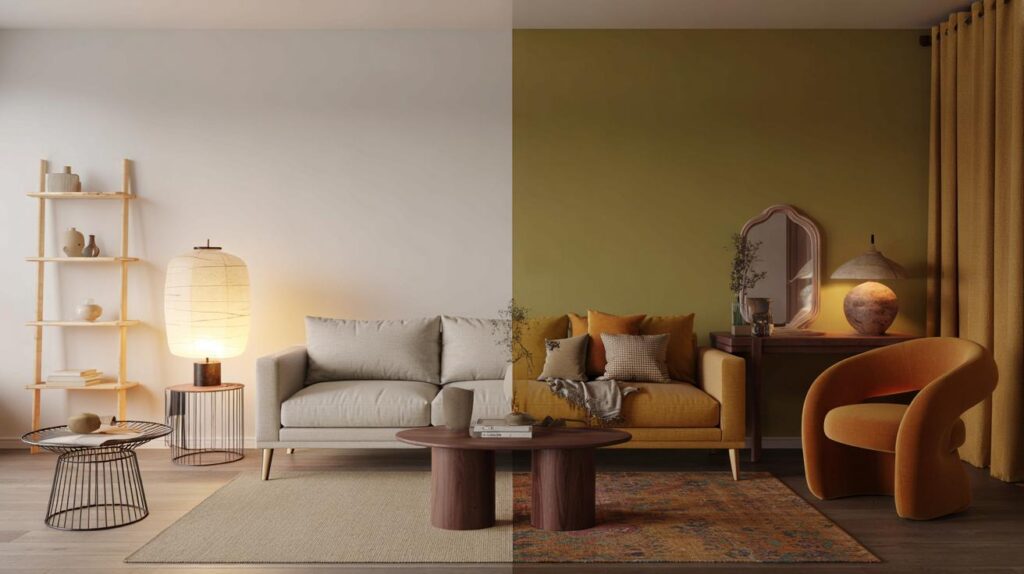
This season, something feels off at home. The room is tidy, the textiles are soft, yet the mood remains strangely thin.
As nights draw in, thousands of homes are sliding from serene to sterile. Designers say the cure for that flat feeling is not more beige throws, but braver choices: deeper colour, richer texture and pieces with a story.
Is Scandinavian style past its peak?
Why the room feels flat even when it’s neat
A decade of pale wood, nude palettes and clean lines brought calm to small urban spaces. It also made living rooms look increasingly alike. When days shorten, pale schemes can read as cool and distant. Minimal shelves, open-leg sofas and powder-soft greys do not always hold the warmth people crave after 6 pm.
Homeowners report a paradox: clutter is gone, but character is missing. The result is order without atmosphere.
Scandi was never the problem; repetition was. When the same blonde oak coffee table, the same lantern lamp and the same boucle cushion turn up in ten different flats, the effect shifts from soothing to generic.
How we got here
Mass retailers made Nordic basics accessible and practical. That democratisation worked brilliantly for tight budgets and renters. Yet scale bred sameness. As second-hand marketplaces filled with identical ladder shelves and peg rails, people began craving pieces that felt personal rather than universal.
Signals the tide is turning
Retail buyers are leaning into saturated shades, heavier textures and handcrafted detail. Curved silhouettes, darker timbers and patterned textiles are gaining space on shop floors. Designers report clients asking for “cosy, but not cluttered”, with priority on comfort seating and low glow lighting.
2025 is shaping up as the year of colour, craft and curves over copy-paste minimalism.
What 2025 looks like: colour, craft and curves
A palette with pulse
The new mood pairs grounded tones with tactile finishes. Think olive green, peacock blue and russet alongside velvet, wool, clay and patinated metal. Walnut and smoked oak bring depth where ash once dominated. Upholstery goes plush; rugs go dense; ceramics go earthy and irregular.
- Heavy curtains to soften acoustics and keep heat in
- Patterned cushions to add contrast to plain sofas
- Low-level lights in coloured glass or aged brass
- Hugging armchairs that invite reading rather than perching
Maximalism with manners
This is not a return to cramped rooms. The look layers confidently without suffocating sightlines. One big patterned rug can anchor a seating area. Two artworks with strong colour can lift a wall of books. A hand-thrown vase or a turned-wood bowl can lend soul to a minimal console. Vintage still matters, not as a theme but as a way to add patina and history to new purchases.
- Handmade objects: clay vases, woven textiles, turned wood
- Second-hand finds: mid-century side tables, gilt mirrors, iron candlesticks
- Spot colour: mustard velvet stool, checked café table, teal lamp base
The goal is personality per square metre: fewer, better pieces with visible handwork or confident colour.
Five decorator-approved swaps under £150
- Replace two cushion covers with velvet or tapestry (£40–£80) to raise visual warmth by a notch.
- Swap a cool white bulb for two warm 2700K bulbs and a dimmer (£30–£60) to cut evening glare.
- Add a dense wool rug runner to a traffic route (£80–£150) to dampen echo and add comfort.
- Trade a wire-frame side table for a vintage wood pedestal (£60–£120) to add mass and character.
- Introduce a coloured glass table lamp (£70–£150) for glow and colour without repainting walls.
How to pivot without waste
Keep the good, ditch the monotony
Scandinavian design still shines when it is treated as a baseline. Keep pieces that are well-made, well-proportioned and genuinely useful. Retire duplicates, bland textiles and lookalike accessories. A simple birch sideboard can sing when flanked by a dark-framed artwork and a patterned rug.
Budget and impact: what to prioritise
Think in layers: colour first, light second, texture third, art fourth, furniture last. Small changes often deliver large shifts in mood.
| Swap | Approx. cost | Time | Impact |
|---|---|---|---|
| Warm paint on one wall (olive, peacock, terracotta) | £30–£70 | 2–3 hours | High: adds depth and frames furniture |
| Two layered lamps with dimmers | £60–£180 | 1 hour | High: instant evening warmth |
| Textured rug upgrade | £120–£350 | 30 minutes | High: comfort, colour and acoustic gain |
| Statement vintage mirror | £80–£250 | 30 minutes | Medium: light bounce and character |
| Dark-stained side table | £60–£150 | 20 minutes | Medium: balances pale sofas |
Lighting that actually changes the mood
Plan for three layers: ambient at 200 lux, task at 500 lux, accent at 100 lux. Aim for warm white bulbs (2700–3000K) with high colour rendering (CRI 90+) to flatter textiles and skin tones. Place light low and close to walls to graze textures. A single bright ceiling fitting rarely flatters a room after dark.
- Use a floor lamp behind seating to backlight and soften silhouettes.
- Set table lamps at eye or lower level to avoid glare.
- Tuck LED strips on shelves to highlight books and ceramics.
What the shift means for you in 2025
Sustainability without guilt
Buying better, less often fits the new brief. A hand-thrown vase or a reupholstered armchair extends lifespan and reduces waste. Dark oils on existing wood can refresh a piece without sending it to landfill. Choose natural fibres for longevity and easier repair.
You do not need a skip to change the story of your room. Swap, stain, re-cover, re-light.
Renters and small spaces
Paint a single wall you can return to white in a morning. Use plug-in dimmers rather than hardwiring. Pick furniture with curved edges to soften tight corners. Fold textiles into depth where you cannot fix shelves or change floors.
Common pitfalls and how to avoid them
- Colour overload: limit the room to three main hues plus one accent. Repeat them across textiles and art.
- Pattern clashes: vary scale (large rug motif, medium cushion pattern, small lampshade print) to keep rhythm.
- Heavy furniture drift: balance dark tables with a light shade or bright art to avoid a gloomy centre.
- Impulse buying: measure first; sketch a quick layout; set a per-month budget ceiling.
Try-before-you-commit tactics
Create a low-cost mock-up: tape a 2-metre rectangle on the wall and pin A4 sheets painted in sample colours to observe daylight shifts. Photograph at 8 am, 1 pm and 7 pm to catch how the hue reads. For textiles, drape a borrowed throw over the sofa for a week to test shedding, texture and tone with your lighting.
Care and upkeep of richer materials
Velvet benefits from weekly brushing to lift pile. Oiled wood needs a quarterly wipe with a non-wax conditioner. Wool rugs prefer blotting and gentle beating rather than harsh vacuums. For brass, leave natural patina unless fingerprints bother you, then use a mild polish sparingly.
Three swaps can lift 60% of your room’s mood: warm wall colour, layered lighting and a tactile rug.
If your space feels polite rather than personal, start small: one richer wall, one vintage piece, one handmade object. The shift away from strict Scandinavian minimalism is less about rejecting calm and more about adding warmth, memory and touch. By layering colour, light and texture with care, you can make a rented studio or a family home feel closer to how you actually live today.



Loved the “colour, craft and curves” mantra. I swapped in 2700K bulbs and put lamps low against the wall—instant evening warmth. The CRI 90+ tip is a keeper, too. Thanks for the clear, practical steps.
Isn’t this just maximalism rebranded? Some of us chose Scandi to avoid visual noise. How do you add “personality per square metre” without turning the room into a prop shop?