
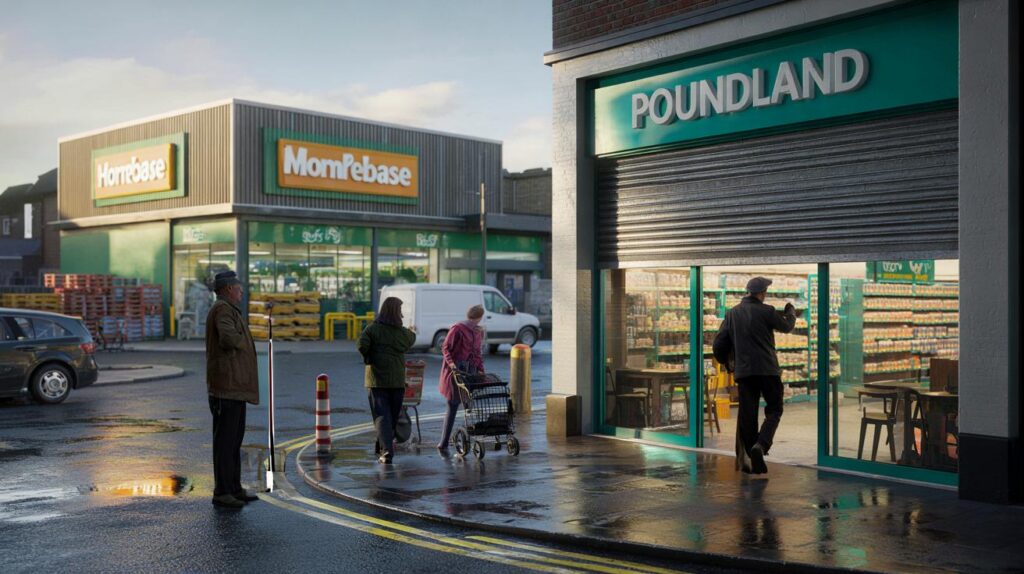
High streets from Scotland to the south coast are bracing for shake-ups that will reshape everyday shopping and weekend errands.
Across the UK, three household names are redrawing the retail map. Morrisons, Poundland and Homebase are shutting sites, trimming formats and rethinking costs. Shoppers face café counters going dark, convenience stores disappearing and DIY sheds closing their doors. The changes will unfold through 2025, with some dates already set and more expected as plans roll on.
What’s changing on your high street
Morrisons is closing a swathe of smaller formats and services, including Morrisons Daily stores, Market Kitchens, cafés, florists, meat and fish counters and several in‑store pharmacies. Poundland, under new ownership after a £1 sale by Pepco to Gordon Brothers, is shedding branches through a staged timetable. Homebase has shuttered dozens after entering administration, even as new owners stabilise parts of the business and transfer some sites to other chains.
Across all three brands, 201 store closures are scheduled in 2025, with the heaviest impact in towns that rely on a single anchor shop.
The closures reflect a reset in UK retail: rising costs, thinner margins and shoppers mixing online orders with less frequent, larger trips. Owners are pruning weaker locations, pushing investment into formats that still draw footfall.
At a glance: the big numbers
| Retailer | What’s affected | Scale | Context |
|---|---|---|---|
| Morrisons | Convenience stores, cafés, Market Kitchens, selected counters and pharmacies | Dozens of sites | Operational streamlining and format review |
| Poundland | Core high street and retail park stores | 50+ by end of 2025; more confirmed for autumn | Cost control under new ownership after a £1 transfer |
| Homebase | DIY and garden branches nationwide | 65 closures this year | Administration, then rescue by CDS Superstores (owner of Wilko and The Range) |
Homebase’s new owners have kept around 70 branches open, with some shuttered stores repurposed by Sainsbury’s and B&Q.
Where closures are happening
The lists span England, Scotland, Wales and Northern Ireland. Below are selected locations to illustrate the spread. Local landlords may relet units to other retailers over time.
Morrisons: selected store and café closures
- High street stores in Bath (Moorland Road), Exeter (Sidwell Street), Romsey and Wokingham
- Suburban sites in Whickham, Woking, Great Barr and Shenfield
- Community hubs in Haxby Village, Peebles and Stewarton
- Cafés and food‑to‑go counters closing in Bradford Thornbury, London Queensbury, Glasgow Newlands, Kirkham, Leeds Swinnow Road and Wood Green, Northampton, Hadleigh and Watford
- Further café changes in East Kilbride (two sites), Wishaw, Troon, Erskine, Gloucester, Helensburgh and Connah’s Quay
Poundland: selected locations and key dates
- Cities and towns including Birmingham (Fort), Cardiff, Leicester, Sunderland (Pallion), Coventry (Hertford Street), Kettering and Worcester
- Greater London sites in East Dulwich, Whitechapel, Swiss Cottage, Shepherd’s Bush and Chiswick
- Retail parks such as Hull St Andrew and Kingston Retail Park, Southport and Blackpool Cherry Tree
- Further closures flagged with dates: Deal and Thurrock (27 Oct), Walsall (29 Oct), Matlock (2 Nov), Carlisle and Burnley (9 Nov), Witham (12 Nov), Sidcup (14 Nov), Peckham (20 Nov), Launceston (29 Nov)
Homebase: where sheds have gone
- Large-format stores closed in Bradford, Cheltenham, Coventry, Gloucester, Romford, Wolverhampton and Oldbury
- South and East of England locations including Colchester (Stanway), Chichester Discovery Park, Harlow, Herne Bay, Luton, Norwich and Saffron Walden
- Scotland and Northern Ireland sites in Dunfermline, Glenrothes, Oban, Inverurie, Omagh, Londonderry and Belfast
- Additional towns affected include Barnstaple, Cannock, Gateshead, Leeds, Milton Keynes, Orpington and St Albans
Why are the shutters coming down?
Retailers face a squeeze from energy prices, higher business rates and wage costs. At the same time, shoppers have shifted habits: fewer impulse trips, more price comparison, and blended baskets across discounters, supermarkets and online. Marginal stores—often with short leases or dated layouts—become candidates for closure. For Poundland, the £1 transfer to a restructuring specialist signals a hard reset. For Homebase, administration forced a deep cut before a buyer stepped in. Morrisons is narrowing its focus to formats with reliable returns.
Store closures do not always signal retreat. They can free cash to refurbish keepers, sharpen pricing and invest in digital ordering for collection.
What it means for you
Shoppers will see longer trips for certain services. Where Morrisons cafés go, meal deals and seating may vanish, but core grocery remains if the main supermarket stays open. If your local in‑store pharmacy closes, your prescription can move; ask your GP or the pharmacy team to transfer nominations ahead of time. When a Poundland branch shuts, gift cards usually remain valid at other locations, but you should spend them early and keep receipts. Homebase customers should check order pick‑up points and delivery windows if a store used for collection closes mid‑order.
How to plan around the changes
- Check opening hours weekly; temporary extensions often precede final closure.
- Use click‑and‑collect where available; choose a neighbouring branch as the fallback.
- Move prescriptions at least five working days before a pharmacy shuts.
- Spend gift cards promptly and keep digital copies of receipts.
- Look for replacement tenants; some sites switch quickly to B&Q or Sainsbury’s formats.
Jobs, redeployment and what happens next
Not every closure means redundancy. Chains often offer transfers to nearby stores, especially in urban areas. Café colleagues may shift into front‑of‑house roles. For Homebase, CDS Superstores—parent to Wilko and The Range—has been redeploying staff into its broader estate where possible. Expect recruitment fairs where multiple brands share a retail park; bring shift preferences and travel options to improve your chances.
Some units will not stay dark for long. Landlords prefer food and value-led tenants that drive weekly visits. Discounters, pet stores, gyms and medical hubs often take over. Where parking and loading are strong, DIY units may convert to trade counters or builders’ merchants. In high streets, smaller footprints can split into two or three lettings to reduce risk.
Key dates and checks
- Autumn 2025: further Poundland sites earmarked as leases end.
- Rolling announcements: Morrisons café and counter closures appear in store first.
- Ongoing: Homebase site disposals complete as deals with new tenants exchange.
If your town relies on a single big box or café for community meet‑ups, plan alternatives now—libraries, leisure centres and independent cafés often expand hours when a chain site closes.
Extra context to help you decide your next shop
Budgeting around closures can trim time and fuel. Try a simple test over a month: move one weekly trip online with collection, switch one to a discount grocer, and direct specialist items—DIY, garden, or homeware—to a retailer that has taken over a former big‑box site near you. Track spend, travel time and returns. Many households find a two‑stop pattern works: one main supermarket visit, one top‑up at a discounter or convenience store that survives the cuts.
For DIY projects, compare tool hire and timber delivery from merchants that replaced Homebase units. Bulk pricing often beats in‑store deals, and next‑day drops reduce repeat journeys. If your nearest Morrisons café closes, look for independent competitors that accept supermarket loyalty vouchers through local partnerships; these arrangements appear more often when a large chain exits.



201 closures across three brands is massive. If your town loses the only anchor, footfall collapses and the independents follow. Are councils coordinating re-letting, or is it landlord by landlord? A map with timelined calender dates would really help residents plan school‑run shopping and prescriptions.