
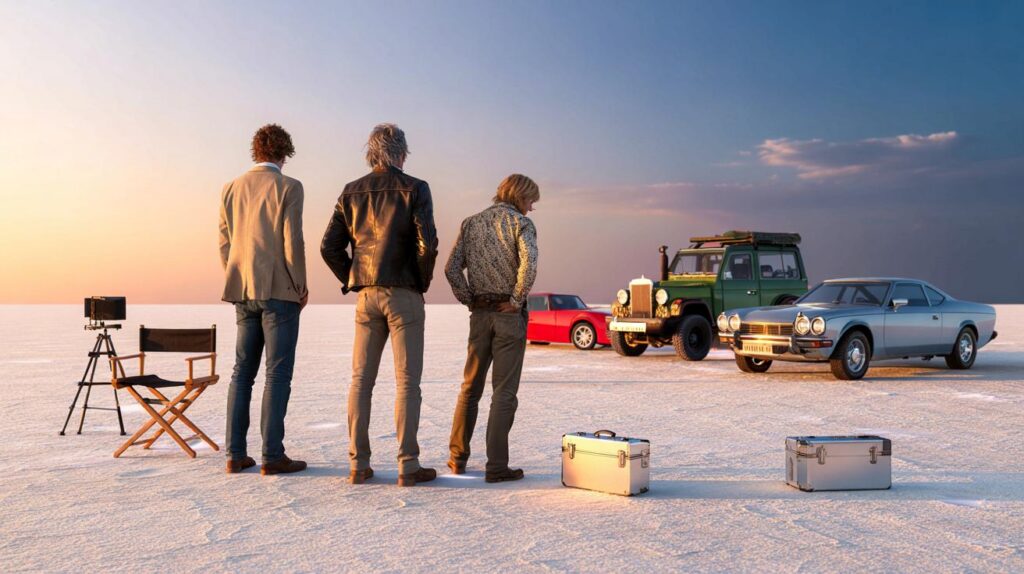
A low-key filing, a familiar trio, and a pile of cash hint at change that could reshape weekend telly habits.
Jeremy Clarkson, Richard Hammond and James May have wound up W Chump & Sons, drawing a line under their 23-year TV partnership.
What the paperwork shows
New filings at Companies House record the voluntary winding up of W Chump & Sons, the production vehicle the trio set up with long-time producer Andy Wilman. The process brings a solvent company to a close, realises remaining assets, and distributes the proceeds to shareholders. It signals a planned exit, not a crisis.
Filings list £24,087,100 on the books at closure — a tidy sum that points to an orderly, solvent wind-down.
With four equal partners, that pot translates to roughly £6m each. The numbers reflect a decade of global streaming deals, location shoots, format rights and merchandising income built on the trio’s post-Top Gear brand. It also underlines how production companies often hold cash reserves between specials, then settle accounts once a project slate ends.
A partnership forged on the test track
Clarkson, Hammond and May locked in their on-screen chemistry on the 2002 reboot of Top Gear. In 2015, Clarkson left the BBC after an altercation with a producer. The three regrouped with Wilman, formed W Chump & Sons, and shifted to Amazon’s Prime Video for The Grand Tour in 2016. Their film-length road trips, elaborate challenges and cross-border logistics demanded a producer-led company to manage budgets, crews and risk.
The Grand Tour ran for six series and signed off last September with a final special. The production returned to Botswana’s Makgadikgadi salt pans, a location that nods to the era that made them household names. The show’s finish freed the quartet to settle the books and shutter the company built for that purpose.
- 2002: Trio established on the BBC’s Top Gear
- 2015: Clarkson exits the BBC; W Chump & Sons incorporated
- 2016: The Grand Tour premieres on Prime Video
- Last September: Final Grand Tour special marks the end of the run
- Now: W Chump & Sons winds up; cash distributed to shareholders
Why now, and why this way
Clarkson has said he planned to call time on globe-trotting car capers. Age and enthusiasm no longer matched the logistics of squeezing into low-slung supercars or chasing the latest hypercar arms race. Bringing the curtain down via a formal winding up keeps control with the directors, draws a clean line under liabilities, and avoids the rancour that marred past exits.
“Landed safely and gently” captured the mood: a deliberate handbrake turn into a neat parking space, not a spin into scandal.
The method also fits how UK producers often close single-purpose vehicles once commissions stop. A members’ voluntary liquidation allows directors to distribute retained profits efficiently after tax, then start fresh ventures without legacy baggage. It protects brand equity and keeps future opportunities untainted by dormant balance sheets.
Where the trio shift their gears
None of the three looks short of work. Clarkson continues his agricultural docuseries, Clarkson’s Farm, charting missteps and small wins from planting to planning permission. The series blends weather woes, livestock reality, and rural policy into accessible TV that still finds room for dry jokes and mechanical misadventure.
May focuses on travel and curiosity-led programmes, most recently James May’s Great Explorers for Channel 5, a format that suits his measured style and gently wonky fascinations. Hammond leans into engineering and restoration with Richard Hammond’s Workshop on Discovery+, following the fortunes of a fledgling classic car business as it balances passion with profit.
The brand isn’t broken up so much as redistributed: three presenters, three lanes, one shared fanbase that now chooses by mood.
Critical reaction reflects that spread. Recent seasons of Clarkson’s farming series drew praise for tight storytelling and a wry tone, even as some episodes revisited familiar beats. Viewers still show up for the mix of jeopardy, competence, and friendly bickering that long defined the trio’s best days on the road.
The money, the mechanics, the future
What does £24,087,100 actually represent? In production, end-of-run balances can include unpaid platform fees, foreign sales, residuals, and reserves held against claims or overruns. Once auditors sign off and creditors receive what they’re owed, the remainder flows to shareholders. The numbers fluctuate, but the headline figure offers a rare glimpse into the economics of mega-franchise factual entertainment.
Fans often ask whether a wind-up means shows vanish. Rights sit with broadcasters and streamers under separate contracts, so back catalogues usually remain available for years. A closed production company doesn’t erase delivered episodes or specials. The change sits behind the scenes: bank accounts close, directors resign, and the vehicle that handled the paperwork and payroll no longer exists.
| Key metric | Figure |
|---|---|
| Years working together | 23 |
| Cash listed at closure | £24,087,100 |
| Core streaming run | 6 series |
| Approximate payout per partner | ~£6m |
| Final filming location | Makgadikgadi salt pans, Botswana |
What it means for viewers
For you, the change shifts the question from “when’s the next road trip?” to “which solo project scratches the itch tonight?” If you want laughs with a side of mud and spreadsheets, the farm wins. If you want slow-burning curiosity, May’s travelogue delivers. If you love oily hands and V12 rebuilds, Hammond’s workshop offers stakes you can smell.
Don’t expect an immediate reunion tour. TV cycles fast, but the trio now run on separate calendars. A future one-off sits in the realm of possible, not promised. The winding up doesn’t ban a comeback; it simply closes the ledger on one chapter that did its job, paid its bills, and sent its principals home with cheques and clean hands.
A quick guide to a solvent wind-down
Directors choose a members’ voluntary liquidation when a company has enough assets to pay all debts in full, usually within 12 months. A licensed liquidator takes control, sells remaining assets, settles obligations, and distributes surplus cash to shareholders. Many production firms use this route after multi-year projects end, avoiding the costs of keeping a dormant company alive.
For industry watchers, that distinction matters. Solvent wind-downs imply planning and closure. Insolvent collapses imply firefighting and loss. Here, the paperwork and the payout tell a straightforward story: the trio built a profitable vehicle for a finite mission, then retired it on their own terms.



Interesting that it’s a members’ voluntary liquidation rather than drama. Do we know if the £24,087,100 includes residuals still due, or is that post-creditors and auditor sign‑off? I’ll miss the trio’s chemistry, but honestly the last specials felt tired. Maybe splitting the brand into farm/travel/workshop is the right call. Curious if rights to older Grand Tour eps stay on Prime longterm.